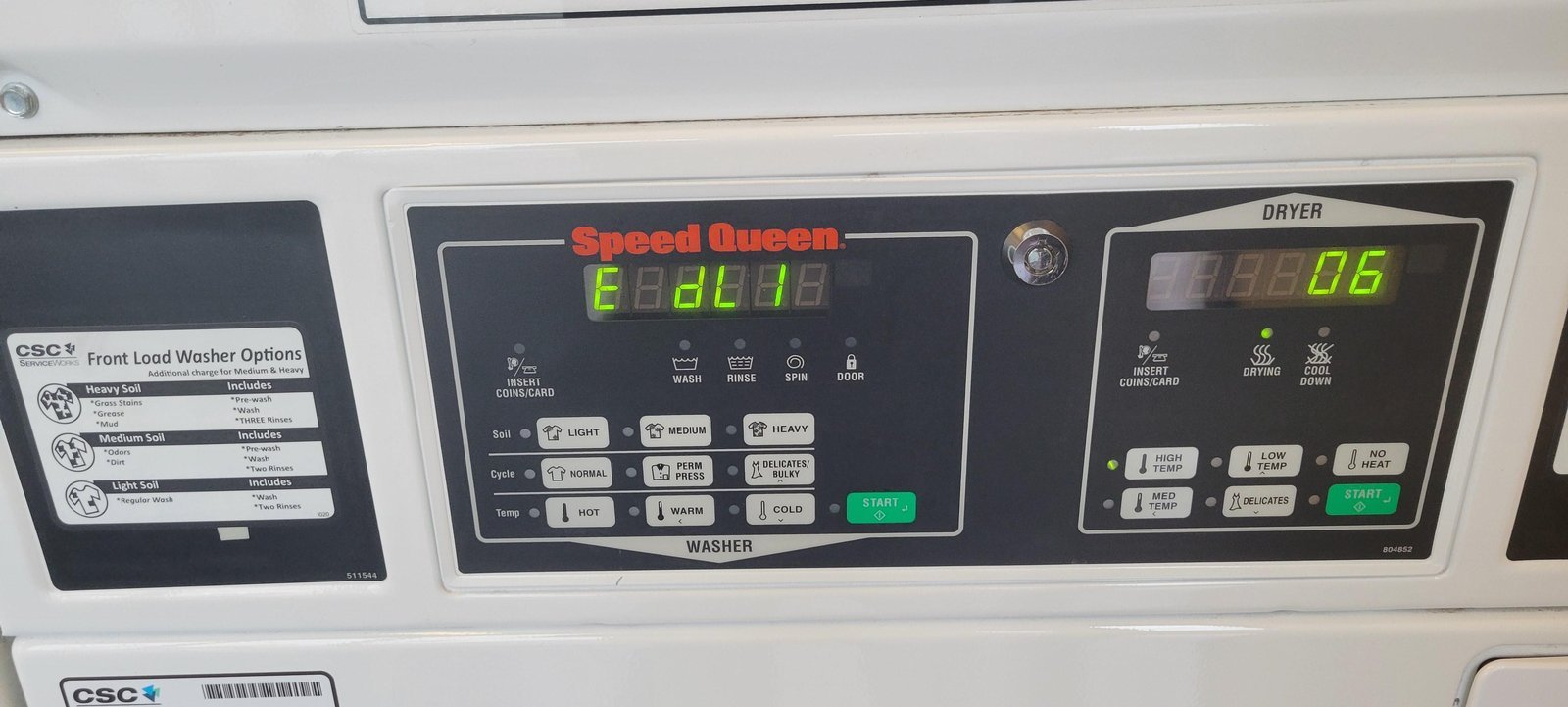
The most common cause of speed queen washer code e dl is a door that isn’t fully latched, so the control never gets the “locked” signal and shuts the cycle down. Don’t keep restarting it — the washer won’t spin or fill while this code is showing, so nothing gets damaged by waiting. Push the door firmly until you hear the latch click, then press Start once and watch whether the code clears within a few seconds.
If it clears, you’re done. If e dl returns on the very next press of Start, the latch itself is the problem, not your technique, and no amount of pushing harder will fix it. Check the door strike for a towel or sock caught in the opening, and look at the latch hook for a crack.
A door that needs a shoulder to close is already failing. The switch behind the latch wears out on machines that get slammed, and it usually goes before anything else in the door assembly.
What each door sign is telling you

The code points at the door circuit, but the exact symptom narrows it fast. Look at what the machine does in the first 10 seconds after you press Start — that’s where the answer usually sits.
| What you notice | What it usually means | What to do first |
|---|---|---|
| Door feels loose or springs back | Latch isn’t catching | Push until it clicks, retry |
| Code appears 2-5 seconds after Start | Lock signal never arrives | Check door alignment |
| Door closes but won’t lock | Lock motor or switch fault | Listen for a hum at Start |
| Code only on one cycle | Cycle needs a locked door longer | Try a different cycle |
| Code after a power cut | Control lost its door memory | Unplug 60 seconds, retry |
| Door hard to shut, rubs the frame | Hinge or strike is out of line | Check the gap all round |
| Code with an empty drum | Not a load problem — door circuit | Skip load-size checks |
| Code on every single cycle | Wiring or control board fault | Stop, call service |
The door isn’t latching all the way
A Speed Queen front-load washer won’t run unless the control sees the door locked, and the latch has to travel its full distance to trip that switch. Clothes caught in the opening, a strike plate that’s shifted a millimeter, or a door that’s simply been pushed too gently all stop that travel short. The control waits, gets no signal, and throws the code.
Check it in under a minute with no tools: open the door, look at the rubber seal all the way round, and pull out anything sitting on it — a sock, a dryer sheet, a bit of lint. Then close the door with one firm push at the handle side, not the hinge side, and listen. You want a single solid click, not a soft thud.
If it clicks and the code still appears, look at the gap between the door and the frame. It should be even all the way around. An uneven gap means the hinge has dropped or the strike has moved, and no amount of pushing will fix that.
The fix for a soft close is just a firmer push — Speed Queen doors need a real shove, not a nudge. For an uneven gap, the strike plate screws usually need a quarter turn to bring it back into line.
You’ll know it worked when the door locks with a hum, the drum starts turning within about 5 seconds, and the code clears on its own. If the door locks but the code returns, the problem is past the latch — move to the next section.
The door lock switch has failed
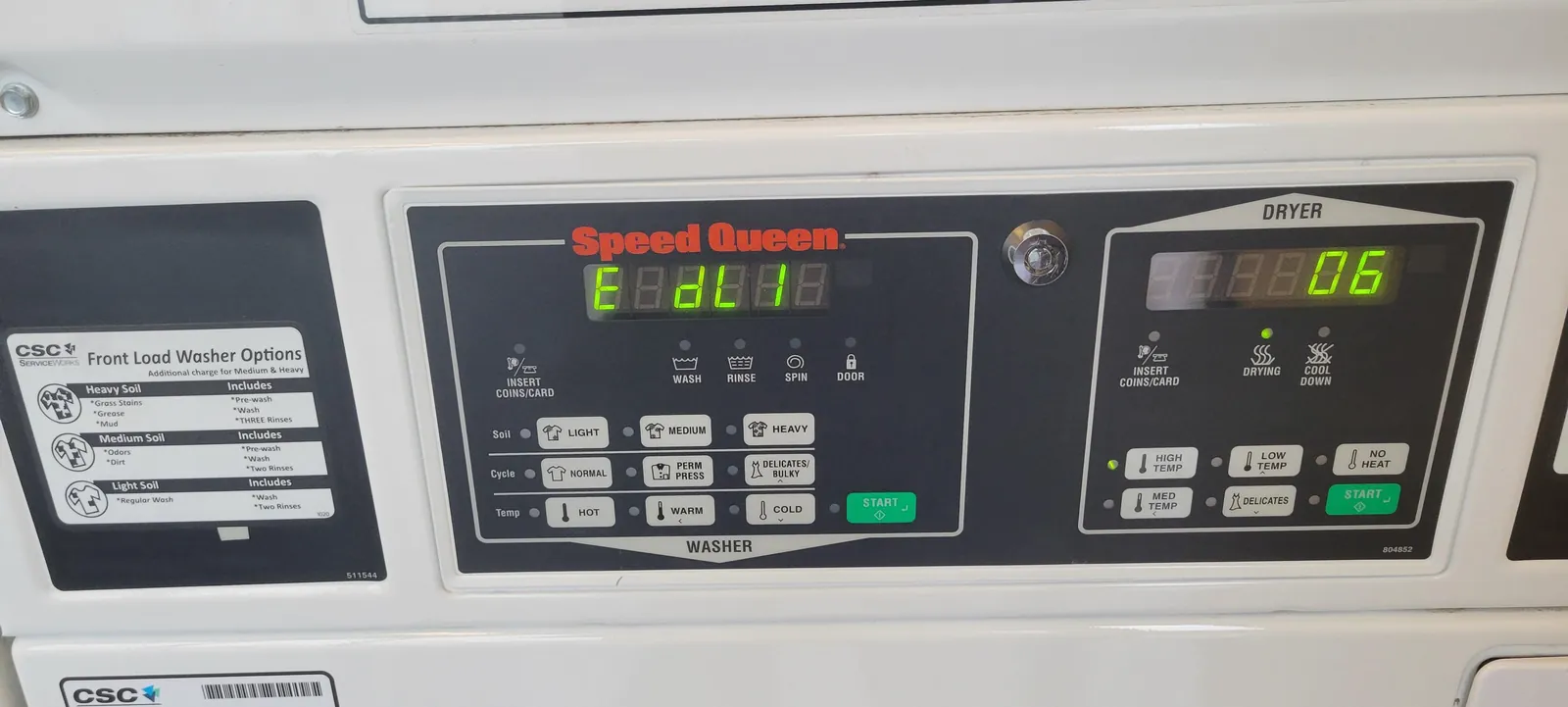
Inside the door frame sits a lock assembly with a switch that tells the control the door is shut. That switch takes a small electrical load every single cycle, and after years of use the contacts can pit or the plastic cam can wear down. When that happens, the door feels perfectly closed and the latch clicks — but the control never receives the confirmation, so it throws the same code.
The check that separates this from a latch problem takes about 30 seconds. Press Start and put your hand on the door frame near the latch. On a working machine you’ll feel a distinct hum or a small thunk as the lock motor runs. If you feel nothing at all, the lock assembly isn’t getting power or has died — that’s a different fault from a door that just isn’t shut.
If you feel the hum but the code still appears, the lock is running but the switch inside it isn’t reporting back. That’s the classic failed lock assembly.
The fix is a new door lock assembly, matched to your model number. It’s a part swap, not a repair, and most people can do it with a screwdriver once the power is off at the breaker.
You’ll know it worked when the door locks, the code stays away, and a full cycle runs end to end. If the new lock behaves the same way, stop — the fault is in the wiring or the control, and that’s not a homeowner job.
When the control board is the real fault
The control board reads the door signal and decides whether to run. If the board’s door-sensing circuit fails, it will throw the code no matter how good the latch and lock are — and this is the one people miss, because they keep replacing door parts that were fine.
Tell it apart from the first two causes with one test. Unplug the washer for a full 60 seconds, plug it back in, and press Start with the door shut.
A second sign: the code appears with the door wide open.
The fix is a control board replacement, and it’s not a DIY job on most Speed Queen models. Boards are model-specific, cost real money, and a wrong board can damage other components. This is where you call service.
You’ll know it worked when the machine powers up clean, the door locks normally, and a full cycle finishes without the code returning.
When to stop and call a technician
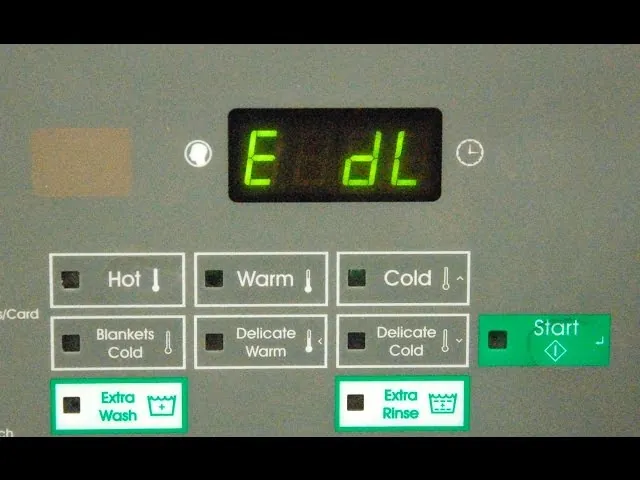
Stop and get help the moment the fault goes past the door itself. These are the signs:
- The code returns with a brand-new door lock fitted. The fault is in the wiring harness or the control board, and both need a technician’s meter to trace.
- You smell burning or see scorch marks near the door or control panel. That’s an electrical fault, not a door problem — unplug the machine and leave it alone.
- The washer trips the breaker when you press Start. A short in the lock circuit or the board is behind this, and it’s a fire risk if you keep resetting the breaker.
- The door won’t open after the cycle ends. Forcing it can break the lock and trap the load — Speed Queen’s own service documentation covers the manual release, and a technician should do it.
- The machine is still under warranty. Opening the cabinet yourself can void it, and a door lock or board failure is exactly what warranty covers.
The line is the cabinet. Anything behind the front panel — the lock assembly wiring, the harness, the control board — is technician work.
Frequently asked questions
Can I still use my Speed Queen washer with the E dL code showing?
No — the washer won’t fill or spin while this code is active, so it’s safe to leave plugged in but useless for washing. The code is a lockout, not a warning. If the door is shut and latched and the code clears after one Start press, you can run a full cycle. If it returns, stop pressing Start and fix the door circuit first.
Why does the code come back right after I press Start?
It comes back within a few seconds because the control isn’t getting a lock confirmation. A door that’s slightly open, a latch that isn’t catching, or a dead lock switch all produce this. Check the seal for trapped clothes first, then listen for the lock hum at Start.
How long does it take to replace a Speed Queen door lock?
About 30 to 45 minutes for most front-load models, assuming you have the correct replacement part and the power is off at the breaker. The job is unscrewing the front panel, unplugging the old lock, and fitting the new one. Add time if the panel is held by hidden screws — check your model’s service manual first.
Is it safe to keep running the washer if I ignore the code?
No. The code stops the cycle for a reason, and running the machine with a faulty door lock means the door could open mid-spin. A drum spinning at full speed with an unlatched door is a real injury risk. Fix the door circuit before you run another load.
What happens if the code shows with the door wide open?
That points at the control board, not the door. Unplug the machine for 60 seconds and try again. If the code appears the moment power returns, the board needs replacing — call service.
Does it matter which cycle I select?
Yes, on some models. If the code appears on one cycle but not another, the door circuit is marginal rather than dead. Test two different cycles before you replace anything.
How often should I check the door seal?
A trapped item is the cheapest cause of this code and the easiest to miss. Wipe the seal with a damp cloth, check the fold for grit, and make sure nothing sits on the lip before you close the door.
Conclusion
The code is almost always the door, not the machine. Check the latch, listen for the lock, and only then look at the board — that order saves most people a service call. When the fault goes past the door frame, hand it to a technician and let the warranty do its job.