Most Electrolux dishwasher error codes point to a water problem, not a broken machine. The most common one you’ll see is i20, and it usually means the dishwasher can’t drain the water out. It’s safe to keep using the machine only if the code clears and no water sits in the bottom. If water is standing there now, stop and check the filter first — pull out the bottom basket, twist the filter counter-clockwise, and lift it out. That takes about two minutes.
What each Electrolux code is telling you
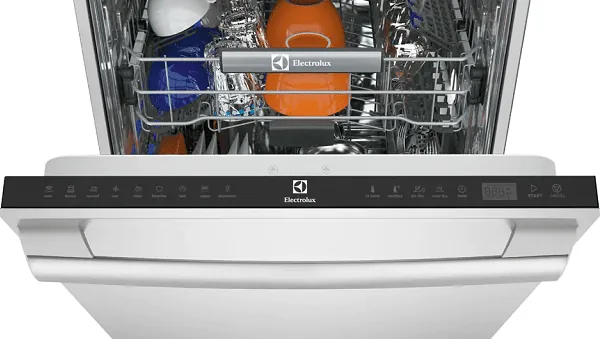
The code on the display is the dishwasher’s way of naming the part it can’t work with. Electrolux uses an ‘i’ followed by a number, and the number identifies the fault. Read the table below, find your code, and start with the “what to do first” column. Most of these checks need no tools.
| What you notice | What it usually means | What to do first |
|---|---|---|
| i20 on the display | Water won’t drain out | Clean the filter and check the drain hose |
| i30 on the display | Water isn’t filling in | Open the water tap fully |
| Water in the bottom, no code | Filter or hose is blocked | Empty it by hand, then clean the filter |
| Code appears, then clears | A one-time blockage passed | Run a short rinse cycle to confirm |
Water won’t drain — the i20 code
The i20 code shows when the dishwasher fills but can’t push the water out, and a blocked filter causes most of these. Food, grease and broken glass collect in the bottom filter over weeks. Water then sits in the sump, the level sensor trips, and the machine stops mid-cycle. You’ll see standing water when you open the door.
The check takes under a minute and costs nothing. Open the door, pull out the bottom basket, and look at the filter well. If water sits above the filter mesh, that’s your confirmation. Twist the filter counter-clockwise, lift it out, and hold it under warm running water. Pick out any food with your fingers — never a knife, which can cut the mesh.
Rinse the filter well too. Grease coats the walls and slows the drain, so wipe it with a damp cloth and a drop of dish soap. Put the filter back and turn it clockwise until it clicks.
The fix works when the next cycle drains fully and no water remains after the final rinse. If the water stays, the blockage is further down the drain hose, and that’s the second cause below. One more thing: run the tap in your sink for 10 seconds before you start the dishwasher. If the sink drains slowly, your shared drain line is partly blocked, and the dishwasher will keep throwing i20 until you clear that.
The drain hose or air gap is blocked
A blocked drain hose or air gap stops water leaving even when the filter is spotless. The hose runs from the dishwasher to your sink drain or garbage disposal. Grease cools inside it and hardens into a plug. An air gap — the small chrome cap on the sink — can also clog with food.
Here’s the check. Pull the dishwasher out about a foot, or look under the sink if the hose is visible. Feel along the hose for a hard, cold section. That’s the plug. If the hose connects to a garbage disposal, check that the knockout plug was removed when it was installed — a common miss that blocks the drain from day one.
To clear it, disconnect the hose at the sink end and push a thin bottle brush through. Run warm water through it. For the air gap, twist off the chrome cap and rinse the plastic body under the tap.
If the hose feels clear but the sink still backs up, the blockage is past the hose, in the sink trap or the branch drain. That’s a plumbing problem, not a dishwasher one, and no amount of dishwasher cleaning will touch it.
A hose that clogs twice in a year is telling you something else. Grease is reaching it because the drain line has no trap or the disposal is rarely run. Run hot water for 15 seconds before every cycle and the plug stops forming.
You’ll know it worked when the sink drains fast and the dishwasher finishes a full cycle with no i20. This cause differs from a dirty filter in one clear way: the filter well looks clean, but the water still won’t leave.
When the water inlet is the problem
The i30 code means the opposite — no water is getting in. This is less common than a drain fault, and it’s usually about supply, not the machine. The tap under the sink may be closed, or the inlet filter screen may be clogged with grit.
Tell it apart from i20 fast: with i30, the bottom of the tub is dry. With i20, water sits there. That single look separates them.
The check: open the cabinet under the sink and find the small valve on the braided hose. Turn it counter-clockwise until it stops. Then start a rinse cycle and listen. You should hear water rushing in within 30 seconds.
If the tap is open and you still hear nothing, the inlet screen is likely blocked. Close the tap, unscrew the hose at the valve, and look inside the hose end. A small mesh screen sits there. Rinse it under the tap and pick out any grit with a toothbrush. Screw the hose back on hand-tight, then open the tap.
The fix worked when the machine fills and the i30 clears by itself. In that case, run a cold tap nearby and check the flow before you blame the dishwasher. The U.S. Department of Energy notes that dishwashers need adequate water pressure to run a full cycle.
When to stop and call a technician

Stop and call a qualified technician if you see any of these signs. Each one means the fault is inside the machine, past the point where a normal person can safely work.
- Water on the floor near the base. This can mean a cracked tub or a failed seal, and it risks damage to your floor and cabinets.
- A burning smell or scorched wires. Stop the cycle and cut power at the breaker. This points to an electrical fault.
- The i60 heater code returns after a reset. The heater sits behind the tub and needs a trained hand to test.
- The control board shows random codes that change every cycle. A failing board needs a part match and a technician.
- You’ve cleared the filter, hose and tap, and water still won’t drain. The drain pump or check valve is the next step.
A dishwasher mixes water and mains electricity, so the inside of the base isn’t a do-it-yourself zone. A capacitor can hold a lethal charge even when the machine is unplugged.
Call an Electrolux-approved service partner for anything past the filter, the hose, the tap and the outlet. If your machine is still under warranty, opening the base yourself can void it.
Two of these signs are urgent in different ways. Water on the floor and a burning smell mean cut the power now, then book the visit. A repeating code or a slow drain can wait for a normal appointment, but keep using the machine in the meantime and you may turn a seal into a flooded floor.
Before you call, write down the model number, the code you saw, and how many cycles it took to come back. A technician who arrives with that in hand often finishes in one visit instead of two.
If the machine is old and the repair quote passes half the price of a new one, put the money toward a replacement. Ask for that number before the technician starts, not after.
Related guides
Frequently asked questions
What does error code i20 mean on an Electrolux dishwasher?
i20 means the dishwasher can’t drain the water out. It’s the most common Electrolux code, and a blocked filter causes most cases. Check for standing water in the bottom of the tub first. If water sits above the filter mesh, clean the filter and the drain hose, then run a rinse cycle to confirm.
Is it safe to keep using my dishwasher with an error code showing?
Only if the code clears and no water stays in the tub. If water sits in the bottom, don’t run another cycle — it can overflow onto your floor. If you smell burning or see water outside the machine, cut power at the breaker and call a technician before you use it again.
How do I reset an Electrolux dishwasher to clear the code?
This clears a one-time fault. If the same code returns on the next cycle, the fault is real and a reset won’t fix it. A reset only helps when the cause was a passing blockage.
Why does my Electrolux dishwasher show i30 and not fill with water?
i30 means no water is entering the machine. The tap under your sink is the first thing to check — it’s often closed by accident after plumbing work. If the tap is open, the small inlet screen on the hose is likely clogged with grit. Rinse it and try again.
How long should a dishwasher drain before the code appears?
The exact time varies by model and by how much water the cycle used, so check your model’s manual for its own figure.
Can a blocked filter cause other error codes too?
Yes. A blocked filter often shows as i20 first, but it can also trigger i40, which means the water level is wrong. Both come from the same blockage, so clean the filter before you look for anything else. Fixing the filter usually clears both codes at once.
What happens if I ignore the error code and keep running cycles?
The machine stops mid-cycle each time, so your dishes stay dirty and wet. Water can also build up in the base and leak onto the floor, which damages cabinets and flooring. Repeated cycles with a blocked drain can wear out the drain pump, turning a simple filter clean into a costly repair.
Does the error code matter if the dishwasher still finishes the cycle?
It matters if the code returns on the next cycle. A code that appears once and clears often means a passing blockage, like a piece of food. A code that comes back every time points to a real fault. Watch it for two cycles before you decide it’s fine.
Conclusion
If the code comes back after you’ve cleared the filter and drained the water, don’t keep running cycle after cycle hoping it fixes itself. Note the exact code, then call Electrolux support or a local technician. They’ll diagnose the drain pump or sensor, and you’ll save yourself a flooded kitchen and a bigger repair bill.