
Most of the time, it’s a slow-drying washer or a drum that’s stayed damp too long. The musty smell isn’t dirt — it’s bacteria and mold that grew while the fabric sat wet. The fastest check: pull the rubber door seal back with your thumb and smell it. If your nose says yes, that’s your answer. If the seal smells clean, the problem is almost always the washer itself, not the clothes.
What usually causes clothes to smell after drying

The causes below are ranked by how often they turn out to be the real one. Start at the top. Work down only when the check above the one you’re on comes back clean.
| Cause | How common | How to confirm it | Fix it yourself? |
|---|---|---|---|
| Washer drum or seal stays damp | Very common | Wipe seal, smell the cloth | Yes |
| Clothes sit wet too long | Very common | Time the gap before drying | Yes |
| Too much detergent | Common | Look for suds after rinse | Yes |
| Washer filter or drain clogged | Common | Check filter for slime | Yes with care |
| Dryer vent blocked | Sometimes | Feel airflow at outside vent | Yes with care |
| Water heater too cool | Less common | Check wash water temp | Yes |
| Washer needs a service call | Rare | Smell returns after cleaning | No |
The washer seal and drum stay damp
This is the one to check first, because it’s the most common cause and the cheapest to fix. The rubber gasket around a front-loading door folds back on itself. Water sits in that fold after every wash, and the warm, dark drum is a good place for mold and bacteria to grow. That growth is what you smell on the clothes. The smell moves from the seal onto the fabric during the next wash.
The confirming test takes two minutes. Pull the lip of the rubber seal back all the way around the door and look inside the fold. Run a clean white cloth along it, then smell the cloth. A sour, musty smell on the cloth confirms it. If the fold looks black or feels slimy, you’ve found it.
The fix is a hot maintenance wash with no clothes inside. Set the machine to its hottest cycle, add 2 cups of white vinegar to the drum, and let it run. When it finishes, wipe the seal dry with a cloth and leave the door open. Do this once a month if you wash often. The whole job takes about 90 minutes, most of it waiting time, and it costs less than a bottle of detergent.
Run a second hot cycle with 1/2 cup of baking soda if the smell is strong. Don’t mix the vinegar and baking soda in the same cycle — the acid and base neutralize each other, so you lose the cleaning benefit of both. Also check the detergent drawer and wipe it dry, since it holds water too. If the smell comes back within a week, the growth is deeper than the seal and you may need a technician.
Clothes sit wet in the drum too long
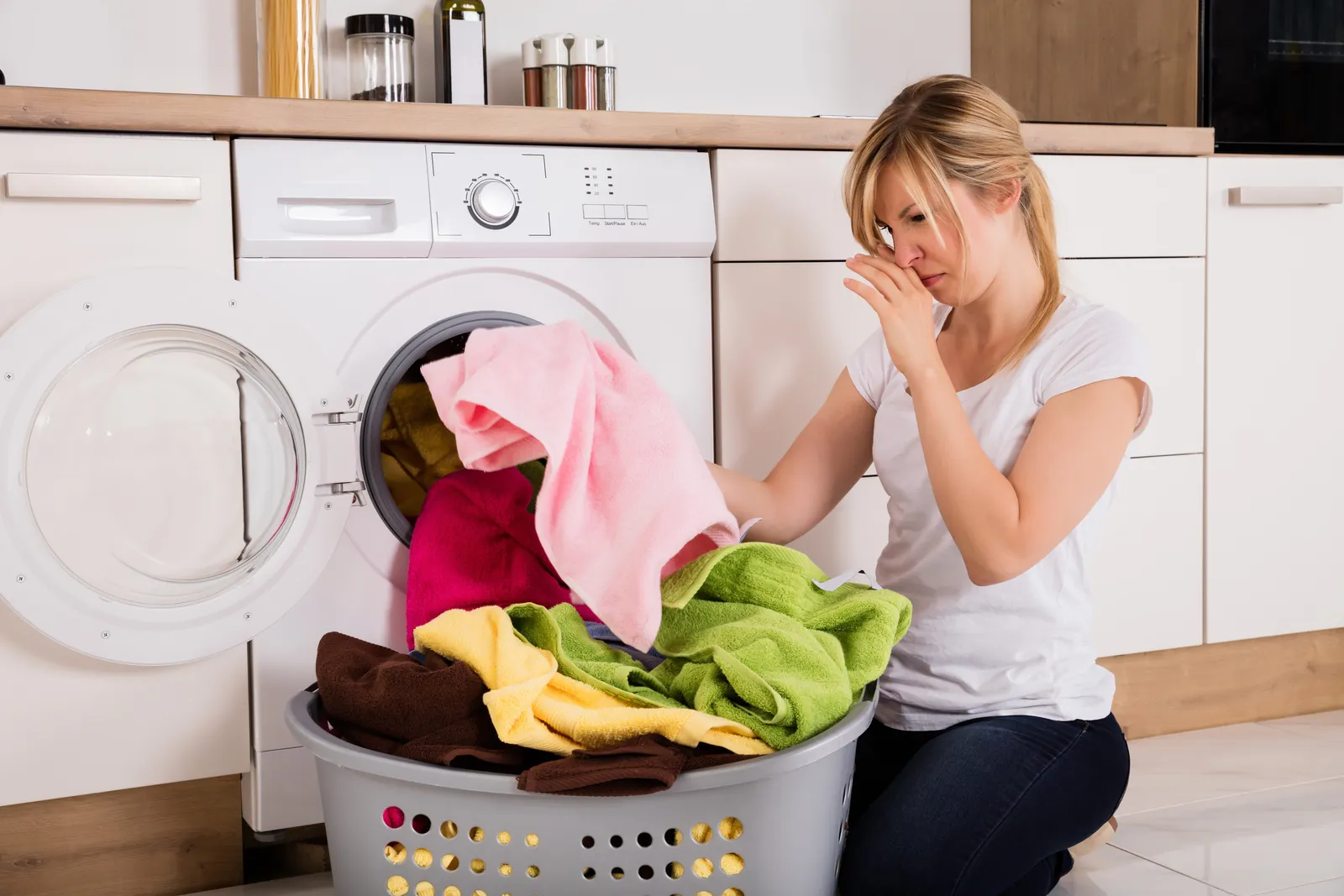
This cause has a different smell — it’s sharper and more like a wet basement. You can tell it apart from the seal problem because the seal itself smells fine when you wipe it, but the clothes still come out sour. The mechanism is simple: bacteria on damp fabric multiply fast, and the longer the clothes sit, the more they grow. A load left overnight is worse than a load moved straight to the dryer.
The check is a timing test. Note the exact minute your wash cycle ends, and note when you move the load. If the gap is regularly over an hour, this is your cause. Most washers hold a wet load fine for about 30 minutes. After that, the smell starts.
The fix is a routine change, not a repair. Move the load within 30 minutes of the cycle ending. If you can’t be home, use your washer’s delay-start setting so the cycle finishes when you’re there. Some machines have a “fresh hold” or “tumble” option that keeps the drum moving — check your model’s manual for the exact name, since it varies by brand.
If you find a load that’s already been sitting, re-wash it rather than drying it. Drying sets the smell into the fabric, and a hot dryer makes it harder to remove later. Add 1/2 cup of white vinegar to the rinse cycle on the re-wash. One forgotten load won’t ruin your clothes, but a weekly habit will leave a permanent sour note in towels and workout gear.
Too much detergent leaves residue
Detergent that doesn’t rinse out feeds the same bacteria that cause the other two problems. It also holds water in the fabric, so clothes take longer to dry. The clue here is a stiff, slightly slick feel on towels, plus a smell that’s more soapy-sour than truly musty. If your seal is clean and you move loads fast, this is the next one to check.
The confirming test is a suds check. Run a small load with no detergent at all. If you see foam in the drum during the wash, there’s leftover detergent in the machine or the clothes. On a front loader, look through the glass door mid-cycle. On a top loader, lift the lid briefly during the wash and look for a layer of foam.
The fix is to use less. Most people use 2 to 3 times the amount they need. For a normal load in soft water, 2 tablespoons of liquid detergent is usually enough. In hard water, use the amount printed on the bottle for a medium load — no more. Never fill past the “max” line in the dispenser cup.
Run one extra rinse cycle on every load for two weeks to clear the buildup. Check your machine’s manual for how to select “extra rinse” on your model. After that, go back to a normal cycle and keep the smaller dose. If towels still feel stiff after two weeks, repeat the extra rinse for another week. The cost here is nothing — you’re just using less product.
Less common causes worth checking
A few rarer problems can also leave clothes smelling after drying. Each has one clear clue, and the last one is where you should stop doing it yourself.
- Clogged washer filter or drain pump. The clue is standing water in the drum after a cycle. On most front loaders the filter sits behind a small panel at the bottom front — check your manual, since the location varies. Clean it over a towel, because water will spill out.
- Blocked dryer vent. The clue is clothes that feel hot but still damp after a full cycle. A blocked vent is also a fire risk, so this one matters. The U.S. Consumer Product Safety Commission publishes guidance on dryer vent safety and cleaning.
- Wash water that’s too cool. The clue is a smell that only appears on cold washes. Check your water heater setting — 120°F is the commonly recommended household setting. If your cold wash is actually cold, switch to warm for towels and bedding.
- A dead animal or nest in the vent line. The clue is a smell that’s stronger outside than inside, or a smell that appears only when the dryer runs. This needs a vent-cleaning professional, not a homeowner.
- Mold inside the washer’s inner drum. The clue is a smell that returns within days of every cleaning. This means the drum needs to be taken apart, and that’s a job for a qualified appliance technician. Don’t open the housing yourself.
What fixing it actually costs you

Most of these fixes cost you time, not money. The seal cleaning and the detergent change are free apart from the vinegar and the smaller detergent dose. A filter clean takes about 15 minutes and a towel. A dryer vent clear-out is a weekend job with a vent brush kit, and it’s cheaper than almost any repair call.
A technician visit is the one real expense, and it’s the option you reach for when the smell returns within a week of a full clean. The price depends on your area, the brand, and whether parts are needed — a seal replacement is a small job, while a drum teardown is a bigger one. Get a written quote before any work starts, and ask whether the call-out fee is separate from the repair.
Smell is subjective and your nose is the only instrument that matters. What one person calls “musty” another calls “faint.” Keep a note of how strong the smell is on a scale of 1 to 5 each time you check, and compare that note to the same note after each fix. Your own log tells you whether it’s working. No article, including this one, can smell your laundry.
Frequently asked questions
Can I just re-wash smelly clothes and wear them?
Yes, but only if you fix the cause first. Re-washing removes the smell from the fabric, and a hot cycle with 1/2 cup of white vinegar in the rinse usually clears it. If the washer itself is the source, the smell comes back on the very next load. Fix the machine, then re-wash.
Why do my clothes smell only after drying, not before?
Because the dryer’s heat and airflow volatilize and disperse the odor compounds that were already present, making them more noticeable. The cause was there before drying — the dryer just made it obvious.
How long can wet clothes sit before they smell?
Bacteria begin multiplying as soon as the load is wet, and the smell becomes noticeable within a few hours. The time depends on room temperature and how wet the load is. A humid laundry room speeds it up. Move loads within 30 minutes to be safe.
Is it safe to wear clothes that smell musty?
Not ideal, especially for people with asthma or allergies. Mold and bacteria on fabric can trigger sneezing, coughing, and skin irritation in sensitive people. If you have a lung condition, re-wash the load before wearing it. For most healthy people, one smelly load isn’t dangerous — but the smell won’t fade on its own.
Does vinegar damage my washing machine?
No, at the amounts used here. 2 cups in an empty hot cycle is safe for most machines, and it’s a common maintenance step. Don’t use it every single wash, and don’t mix it with bleach — that combination releases a gas. Check your washer’s manual first, since some brands advise against vinegar for their seals.
Why does my dryer make clothes smell worse?
A blocked vent traps moist, warm air in the drum, and that’s a perfect place for odor to build. The clue is clothes that feel hot but still damp after a full cycle. Clean the vent line, and check the outside flap opens fully when the dryer runs. A blocked vent is also a fire risk, so don’t ignore it.
When should I call a technician instead of fixing it myself?
Call one when the smell returns within a week of a full clean, when you see standing water after a cycle, or when the smell is stronger outside the drum than inside. Those point to problems behind the drum that need the housing opened. A qualified appliance technician has the tools and the training for that work.
Does it matter which detergent I use?
Yes, more than most people think. Liquid detergents rinse out better in cold water than powders, and “free and clear” types leave less residue. If you wash mostly in cold water, switch to a liquid. Use 2 tablespoons per normal load in soft water, and check the bottle’s guide for hard water.
Conclusion
If your seal smells clean and you move loads fast, the washer is usually the source — not the clothes. Clean the seal, cut the detergent, and keep a simple log of how strong the smell is. If it comes back inside a week, that’s your signal to call someone qualified.