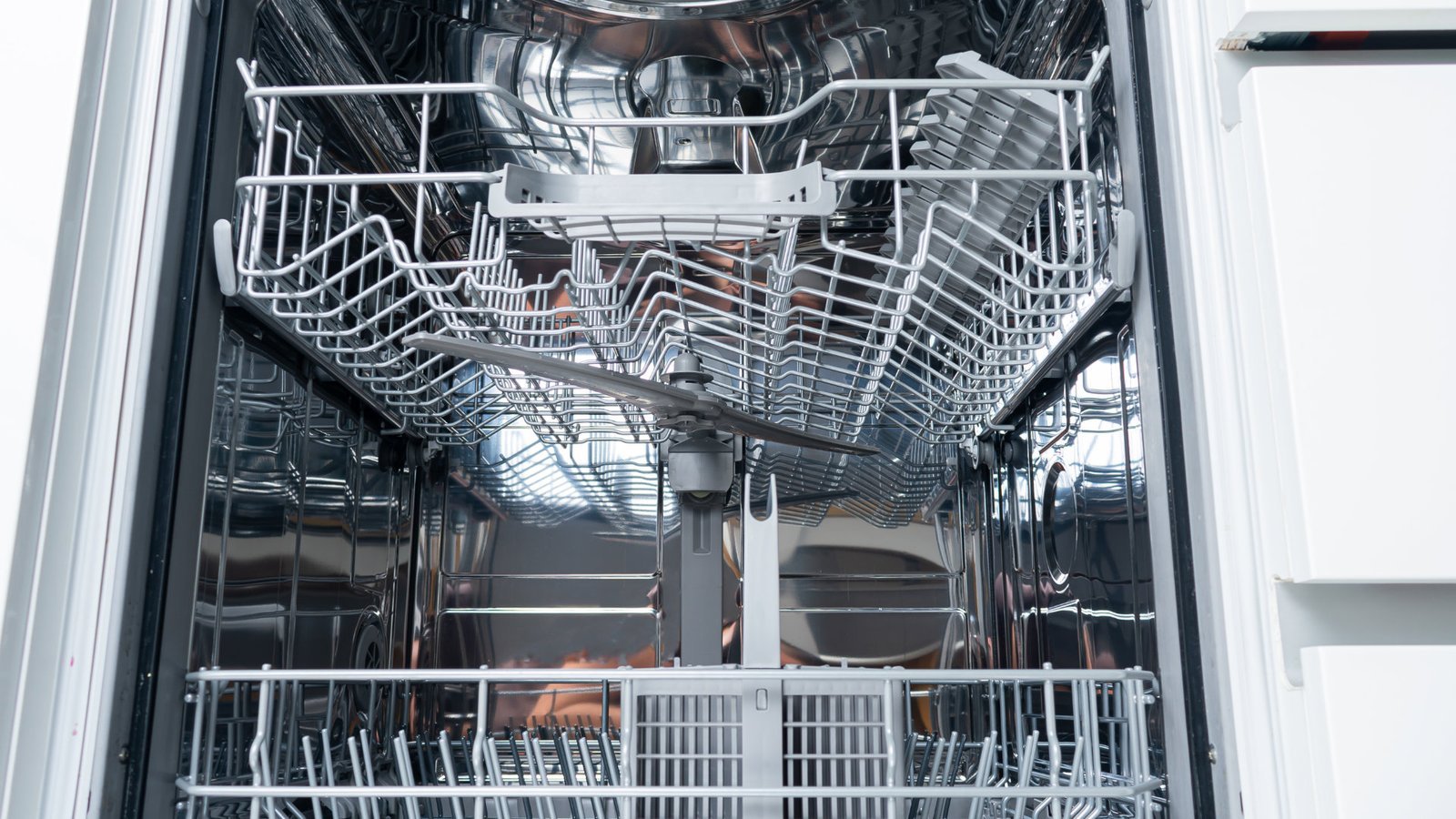
A dishwasher that hums but never fills is usually stuck at the fill stage, and most of the time the cause sits right at the water inlet — a closed supply valve, a kinked hose, or a clogged filter screen. The fastest check takes under a minute: open the cabinet, find the valve on the hot water line, and confirm it’s turned fully counterclockwise. If it’s already open, the problem is further in.
Why the dishwasher hums without getting water
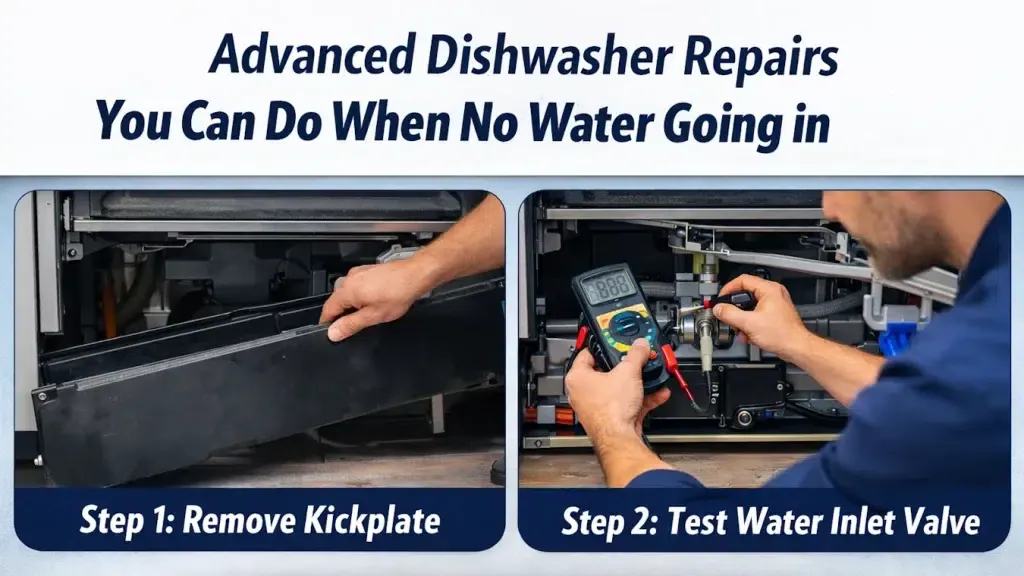
The table below ranks the likely causes by how often each one turns out to be the real problem. Work down it in order — the top rows are the ones a home user can check alone, and the bottom rows are where you stop and call someone.
| Cause | How common | How to confirm it | Fix it yourself? |
|---|---|---|---|
| Supply valve closed or partly open | Very common | Valve handle won’t turn further open | Yes |
| Kinked or crushed inlet hose | Common | Visible bend or flat spot behind unit | Yes |
| Clogged inlet filter screen | Common | Screen feels gritty or scaled | Yes |
| Float switch stuck in “full” position | Sometimes | Float won’t move up and down freely | Yes with care |
| Door latch not fully engaged | Sometimes | Latch feels loose or won’t click | Yes with care |
| Faulty water inlet valve | Less common | No click heard when cycle starts | No |
| Control board or timer fault | Rare | No lights, no response to any button | No |
A dishwasher is connected to mains power and a pressurized water line, and the capacitor behind the lower panel can hold a charge even when unplugged.
Start with the supply valve and inlet hose
A closed or half-open valve is the single most common reason a dishwasher hums without filling. The pump runs, the motor strains against an empty tub, and you hear that low drone. Water never arrives because the valve feeding the machine is shut off — often after plumbing work, a vacation, or a kitchen remodel.
If the valve is already open, check the hose itself. A sharp bend behind the unit will pinch the line shut. Straighten any kink, and make sure the hose isn’t crushed against the cabinet frame or the back wall.
Then check the filter screen. Most inlet hoses have a small mesh screen where the hose meets the valve, and some dishwashers have a second one at the machine’s inlet. Shut the valve off first, unscrew the hose, and look inside. A screen coated in white scale or grit blocks flow. Rinse it under a tap and scrub it gently with an old toothbrush.
This whole sequence takes 15 to 30 minutes on a typical install. If your machine sits under a stone countertop with no side access, add time — you may need to loosen the mounting brackets to slide it forward.
When the float switch is the problem

The float switch tells the dishwasher the tub is already full, so it stops calling for water — and the pump keeps humming against nothing. You tell this cause apart from a supply problem by the sound: with a closed valve, you hear the machine straining dry; with a stuck float, the cycle often starts normally and then stalls partway.
Find the float inside the tub. It’s a small plastic dome, usually near the front corner of the floor, that rises as water fills. Press it down gently with one finger. It should spring back up on its own. If it feels stuck, gritty, or sluggish, that’s your answer.
Clean around the float with a soft cloth and warm water. Food debris and hard water film are the usual culprits. Don’t force it or pry at it — the assembly is plastic and cracks easily.
On many models, the float cover lifts off with a quarter turn or a small clip. Check your model’s manual before removing anything, since the design varies a lot between brands. If the float moves freely after cleaning, run a short rinse cycle and listen. A normal fill sounds like steady water rushing, not a dry hum.
If the float still won’t move, or the machine fills past the float line, stop and call a technician. An overfilling dishwasher can leak into the floor and damage cabinets.
Door latch and control faults
A door that isn’t fully latched stops the cycle before the fill valve opens, and the drain pump can keep running — which sounds exactly like a hum with no water. You tell this one apart from a float issue by checking the latch first: it should click firmly, with no wobble.
Push the door closed until you hear a solid click. On some models, the latch needs a firm press in the center, not a gentle nudge. Look at the strike plate on the tub frame — if it’s bent or the screws are loose, the door won’t seat. Tighten any loose screws with a screwdriver.
A control board or timer fault is the rarest cause, and it’s the one you can’t diagnose from the outside. Signs include no lights on the panel, no response to any button, or a cycle that starts and dies within seconds. There’s no safe home test for this. Call a qualified appliance technician.
I can’t tell you which of these is yours. The answer depends on your model, its age, and what you hear at the moment the cycle starts. Your machine’s own tech sheet — usually taped behind the lower kick panel or inside the door — lists the exact fill time and valve specs for your unit, and that’s where you read your own numbers.
Other rare causes worth knowing
These come up far less often, but each has one clear clue:
- Water supply line frozen — only in cold climates, and only if the dishwasher sits against an exterior wall. The clue is that the machine worked yesterday and the temperature dropped overnight.
- Shutoff valve broken internally — the handle turns but the valve gate doesn’t move. The clue is a handle that spins with no resistance.
- House water pressure too low — other taps in the home also run weak. Your water utility can tell you the normal range for your area.
- Drain hose plumbed into the same line as the fill — a rare install mistake. The clue is water appearing in the tub and draining at the same time.
- Failed pressure switch — the machine can’t sense water level. No home test exists for this one.
Anything past the inlet valve, the float, and the latch needs a technician. That includes the pressure switch, the control board, and anything behind the lower access panel. A dishwasher’s capacitor can hold a dangerous charge even when unplugged, and the water line is under pressure.
What a fix usually involves
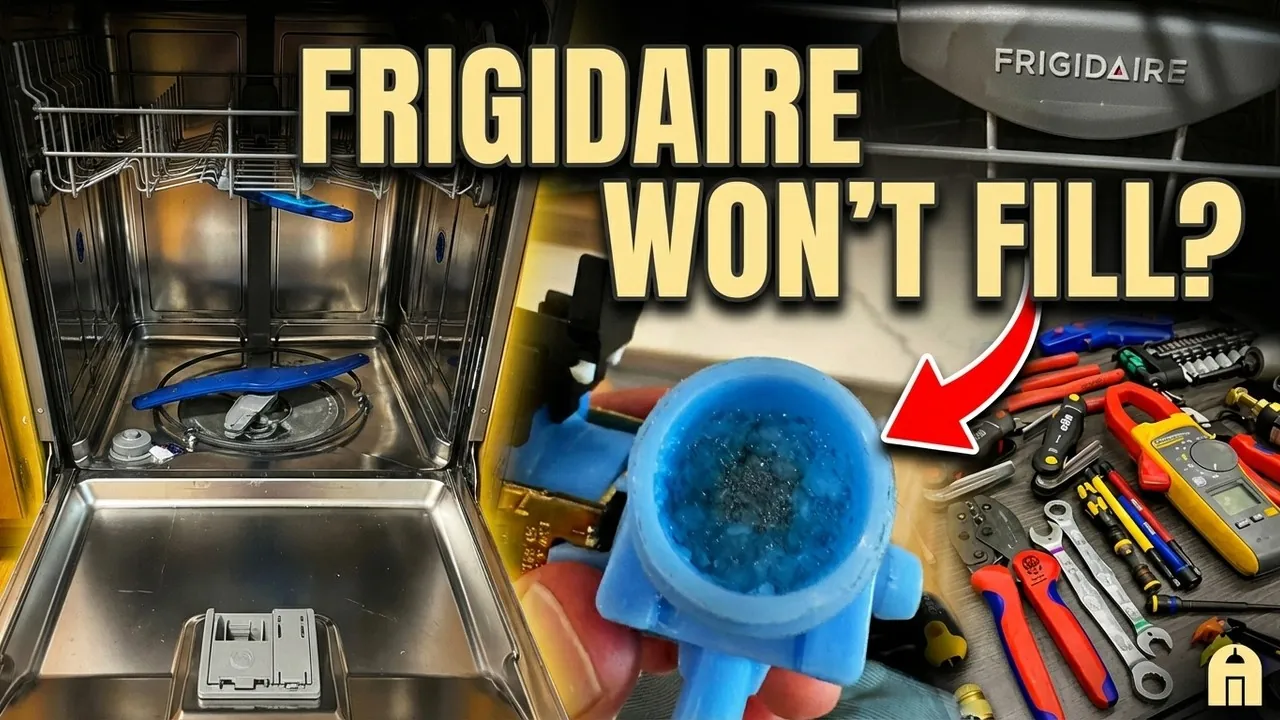
The valve and hose checks cost you nothing but time — 15 to 30 minutes with no parts, assuming the valve just needed opening. That’s the cheapest outcome, and it’s the most common one.
A clogged filter screen is the same job, plus a toothbrush and a towel. If the screen is torn or the hose is cracked, you’ll need a replacement inlet hose, which is a small part compared to the machine itself — think of it as the cost of a decent meal out, not a appliance-sized expense. Any hardware store stocks them, and the price depends on the length and the fittings your model uses.
A stuck float is a cleaning job in most cases. If the assembly is cracked, the part is still small and model-specific. Look up your model number on the manufacturer’s official parts page to get the exact price for your unit.
A failed inlet valve or control board is a technician visit. The cost depends on your location, the brand, and whether the board needs programming. Get two quotes before you commit, and ask whether the repair is worth it against the price of a new machine — for an older unit, sometimes it isn’t.
Frequently asked questions
Why is my dishwasher humming but not filling with water?
The supply valve is closed or the inlet is blocked in most cases. Check the shutoff valve under the sink first — turn it counterclockwise until it stops. If it’s already open, look for a kinked hose or a clogged filter screen at the inlet. Both are common and both are fixable in under 30 minutes.
Can I run a dishwasher with the water supply valve closed?
No. Running it dry overheats the pump and can burn out the motor. If you hear humming with no water, stop the cycle and shut the machine off at the breaker before you investigate. A few seconds of dry running is usually harmless, but repeated cycles will shorten the pump’s life.
How long should a dishwasher take to fill with water?
The exact fill time for your model is listed on the tech sheet behind the kick panel.
Is it safe to check the dishwasher inlet hose myself?
Yes, if you shut off the water valve first and unplug the machine. Don’t open the lower panel or touch anything past the inlet connection. The capacitor inside holds a charge that can be lethal even with the power off, so leave everything behind the panel to a technician.
What happens if the float switch is stuck?
The dishwasher thinks the tub is already full, so it never opens the fill valve. The pump keeps running and you hear a steady hum. Press the float down gently — it should spring back. If it’s gritty or sluggish, clean it with warm water and a soft cloth.
Does a kinked hose really stop the water?
Yes. A sharp bend pinches the line shut, and no water gets through. This happens most often after the machine is pushed back into place. Pull it forward, straighten the hose, and make sure it isn’t crushed against the cabinet or wall.
How do I know if I need a technician?
If the valve is open, the hose is clear, the screen is clean, and the float moves freely, you’ve done every safe check. Anything past that point — the inlet valve, the pressure switch, the control board — needs a qualified appliance technician. Don’t open the lower panel yourself.
Will a dishwasher fill if the door isn’t latched?
No. The door switch cuts power to the fill cycle, so the machine won’t take in water until the latch engages. Push the door until you hear a firm click. If the latch feels loose or won’t hold, check the strike plate for loose screws before calling anyone.
Conclusion
If the valve is open, the hose is straight, and the float moves freely, you’ve reached the end of what’s safe to check at home. At that point, the machine needs someone with the right tools and training — and that’s not a failure on your part. It’s just where the line sits.