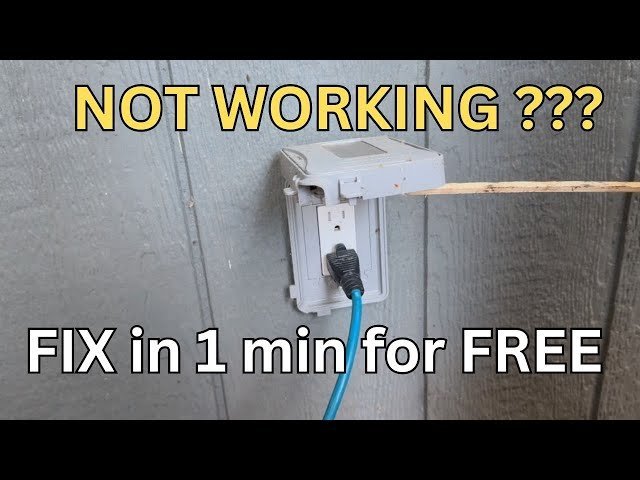
Your outdoor power outlet isn’t working most often because a ground-fault circuit interrupter (GFCI) has tripped and needs a reset. Press the RESET button on the GFCI device — either on the outlet itself or on another outlet or breaker that protects it. If the outlet still has no power after that, the cause is usually a tripped breaker, a tripped GFCI upstream, or water inside the box. Check those three things before you call anyone.
Why an outdoor outlet stops working
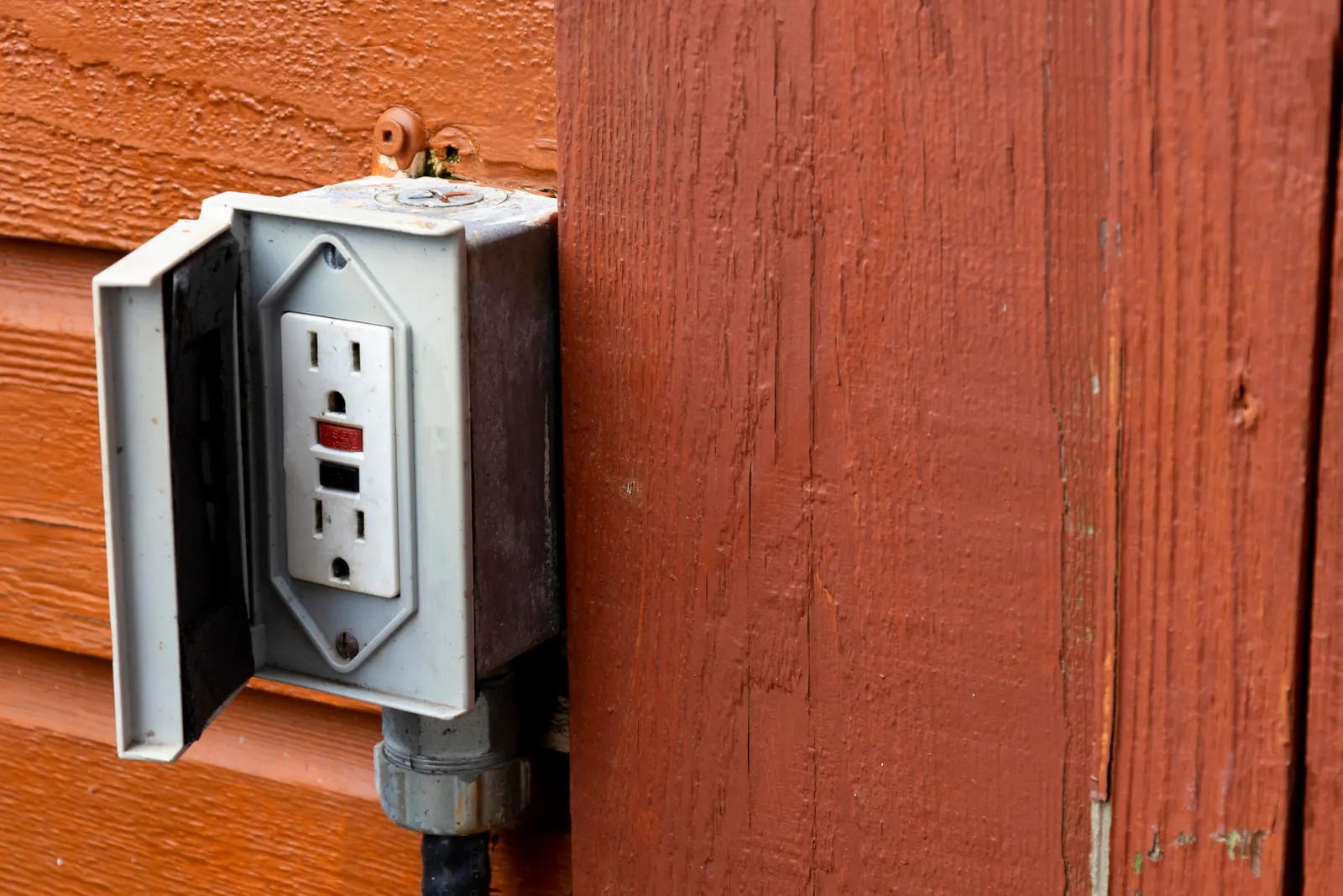
Outdoor outlets face conditions that indoor ones never see. Rain, snow, dust, insects, and temperature swings all attack the same small box. Most failures come down to three causes, and you can check all three without any special tools.
The first cause is a tripped GFCI. Since the 1970s, the National Electrical Code has required GFCI protection for outdoor receptacles, and the NEC is published by the National Fire Protection Association. A GFCI cuts power the moment it senses a tiny current leak — often just a few milliamps. That leak can come from damp air alone. When it trips, every outlet on the same circuit downstream goes dead too.
The second cause is a tripped circuit breaker. Outdoor circuits often share a breaker with a garage, a bathroom, or a patio light. One overload trips the breaker, and the outdoor outlet dies with it.
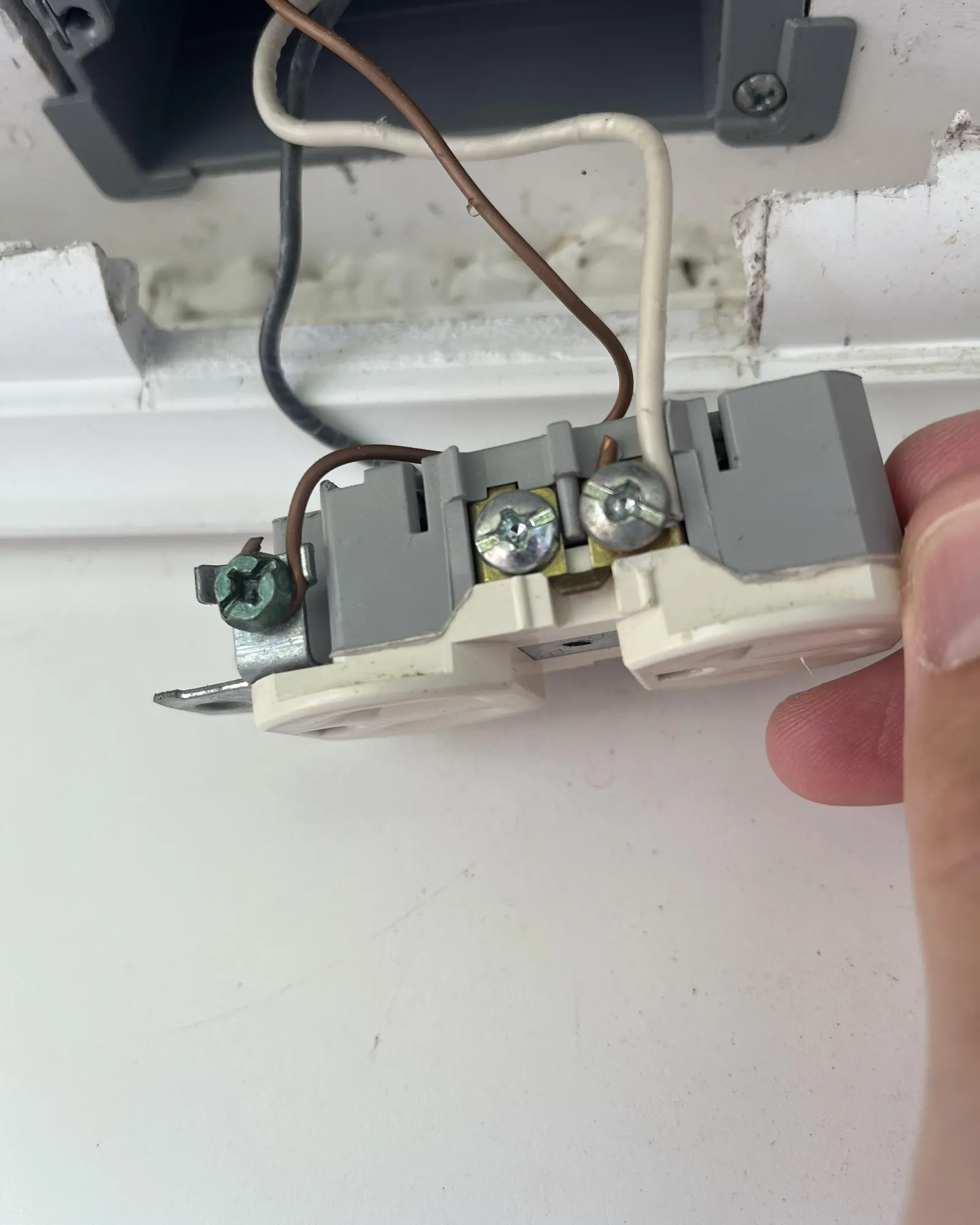
The third cause is water or corrosion inside the box. A missing or cracked cover gasket lets rain in. Over months, the contacts corrode and stop passing current. Insects nesting in the box cause the same result.
A fourth cause is a loose wire at the terminal. This one is real but less common, and it’s the point where you should stop and call an electrician.
Reset the GFCI and test it
This fix is for anyone whose outlet is completely dead — no power at all, no hum, nothing. It costs nothing and takes about two minutes.
First, find every GFCI device on the circuit. Look on the dead outlet itself. If it’s not there, check nearby outlets, the garage, the bathroom, and the breaker panel. One GFCI can protect up to several outlets downstream, so the tripped device may be far from the dead one.
Press RESET firmly until it clicks. If it won’t stay in, that’s a sign of a real fault — stop there and read the next section.
Once it resets, test it. Plug in a small lamp or a phone charger and confirm power. Then press TEST. The outlet should go dead, and RESET should pop out. That proves the GFCI is actually protecting you. If TEST does nothing, the device has failed and needs replacing.
One safety note: a GFCI that trips again within minutes is telling you something. Don’t keep resetting it. Moisture or a wiring fault is present, and repeated resets hide a real hazard. Call a licensed electrician at that point.
Check the breaker and the cover
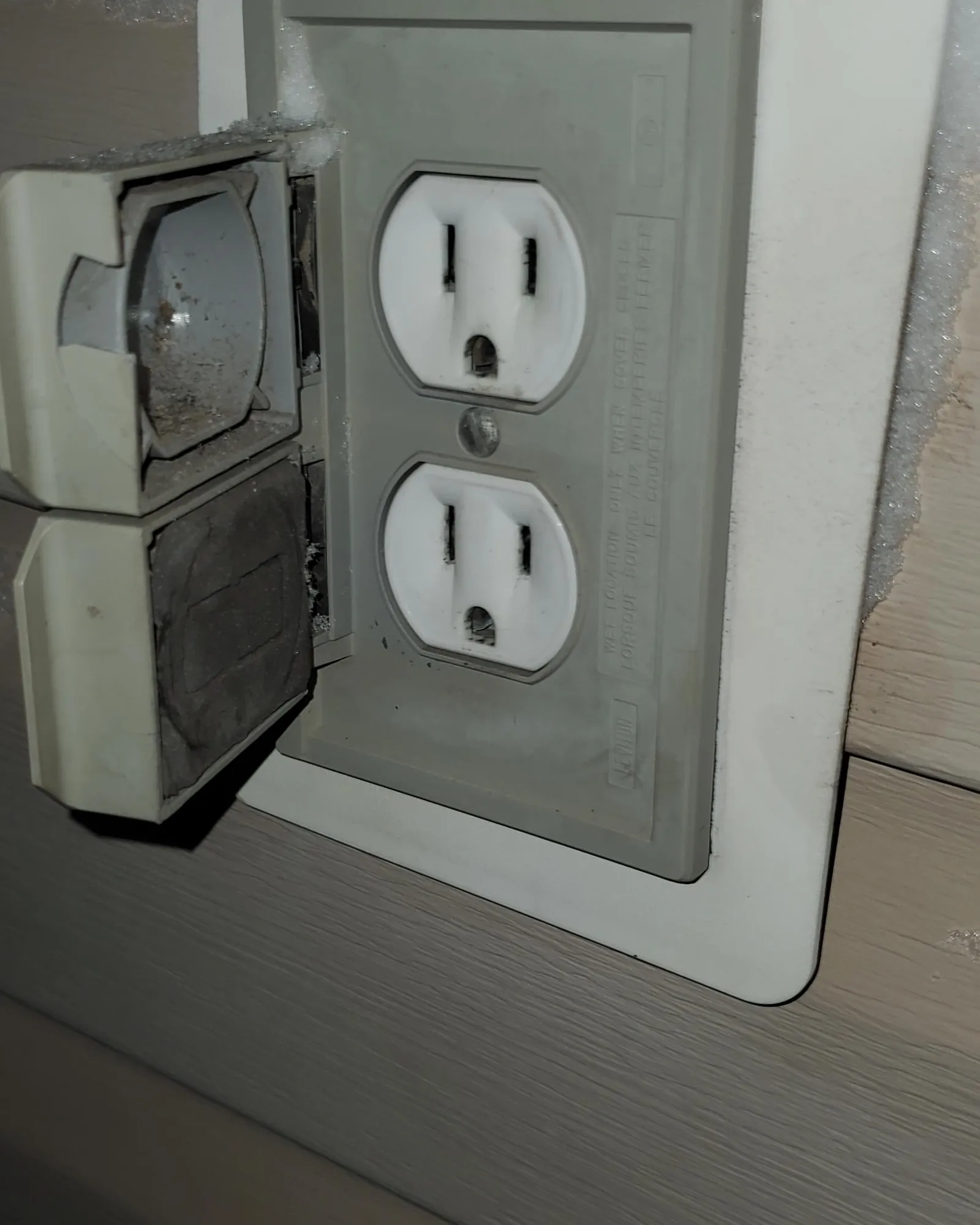
This fix is for outlets that stay dead after a GFCI reset, or for outlets with no GFCI on the circuit at all. It’s a different lever: you’re working at the panel and at the box exterior, not at the device face.
Go to your breaker panel. Find the breaker labeled for outdoor, garage, or patio outlets. A tripped breaker sits in the middle position, not fully ON and not fully OFF. Push it fully OFF first, then firmly ON. That single step restores power more often than people expect.
If the breaker trips again right away, stop. Something on that circuit is drawing too much current or has a short. Don’t tape the breaker on or swap in a bigger one — that’s how house fires start.
Next, look at the outlet’s weatherproof cover from outside. The cover should close fully with a gasket that’s soft, not cracked. If the gasket is hard or missing, replace the cover with an “in-use” type rated for wet locations. A cover that can’t close over a plugged-in cord lets rain straight in.
You can also check for obvious water inside by looking through the slots with a flashlight — never with a finger or a tool. If you see standing water or heavy green corrosion, stop and call an electrician.
When to replace the outlet or call an electrician
This fix is for the harder cases: an outlet that’s old, corroded, or repeatedly tripping. It’s worth the effort when the outlet is 10 or more years old, when you see rust or burn marks, or when a GFCI won’t reset at all.
Replacing an outdoor GFCI receptacle is a job a confident DIYer can do — but only with the breaker OFF and a tester confirming no power at the wires. If you’re not sure you can confirm that, don’t start. A licensed electrician should do it. In most US states, that work legally requires a licensed electrician or a permit, and your local building department can tell you which applies to you.
Water damage inside the box, a loose terminal, or a breaker that trips on its own are all electrician jobs. So is any outlet that feels warm, smells burnt, or shows scorch marks. Those are signs of arcing, and arcing starts fires.
Replacing the outlet itself is usually cheaper than a service call, but only if you’re certain about the wiring. If the box has two hot wires or you see aluminum wiring, call a professional. Aluminum wiring needs special connectors and is a known fire risk.
What not to do when an outdoor outlet dies
-
Keep pressing RESET over and over. If it trips again within minutes, a real fault exists. Repeated resets hide the problem and can overheat the device. Press it once. If it holds for an hour with nothing plugged in, plug in one item and watch. If it trips with that single item, the item is the fault. If it trips with nothing plugged in, the wiring is.
-
Swap in a bigger breaker. A larger breaker doesn’t fix an overload — it removes the protection that stops wires from overheating. That’s a fire risk, not a fix. The breaker size is set by the wire gauge behind it, not by what you plan to plug in. Match the number on the old breaker exactly.
-
Wrap the outlet in plastic or tape. This traps moisture inside and speeds up corrosion. Use a proper in-use cover instead. A bubble cover costs a few dollars and lets cords stay plugged in while the lid closes.
-
Ignore a warm or buzzing outlet. Heat and noise mean current is escaping where it shouldn’t. Unplug everything and call an electrician. Warm isn’t the same as slightly sun-warmed by the afternoon; if the face plate is hot to a bare hand after ten seconds, stop using it.
-
Assume the dead outlet is the broken one. The tripped GFCI is often on a different outlet or in the garage. Test the whole circuit before you replace anything. Check every GFCI on that circuit first, then the breaker panel. Only after both come back clean is the outlet itself the suspect.
Stop it from happening again
Outdoor outlets fail on a schedule, and most of that schedule is set by water and wear. A few habits push the failure date out by years.
| If you’re doing this | Do this instead | Why |
|---|---|---|
| Leaving cords plugged in year-round | Unplug when not in use and close the cover | Keeps rain and insects out of the slots |
| Using a flip cover over a plugged cord | Install an in-use (bubble) cover | A flip cover can’t close over a cord, so water gets in |
| Ignoring a tripped GFCI for weeks | Reset it and test it monthly | A GFCI that sits tripped can fail silently |
| Painting over the outlet or cover | Tape off the outlet before painting | Paint seals the cover shut and traps moisture |
| Never testing the GFCI | Press TEST once a month | The manufacturer’s own instructions call for monthly testing |
Test each outdoor GFCI monthly by pressing TEST, then RESET. It takes ten seconds. If it won’t reset, replace it — a GFCI that can’t trip isn’t protecting anyone.
Frequently asked questions
Why is my outdoor outlet not working but my indoor outlets are fine?
The outdoor outlet is almost certainly on its own circuit or has its own GFCI protection. That’s why indoor outlets stay live while the outdoor one dies. Check the GFCI on the outdoor outlet first, then the breaker labeled for outdoor or garage use. If both are fine, the outlet itself has likely failed from moisture or age.
Can I just replace the outdoor outlet myself?
Yes, if you’re comfortable working with basic wiring and can confirm the power is off with a tester. Turn the breaker off, test for voltage, and swap the receptacle for a GFCI-rated outdoor model. If you can’t confirm zero voltage, or you see aluminum wiring or two hot wires, hire a licensed electrician. In many areas, a permit is required.
How long do outdoor outlets usually last?
Check the gasket each spring and replace it if it’s cracked or stiff.
Is it safe to use an outdoor outlet after it gets wet?
No — unplug everything and let it dry completely before you use it again. If the GFCI tripped, that’s the device doing its job. Don’t reset it while the outlet is still wet. Once it’s dry, reset the GFCI and test it. If it trips again right away, moisture is still inside and you should call an electrician.
What happens if a GFCI won’t reset?
A GFCI that won’t reset has either failed internally or is sensing a real ground fault. First, unplug everything from the outlet and try again. If it still won’t reset, the device is likely dead and needs replacing. If a new GFCI also won’t reset, there’s a wiring fault in the circuit — that’s an electrician’s job, not a DIY one.
How often should I test an outdoor GFCI outlet?
Once a month, per the manufacturer’s instructions printed on the device. Press TEST — the outlet should go dead and the RESET button should pop out. Then press RESET to restore power. If TEST does nothing, the GFCI has failed and offers no protection. Replace it before using the outlet again.
Why does my outdoor outlet keep tripping when it rains?
Water is getting into the box or the cover gasket has failed. Rain bridges the contacts inside and creates the tiny current leak a GFCI is designed to catch. Check the cover gasket first — that’s the usual culprit. If the gasket is fine and it still trips in rain, water is entering through the box itself, and an electrician should reseal or replace it.
Conclusion
A dead outdoor outlet is usually a tripped GFCI or breaker, and both are things you can check in a few minutes without any tools. Reset, test, and look at the cover. When a GFCI won’t stay reset, when a breaker trips twice, or when you see heat, burn marks, or water inside the box — that’s where your part ends and a licensed electrician’s begins.