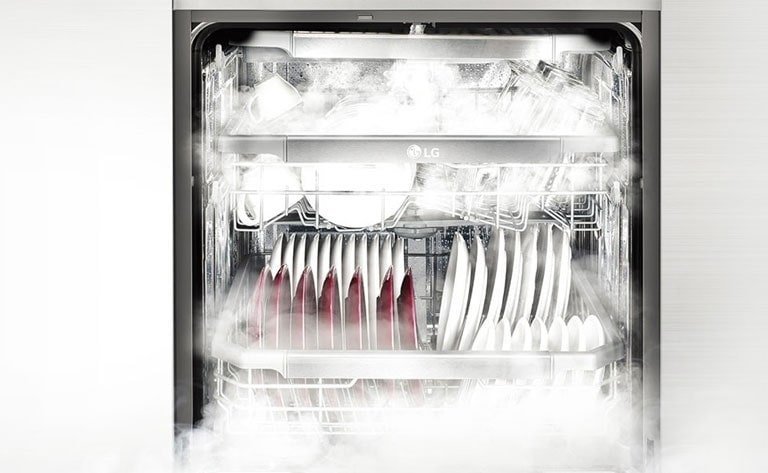
If your lg dishwasher isn’t cleaning dishes, the most common cause is a blocked or dirty filter at the bottom of the tub. Pull out the lower rack, twist the filter out, rinse it under warm running water, and check the spray arms for food stuck in the holes. That fixes most weak-wash complaints in one go.
Why your LG dishwasher isn’t cleaning dishes
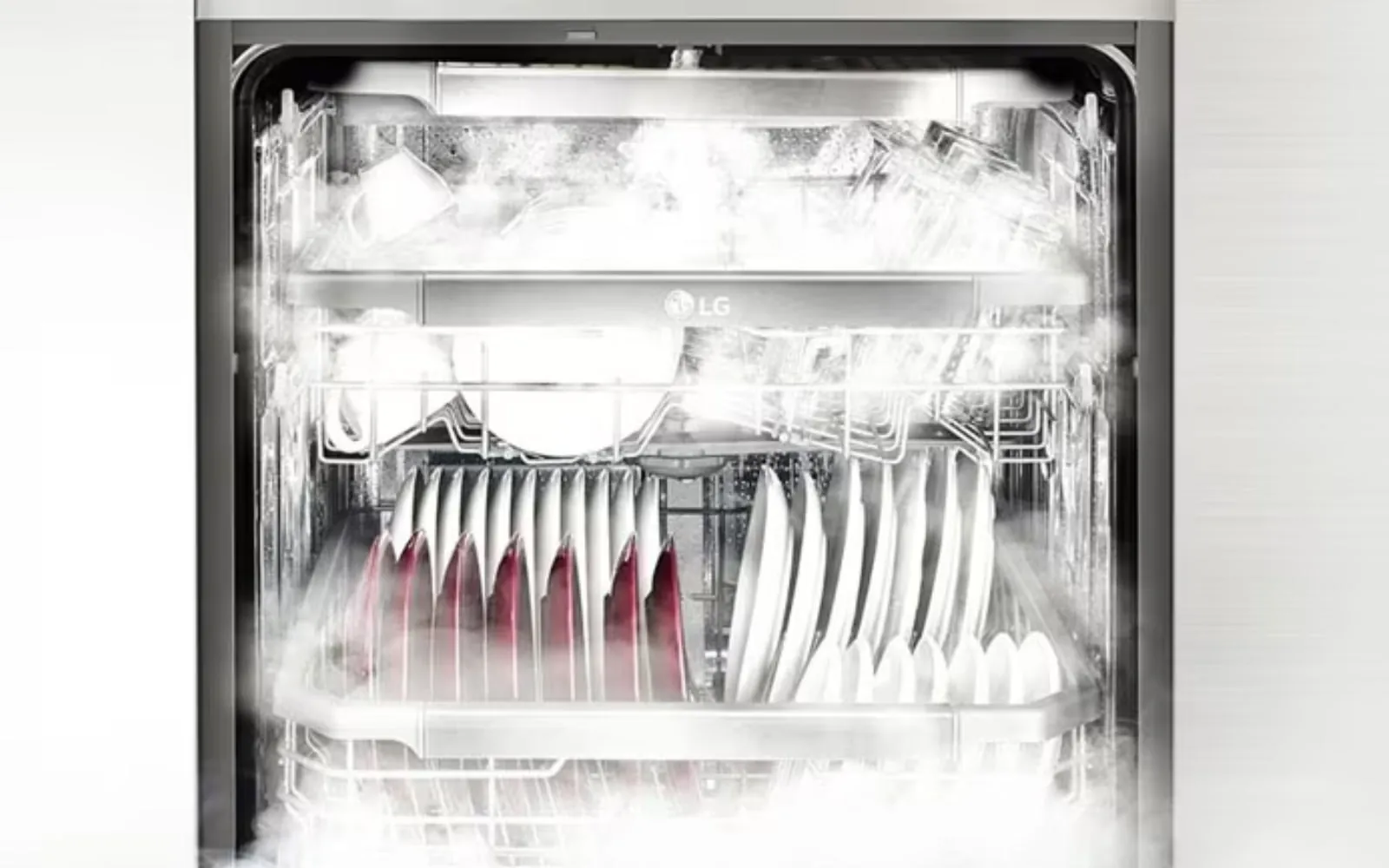
Dishes come out dirty when water can’t reach them, when the water itself is wrong, or when the cycle never gets hot enough to do its job. Those three things cover almost every case, and each one leaves a different signature on the plate.
The first cause is blocked water paths. The filter catches food, but when it’s packed solid, dirty water recirculates instead of draining. Spray arm holes clog with rice, seeds, and glass grit. A loaded rack with plates touching can also block the arm from spinning at all.
The second is water that’s too cool or too hard. Most LG cycles rely on the household water heater to supply hot water at the tap. If the line runs cold, the detergent never fully dissolves. Hard water leaves a white film that looks like soap residue but is actually mineral scale.
The third is detergent and rinse aid. Pods placed in the wrong spot, old powder that’s gone clumpy, or an empty rinse aid reservoir all change the result. Rinse aid is what stops water from drying in spots on glass.
One more thing worth checking: LG publishes a cycle guide and a troubleshooting page for each model, so the exact behavior of your machine is documented there. If your model has a specific error code or a filter design that differs, that’s where to confirm it.
Safety: Inside a mains-powered machine, the parts behind the outer cover can hold a dangerous electrical charge even after it has been unplugged — that’s why they sit behind a cover. Opening the housing, or testing or replacing anything behind it, is a job for a qualified technician, never a home repair.
Clean the filter and spray arms first
This is the fix for anyone whose dishes come out gritty, or who finds standing water and a smell at the bottom of the tub. It costs nothing and takes about ten minutes.
- Pull the bottom rack all the way out.
- Twist the cylindrical filter counterclockwise and lift it out. On most LG models there’s a flat mesh filter underneath it too — lift that as well.
- Rinse both under warm running water. Use a soft brush and a drop of dish soap on the mesh. Don’t use a wire brush; it tears the mesh.
- Check the two spray arms. Spin them by hand — they should turn freely. Hold each up to a light and look through the holes.
- Clear blocked holes with a toothpick or a paper clip. Rinse the arm.
- Wipe the door gasket and the area around the detergent dispenser.
You’ll know it worked when the filter runs clear and the arms spin without catching. If the arms wobble or a clip is broken, that’s a part replacement, not a cleaning job — order it from LG’s parts site for your model number.
Run a hot cycle with the right detergent and rinse aid

This one is for dishes that come out greasy, cloudy, or coated in a white film even though the filter is clean. The lever here is chemistry and temperature, not mechanics.
Fill the main wash cup with a quality powder or gel, or drop one pod in the tub floor — not in the dispenser — if your model’s manual says to. Add rinse aid to the reservoir until the indicator shows full. Most reservoirs take roughly 3 to 4 ounces and last about a month of daily use.
Before starting, run the kitchen tap until the water is genuinely hot. That takes 30 to 60 seconds in most homes. Then choose the heaviest cycle your model has, and select the extra-dry or high-temp wash option if it’s offered.
Hard water is the case where this fix alone won’t do it. If you see white scale on the heating element or the tub walls, you likely need a water softener or a dishwasher-specific descaler. Your water utility publishes a hardness figure for your area — that number tells you which camp you’re in.
When to call a technician instead
The harder cases are the ones where the machine runs a full cycle and the dishes come out cold and still wet, or where you hear the wash motor but see no water moving. That points to a circulation pump, a heater, or a control board — none of which a home user should touch.
The heating element and the pump sit behind the lower panel and the tub. A technician has the meters and the service manual to test them properly. LG’s own support line and its authorized service network are the right route, and your model’s rating plate — inside the door edge or on the side — gives them the number they need.
Is it worth it? If the machine is relatively new and the repair is a pump or heater, a repair usually beats a new unit. If the tub is cracked, the door seal is warped, or the control board has already been replaced once, put the money toward a new dishwasher instead. Get the quote first, then decide.
Popular dishwasher advice that backfires
-
Rinsing every dish before loading. Modern detergents need food soil to activate. A fully rinsed load can leave the detergent working on nothing, and some sensors read the water as clean and shorten the cycle. Scrape solids into the trash and leave the rest. If a dish has dried-on egg or cheese, a short soak beats a full rinse.
-
Packing the racks tight “to save a cycle.” Water can’t reach the middle of a packed row. Plates should face the center and never touch each other. Leave a finger’s width between items and you’ll still fit the same number of place settings.
-
Using regular hand dish soap. It foams far more than dishwasher detergent, and the foam can overflow the tub and reach the electronics. Use only detergent made for dishwashers. If you’re out, wait — a sink of hot water and a sponge costs less than a service call.
-
Skipping rinse aid because the dishes “look fine.” Rinse aid is what breaks the surface tension so water sheets off instead of drying in spots. Without it, glass comes out cloudy even on a clean cycle. Hard water makes the clouding worse and faster.
-
Running the shortest cycle for everything. Quick cycles use less water and lower temperatures. Greasy or baked-on loads need the heavy cycle to get clean. Match the cycle to the load, not to the clock.
Stop the problem coming back
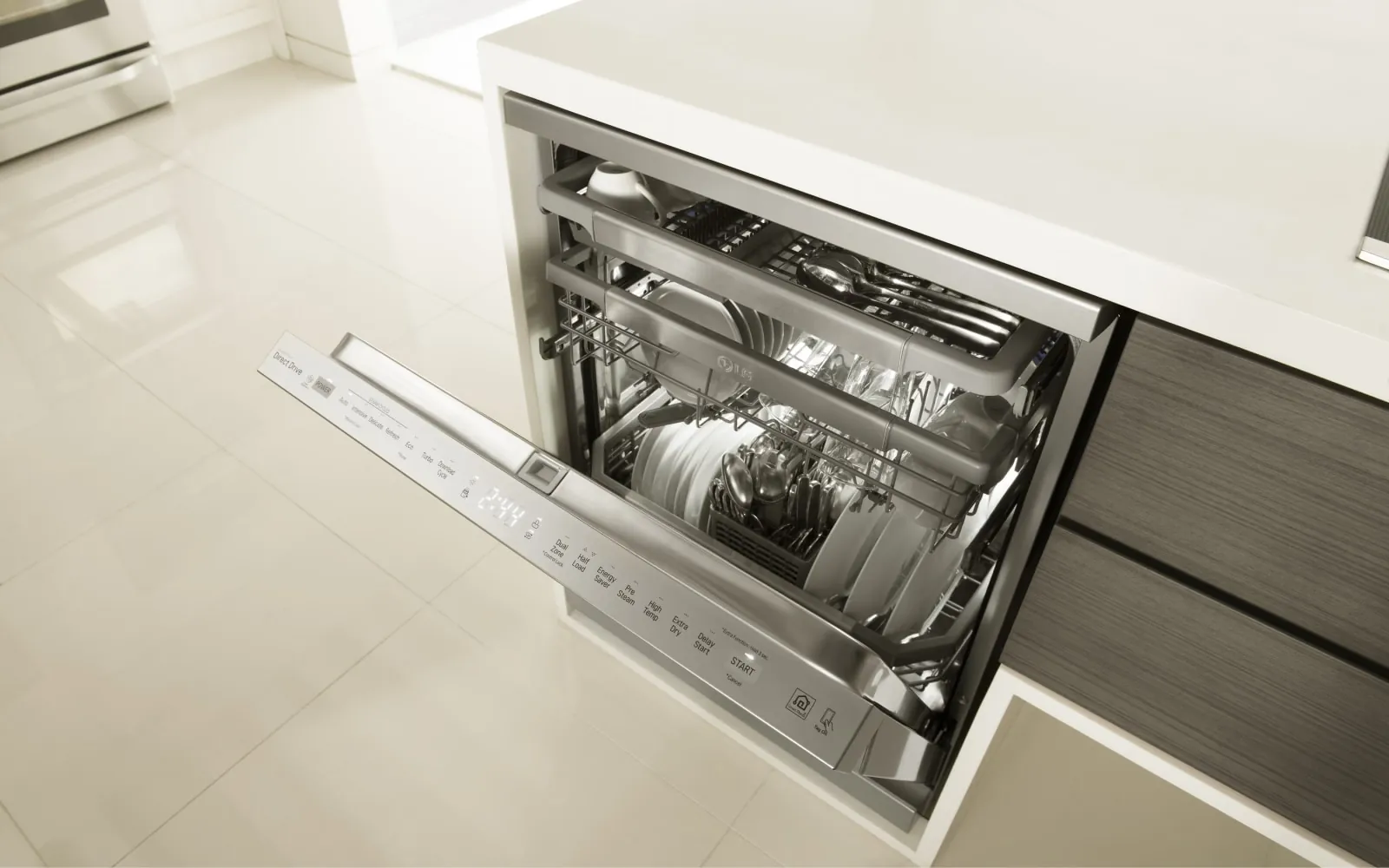
The trick is to change a few habits rather than fix the machine over and over. Most repeat problems come from the same three or four routines.
| If you’re doing this | Do this instead | Why |
|---|---|---|
| Loading without scraping | Scrape solids into the trash, don’t rinse | Keeps the filter clear without starving the detergent |
| Running the filter under the tap once a month | Rinse the filter weekly, deep clean monthly | Food film builds faster than most people expect |
| Letting the tap run cold | Run hot water at the sink first | The cycle starts with hot water, not cold |
| Using whatever detergent is on sale | Match detergent to your water hardness | Hard water needs more detergent and rinse aid |
| Ignoring the salt or softener light | Refill when the indicator shows low | Scale is the main cause of cloudy glass over time |
| Stacking bowls face-up | Load bowls and cups face-down and tilted | Water pools in an upright bowl and never drains |
Frequently asked questions
Why is my LG dishwasher not cleaning the top rack?
The top rack gets water from the upper spray arm, which is fed through a channel in the middle of the machine. If that channel is blocked, or the upper arm’s holes are clogged, only the bottom rack gets clean. Pull the upper arm off, rinse it, and check the feed tube for debris. Also check that tall items in the lower rack aren’t blocking the arm’s rotation.
How long should an LG dishwasher cycle take?
A normal cycle runs about 2 to 2.5 hours on most LG models, and heavy or sanitize cycles run closer to 3 to 4 hours. These times assume a standard cycle with heated dry. If your cycle finishes in under an hour, it’s likely on a quick or rinse-only setting, which won’t clean a full load.
Can I use vinegar to clean my LG dishwasher?
Yes, for the tub and the racks. Put a cup of white vinegar in a dishwasher-safe bowl on the top rack and run a hot cycle with no dishes. Don’t put vinegar in the rinse aid reservoir — it can damage the seal over time. For scale on the heating element, a citric-acid dishwasher cleaner made for the purpose works better.
Is it safe to keep using the dishwasher if the filter is broken?
No. A broken or missing filter lets food particles into the pump, and that can jam the impeller or block the drain. Stop using the machine until the replacement filter arrives. Order it by your model number from LG’s parts page — a filter that doesn’t seat properly won’t do the job either.
Why does my LG dishwasher leave a white film on glasses?
That film is usually hard-water scale, not leftover soap. Check your water hardness from your utility’s published report. If it’s high, add rinse aid every fill, use a detergent rated for hard water, and run a descaler cycle monthly. If the film wipes off with a little vinegar, it’s scale. If it doesn’t, it may be etching from too much detergent.
What happens if I never clean the filter?
The machine keeps running, but performance drops steadily. Water recirculates through the trapped food, so dishes come out gritty and the tub starts to smell. Over time the pump works harder and the drain can clog. A weekly rinse takes under a minute and prevents all of it.
How often should I clean an LG dishwasher filter?
Rinse it regularly, and do a deeper clean with warm soapy water as needed. How often depends on your use, so check the owner’s manual for guidance. If you scrape rather than rinse your plates, less frequent cleaning is enough. If you load heavily soiled pots and pans often, check it more often. The filter is the single biggest factor in how well the machine cleans.
Conclusion
A dishwasher that stops cleaning is usually telling you something simple — the filter, the water temperature, or the detergent. Work through those three before you spend money on a repair. If the machine runs cold and silent through a full cycle, that’s your signal to call LG service and let a technician take it from there.