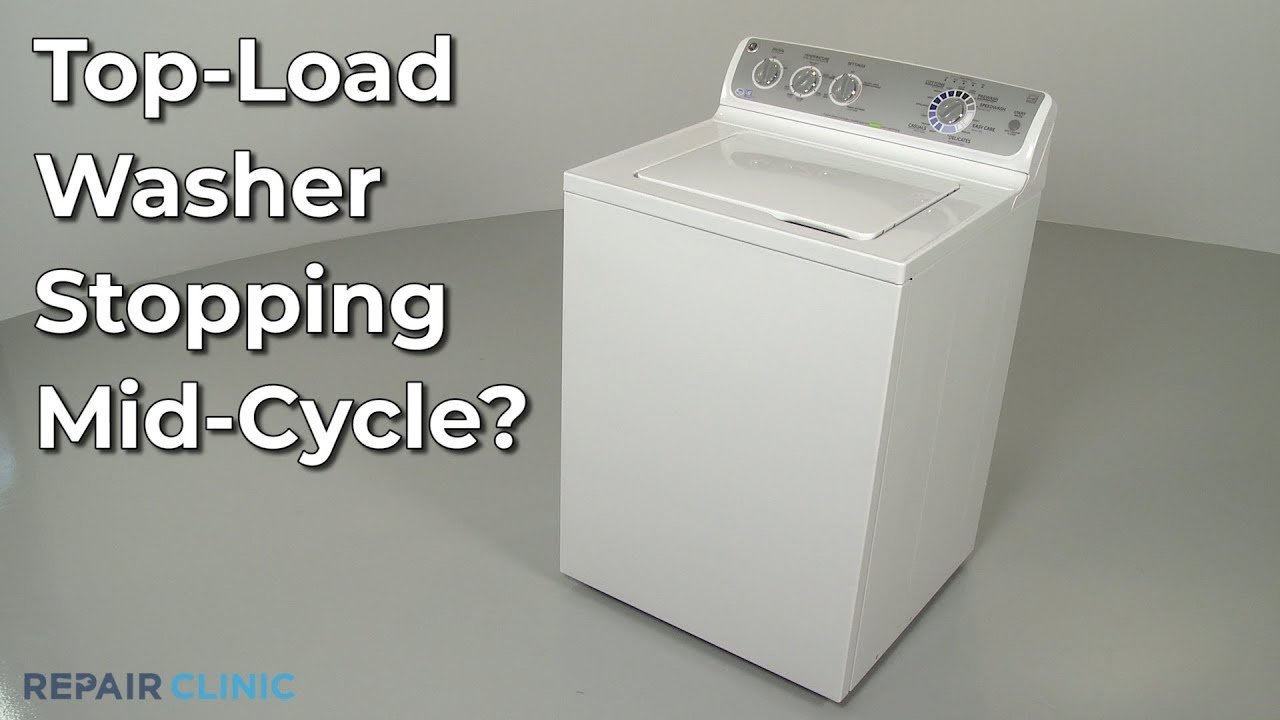
Why a washing machine stops mid cycle

A washing machine that stops mid cycle is usually dealing with an unbalanced load or a drain problem — those two account for most cases a home user can actually fix.
The fastest way to confirm which one you have is to look at the display or listen: an error code, a blinking light, or standing water in the drum each point to a different cause.
Check your model’s error code list in the manual or on the maker’s official support page before you do anything else.
If the drum is full of water and the clothes are soaked, the machine couldn’t drain. Pull the drain hose where it meets the standpipe and look for a kink, then clean the lint filter on the front or the coin trap behind the lower panel. A filter packed with lint and hair is the single most common reason a washer quits with water still sitting in it.
If the drum is empty and the load is bunched to one side, it’s balance. Stop the cycle, open the lid, and spread the items evenly around the agitator. Washing one heavy item alone — a bath mat, a comforter — will trip the same sensor every time. Add two towels to balance it.
Safety: Inside a mains-powered machine, the parts behind the outer cover can hold a dangerous electrical charge even after it has been unplugged — that’s why they sit behind a cover. Opening the housing, or testing or replacing anything behind it, is a job for a qualified technician, never a home repair.
Common Causes, Ranked by How Often They’re the Real One
| Cause | How common | How to confirm it | Fix it yourself? |
|---|---|---|---|
| Unbalanced load | Very common | Drum thumps, then pauses | Yes |
| Clogged drain filter | Common | Water left in drum | Yes, with care |
| Kinked drain hose | Common | Hose bent behind machine | Yes |
| Door or lid not latched | Sometimes | Door light stays on | Yes |
| Faulty door lock switch | Less common | Door won’t click shut | No |
| Control board fault | Rare | Random stops, no pattern | No |
| Motor or belt issue | Rare | Burning smell, no spin | No |
The pattern matters more than any single row. A washer that stops at the same point every time is telling you something different from one that stops at random moments.
An Unbalanced Load Is the Most Likely Cause
An unbalanced load means the clothes have clumped to one side of the drum, and the machine’s sensor cuts the spin to protect itself from shaking apart. It happens most with a single heavy item — a bath mat, a duvet, or one pair of jeans — because there’s nothing else to balance against it. The washer fills, starts to spin, feels the wobble, and stops.
To confirm it, open the door once the cycle pauses and look. If everything sits in one lump, that’s your answer. On a front loader, you’ll often see the drum tilted or the clothes stuck to one side.
The fix is simple. Pull the items out, shake them apart, and reload them loosely around the drum. Add one or two similar-sized items if you’re washing something heavy alone. Close the door and press start — the machine will usually resume or restart the spin.
Most washers pause for 1-3 minutes before deciding whether to retry the spin. If yours stops and stays stopped, it’s waiting for you to fix the balance, not broken.
This costs you a few minutes, nothing more. If the same load keeps unbalancing, your machine may be sitting on an uneven floor — check that all four feet touch the ground and the machine doesn’t rock when you push a corner.
Water That Won’t Drain Keeps the Cycle Frozen
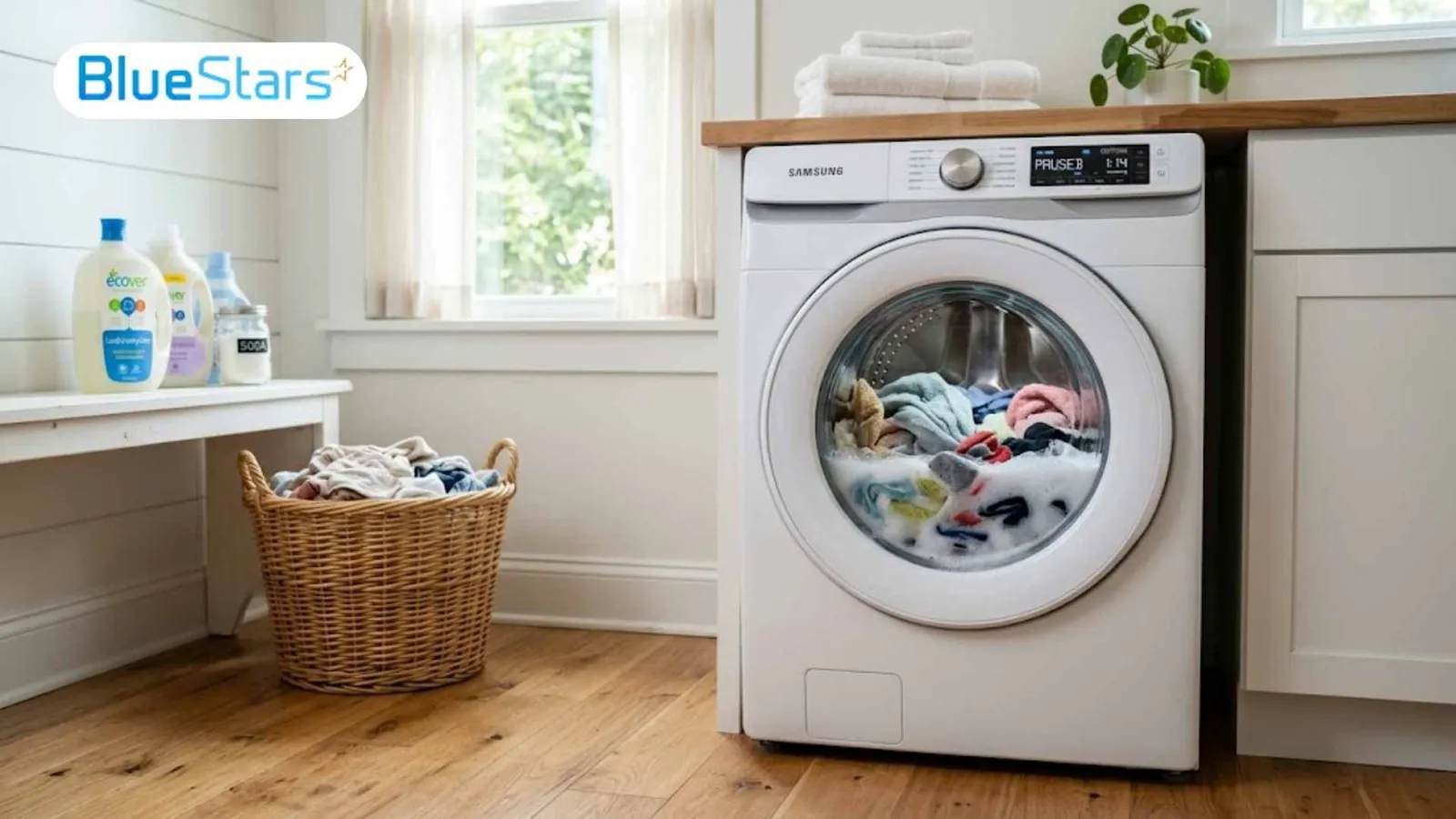
A drain problem shows up differently: the washer stops with water still sitting in the drum, and the door stays locked. The machine can’t move to the spin stage until the water is gone, so it waits — sometimes for hours.
You can tell this apart from an unbalanced load in one look. Unbalanced load: no water, door opens. Drain problem: standing water, door locked, often a humming sound as the pump tries and fails.
The most common culprit is the drain filter, usually behind a small panel at the bottom front of a front-loading machine. Put a shallow tray and old towels down first — water will come out. Unscrew the filter slowly, pull out lint, coins, hair pins and anything else trapped there, then rinse it and screw it back.
If the filter is clean, check the drain hose at the back. A hose that’s kinked, crushed against the wall, or pushed too far into the standpipe will block flow. Straighten it and make sure the end sits no more than about 6 inches into the pipe — deeper than that can siphon water back.
When the Door Lock or Sensor Is the Problem
A door that never fully latches tells the control board it isn’t safe to spin, so the cycle stops. The clue is a door or lock indicator light that stays on, blinks, or never comes on at all — even after you’ve pushed the door firmly shut.
Try this first: press the door until you hear a distinct click, then start a short cycle. If it runs, you had a loose latch. If it stops again at the same point, the lock switch itself may be worn. That part usually sits inside the door frame.
Replacing a door lock switch is a job for a technician on most models. It involves removing the door seal or front panel, and getting the wiring wrong can damage the control board. This is where you stop and call someone.
One more thing worth checking: some machines won’t start if the child lock is on. Look for a lock icon on the display and hold the button your manual names for 3 seconds to release it. That single step solves a surprising number of “broken” washers.
Less Common Reasons a Washer Quits Mid Wash
These are rare, but each has a clear tell.
- A faulty pressure switch — the machine can’t sense water level, so it never advances. Clue: it stops right after filling, every time.
- A worn drive belt — the drum won’t turn even though the motor runs. Clue: you hear the motor but see no movement.
- A tripped breaker or loose outlet — power cuts out mid spin. Clue: the display goes completely dark.
- A blocked water inlet screen — the fill is too slow and the machine times out. Clue: long fill times before the stop.
- A control board fault — random stops with no pattern and no error code. Clue: the machine behaves differently every cycle.
The last two need a qualified appliance technician. A control board replacement involves live electrical components, so don’t open the housing yourself. Don’t open the housing yourself.
What Fixing It Actually Takes
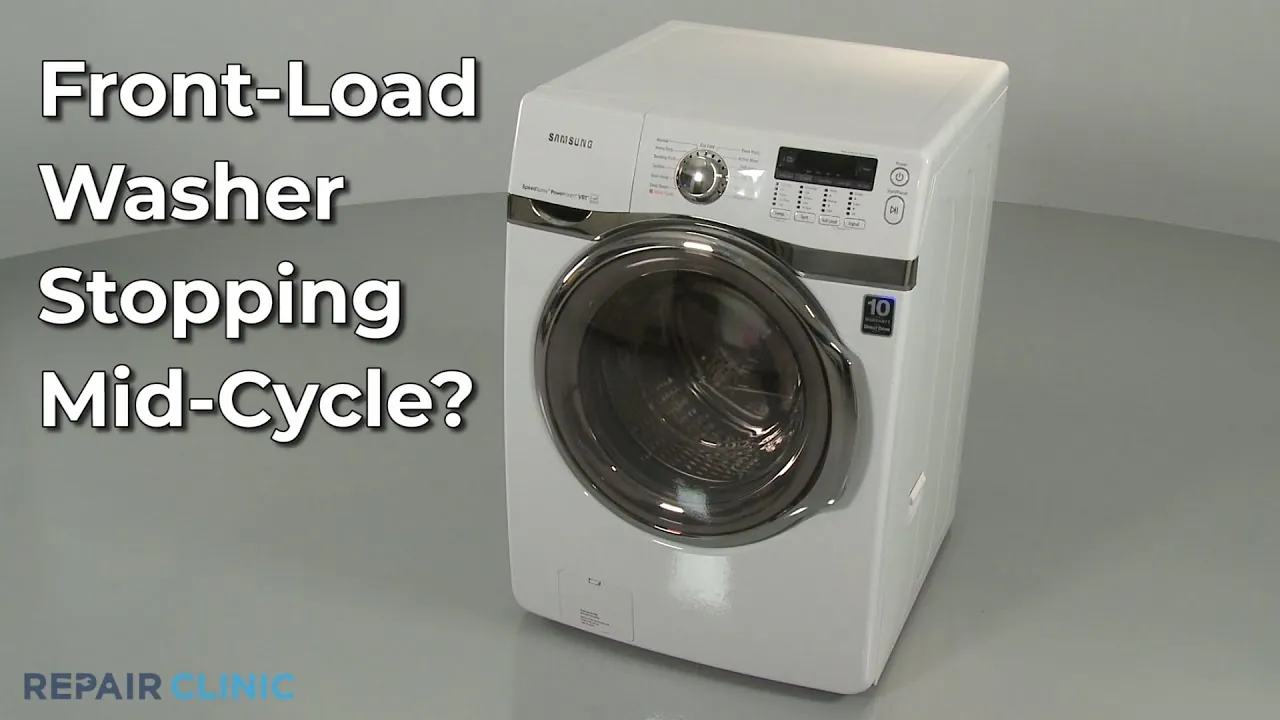
Most fixes here are small jobs. Clearing an unbalanced load takes 5 minutes and no tools. Cleaning a drain filter takes 15-20 minutes, a shallow tray, and old towels. Straightening a drain hose takes 5 minutes and maybe a flashlight.
A door lock switch or control board is a different scale — think of it like the difference between changing a light bulb and rewiring a room. The part itself is a small fraction of what you’ll pay; most of the cost is the technician’s time and the call-out fee. That fee varies a lot by region, so ask for a flat quote before anyone comes out.
To get a real number, call two local repair shops, give them your model number (it’s on a sticker inside the door or on the back panel), and describe the exact symptom. Ask whether the quote includes the part and the visit.
If the repair quote lands close to what a basic new machine costs in your area, replacing it’s often the smarter call — especially if yours is already well into its expected lifespan. Check your machine’s age on the serial plate and compare against typical appliance lifespans from ENERGY STAR before deciding.
Related guides
Frequently asked questions
Can a washing machine stop mid cycle and then restart on its own?
Yes, and it’s usually normal. Many machines pause for 1-3 minutes to let an unbalanced load settle, then retry the spin. If it restarts and finishes, there’s nothing to fix. If it stops at the same point every cycle, that’s a real fault worth checking.
Why does my washer stop with water still in the drum?
A drain blockage is the most likely cause. Check the drain filter behind the bottom front panel and the drain hose at the back for kinks. The machine won’t spin until the water is gone, so it waits. Clear the blockage and the cycle will complete.
How long should a washer pause before it keeps going?
A normal pause runs 1-3 minutes while the machine balances the load or checks the water level. Anything longer than 5 minutes with no movement usually means it’s waiting on a blocked drain or a door that hasn’t latched. Check both before assuming a breakdown.
Is it safe to open the door when the cycle stops?
Only if the door unlocks. Most front loaders keep the door locked while there’s water in the drum — that’s a safety feature, not a fault. Never force it open. If the door stays locked after the cycle ends, unplug the machine, wait 10 minutes, and try again.
What happens if I just keep restarting the cycle?
It’ll stop again at the same point if the underlying cause is still there. Restarting doesn’t clear a blocked filter or fix a worn door lock. You’re also adding wear to the motor and pump each time. Fix the cause first, then run a full cycle.
Does it matter which cycle I choose?
Sometimes, yes. Heavy-duty and bulky cycles spin longer and are more sensitive to unbalanced loads. If your machine keeps stopping on those settings, try a normal or quick wash with a balanced load. If it completes fine, the issue is load balance, not the machine.
How often should I clean the drain filter to prevent this?
Every 2-3 months for most households, and monthly if you wash pet bedding, rugs, or heavily soiled work clothes. A clogged filter is one of the top reasons a washer stops mid cycle. It’s a 15-20 minute job with a tray and towels.
When should I call a technician instead of fixing it myself?
Call one when the door lock, control board, motor, or belt is involved. Those repairs need the housing opened and live components handled. For everything else on this list, you can safely do it yourself.
Conclusion
If the drum still won’t spin after you’ve checked the basics, it’s worth calling a technician before you start replacing parts on a guess. Keep a note of what you saw and heard, since that’ll help them pinpoint the fault faster.