
Steam coming out of the dryer vent usually means heat and moisture are escaping where they shouldn’t, and the most common cause is a vent line that’s crushed, clogged, or disconnected. Stop using the dryer until you’ve checked it — a blocked vent is a real fire risk, not just a damp problem. Go outside, find the vent hood on the exterior wall, and feel for strong airflow while the dryer runs on air-fluff. Weak or no airflow confirms a blockage or a broken connection.
What steam coming out of the dryer vent means

Steam at the vent isn’t always a fault. A little visible vapor on a cold day is normal — warm moist air meets cold outside air and condenses. The problem starts when the steam is heavy, constant, or comes with a hot dryer body or a long dry time. The table below matches what you notice to what it usually means.
| What you notice | What it usually means | What to do first |
|---|---|---|
| Heavy steam every load | Clogged or crushed vent line | Disconnect and inspect the duct |
| Dryer body feels very hot | Restricted airflow, heat building up | Stop the dryer, check the vent |
| Clothes still damp after a full cycle | Vent partly blocked | Clean the lint trap and duct |
| Steam inside the laundry room | Duct came loose from the dryer | Reconnect and clamp the duct |
| Burning or musty smell | Lint touching the heater | Stop now, clean the whole line |
| Dryer shuts off mid-cycle | Overheat safety switch tripping | Clear the vent before restarting |
| Steam only on cold days | Normal condensation outside | No action needed if airflow is strong |
| Long dry times, 2+ cycles | Duct run too long or full of lint | Shorten or clean the run |
The vent line is clogged or crushed
Lint builds up inside the duct over time, and every load adds a little more. The duct then can’t move air fast enough, so heat and moisture back up and puff out as steam. A crushed or kinked flexible foil duct does the same thing — the air has nowhere to go.
The check takes under a minute and needs no tools. Run the dryer on air-fluff for two minutes, then hold your hand at the outside vent hood. You should feel a strong, steady push of warm air. Weak airflow or nothing at all confirms the blockage.
The fix is to pull the dryer out, disconnect the duct, and clear it. A rigid or semi-rigid metal duct is better than the old foil kind because it doesn’t crush. The National Fire Protection Association notes that failure to clean the dryer vent is a leading factor in dryer fires, so this isn’t a job to skip.
You’ll know it worked when the airflow at the hood feels strong and the steam stops. If the duct is plastic or foil and more than a few years old, replace it.
The duct has come loose or the run is too long
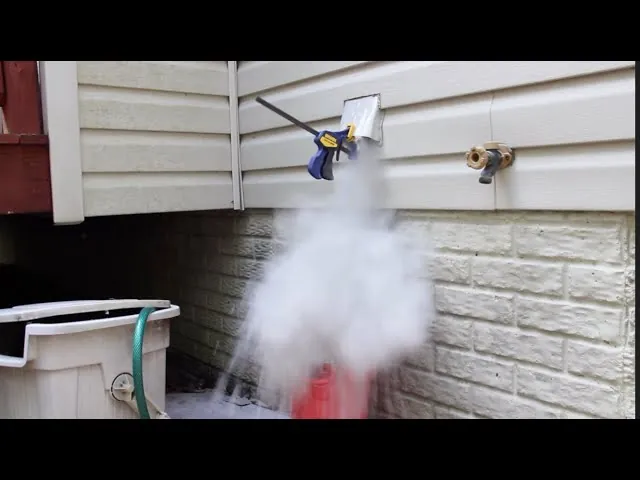
A duct that’s slipped off the back of the dryer dumps all that moist air straight into the room. You’ll see steam and dampness around the machine, and the walls nearby may feel clammy. This is a different problem from a clog — the air is escaping, not blocked.
Check by looking behind the dryer. If the duct isn’t snug on the outlet and clamped tight, that’s your cause. Push it back on and secure it with a metal clamp, not tape alone. Foil tape works as a backup over the seam, but it won’t hold a duct that keeps popping off under heat and vibration.
A duct run that’s too long or has too many bends causes a similar backup. The air has to travel too far and loses its push. Keep the run as short and straight as you can, and count the elbows. Every 90-degree turn costs you airflow, so two or three bends on a short run are fine, while the same bends on a long run will leave the room damp.
Here’s how to tell the two apart: a loose duct shows steam in the room and a disconnected hose. A clogged duct shows weak airflow outside but a connected hose. If the hose is on tight and the outside airflow is weak, it’s a clog. If the hose is off, it’s the connection.
The vent hood or outside flap is stuck
The flap on the outside vent hood can jam shut with lint, paint, or ice. When it can’t open, the air has nowhere to exit, so it backs up and steams. This is less common than a clog, but it’s easy to miss because the problem is outside, not at the dryer.
Check by going outside and pushing the flap with your finger. It should swing open freely and fall shut on its own. If it’s stuck, clear the lint or debris around the hinge. In freezing weather, ice can seal it shut — thaw it and check again.
You can tell this apart from the first two causes by the airflow test. If the duct is clear at the dryer but the outside airflow is still weak, and the flap won’t move, the hood is the problem. The fix is a cleaning, not a new duct.
Some hoods have a bird screen behind the flap. That screen clogs with lint faster than the flap itself, and you can’t see it from the ground. Pull the hood off its mounting screws and check behind the flap before you decide the hood is fine.
A flap that hangs open is the opposite problem, and it matters just as much. It lets cold air, rain, and birds into the duct. If yours never closes, the spring or the hinge pin is gone, and no amount of cleaning will bring it back.
If the flap is broken or rusted, replace the whole hood. They’re cheap and most hardware stores carry them. Match the duct size stamped on the old hood — a 4-inch hood on a 4-inch duct, not a 3-inch one.
When to stop and call a professional
Some vent problems are past a DIY fix. Stop and get help if you see any of these:
- You smell burning or see smoke. This can mean lint is touching the heater — a fire risk. Unplug the dryer and call a technician.
- The dryer trips the breaker or won’t heat. This points to an electrical fault inside the machine. A capacitor can hold a lethal charge even when unplugged, so never open the housing yourself.
- The duct runs through a wall, ceiling, or crawlspace. Cleaning a hidden run needs tools and access most people don’t have. Call a vent-cleaning service.
- You’ve cleaned everything and it still steams. The fault is inside the dryer — a blocked blower wheel or a failing thermostat. That’s technician work.
- The vent run is very long or has many bends. Re-routing a duct is a job for a pro who knows the code for your area.
For anything inside the cabinet — the heating element, the thermal fuse, the blower — call a qualified appliance technician. Don’t open the housing.
One test tells you which side of the line you’re on. If you can reach the entire duct with a brush or vacuum from one end to the other, it’s yours to clean. If any part of the run is sealed behind drywall, you’re in the other category.
A dryer that still shuts off mid-cycle after a full cleaning is the clearest sign the problem isn’t the vent at all. The vent is the easy half. The machine is the half that burns houses down.
Two mistakes cost people the most here. The first is running the dryer “just once more” to finish a load after smelling something hot. The second is opening the cabinet to save a service call, then discovering the capacitor the hard way.
If the dryer is under warranty, call the manufacturer’s line before anyone else touches it. A DIY repair or an outside technician can void the coverage on a machine you already paid for.
Frequently asked questions
Can I use my dryer if steam is coming out of the vent?
No, not until you’ve checked the airflow. A little vapor on a cold day is fine, but heavy steam usually means a blockage or a loose duct. A blocked vent is a fire risk, so run the outside airflow test first. If the airflow is weak, stop using the dryer until it’s cleared.
Why is steam coming out of my dryer vent?
Lint buildup, a crushed or disconnected duct, or a stuck outside flap. All three trap moist air so it backs up and escapes as steam. The most common cause is a clogged line. Check the airflow at the outside hood to find out which one you have.
Is it safe if I only see steam on cold days?
Yes, that’s normal. Warm moist air from the dryer meets cold outside air and condenses into visible vapor. It’s not a fault if the airflow is strong and your clothes dry in one cycle. If the steam is heavy or the clothes stay damp, then check the vent.
How long does it take to clean a dryer vent?
About 30 to 60 minutes for a short, straight run you can reach. A long run through a wall or ceiling can take 2 hours or more, and often needs a pro with a rotary brush. The time depends on the length of the duct and how much lint has built up.
What happens if I ignore the steam and keep drying?
Lint can build up until it touches the heater and catches fire. The National Fire Protection Association reports that dryers cause thousands of home fires each year, mostly from failure to clean the vent. You’ll also see longer dry times and higher energy bills before anything worse happens.
How often should I clean my dryer vent?
Clean the lint trap after every load, and clean the full duct regularly. How often depends on how much you use the dryer and how long the duct run is, so check your owner’s manual for the schedule that fits your machine.
Does it matter if my duct is foil or metal?
Yes, it matters a lot. Rigid or semi-rigid metal duct doesn’t crush and holds its shape, so air moves freely. Foil or plastic flex duct kinks easily, traps lint, and is a fire risk. Replace foil with metal if you can.
What if the steam stops but the dryer still runs hot?
A hot dryer body with weak outside airflow points to a partial clog or a failing thermostat. Clean the duct fully first. If it still runs hot, call a technician — don’t open the machine yourself.
Conclusion
Once you’ve cleared the blockage, run an empty cycle on high heat and watch the outside hood. You should feel a steady, warm breeze pushing through. If it’s still weak, don’t keep guessing — call a vent cleaning pro before your next laundry day.