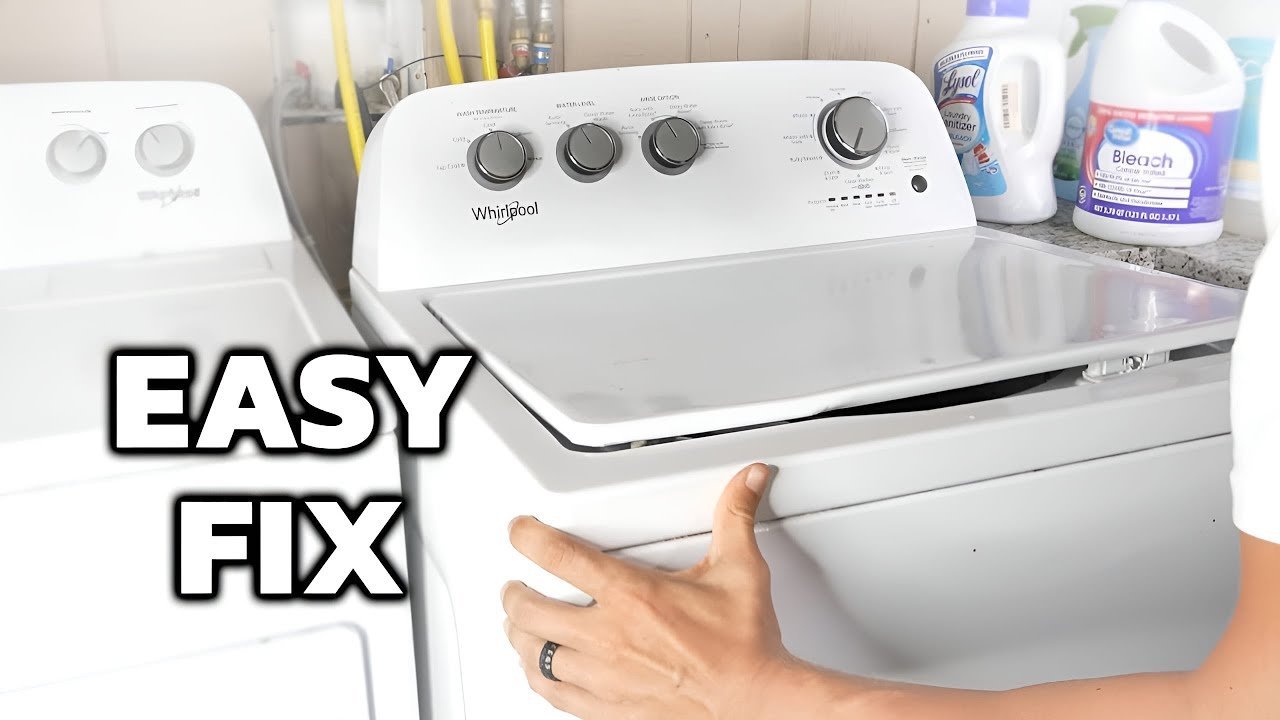
A load that’s too heavy or bunched on one side is the most common reason an Amana washer gets stuck on the final spin. It’s usually safe to keep using the machine, but stop it and check the load before you run it again. Open the lid or door, look at how the clothes sit, and spread them evenly around the drum.
Why your Amana washer gets stuck
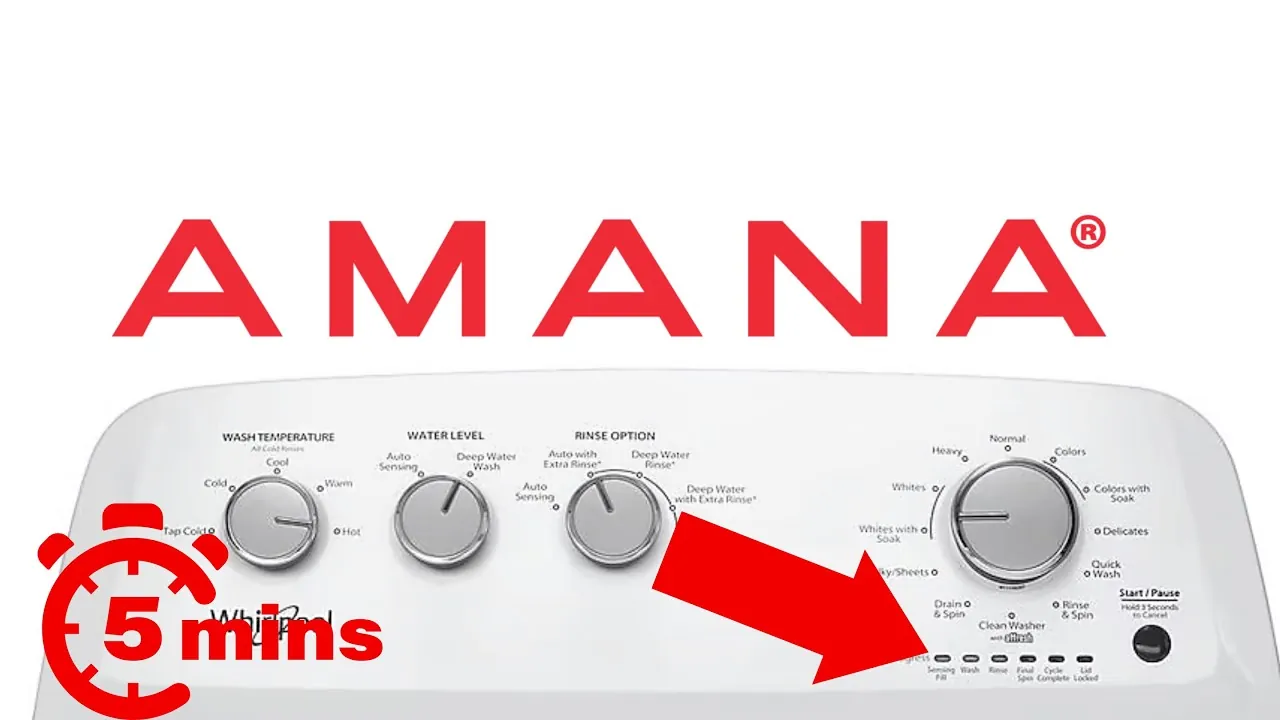
The final spin is the fastest part of the cycle, so it’s the first place a problem shows up. The drum needs to turn at high speed without shaking itself apart. When something stops that, the machine holds the spin and waits.
Here’s what each sign usually points to.
| What you notice | What it usually means | What to do first |
|---|---|---|
| Clothes bunched on one side | Unbalanced load | Stop it, spread the load evenly |
| Washer shakes hard, then stops | Load too heavy or too wet | Remove a few items, restart |
| Water still sitting in the drum | Won’t drain | Check the drain hose for a kink |
| Stuck on the same time, no noise | Control locked or paused | Press Start/Pause again |
| Clothes still soaked after spin | Drain or pump issue | Clean the drain filter |
| Lid open or error code showing | Safety lock triggered | Close the lid fully, restart |
| Happens on every single load | Level or drain problem | Check the feet and the hose |
The pattern matters more than one bad cycle. A single stopped spin is almost always the load. The same stop on every wash points somewhere else.
Too much weight on one side of the drum
When the weight sits on one side, the drum shakes, and the machine cuts the spin to protect itself. This is the most common cause, and it’s the easiest to fix.
The check takes under a minute and costs nothing. Open the lid and look at where the clothes sit. If most of them are piled on one side, or one heavy item like a wet blanket is alone in the drum, that’s your answer.
The fix is simple. Stop the cycle, pull the clothes out, and put them back spread around the drum. Add one or two small items if the load looks thin. Heavy single items like a comforter need two or three towels added to balance the drum.
You’ll know it worked when the washer reaches the end of the cycle without pausing. If it spins through cleanly, the load was the whole problem.
One thing trips people up: a load can look balanced from above and still be heavy on one side, because the drum is deep and the weight settles at the back where you can’t see it. Reach in and feel the back of the drum before you decide.
If the load is spread out and the washer still stops, the imbalance isn’t the cause. Run it again with nothing in it. An empty drum that still cuts the spin points to the machine, not the laundry, and no amount of rearranging will fix that.
Towels are the worst offenders. They hold water, clump together, and stay stuck to the drum wall through the whole wash. Wash them with a couple of lighter items rather than on their own.
Water that can’t leave the drum
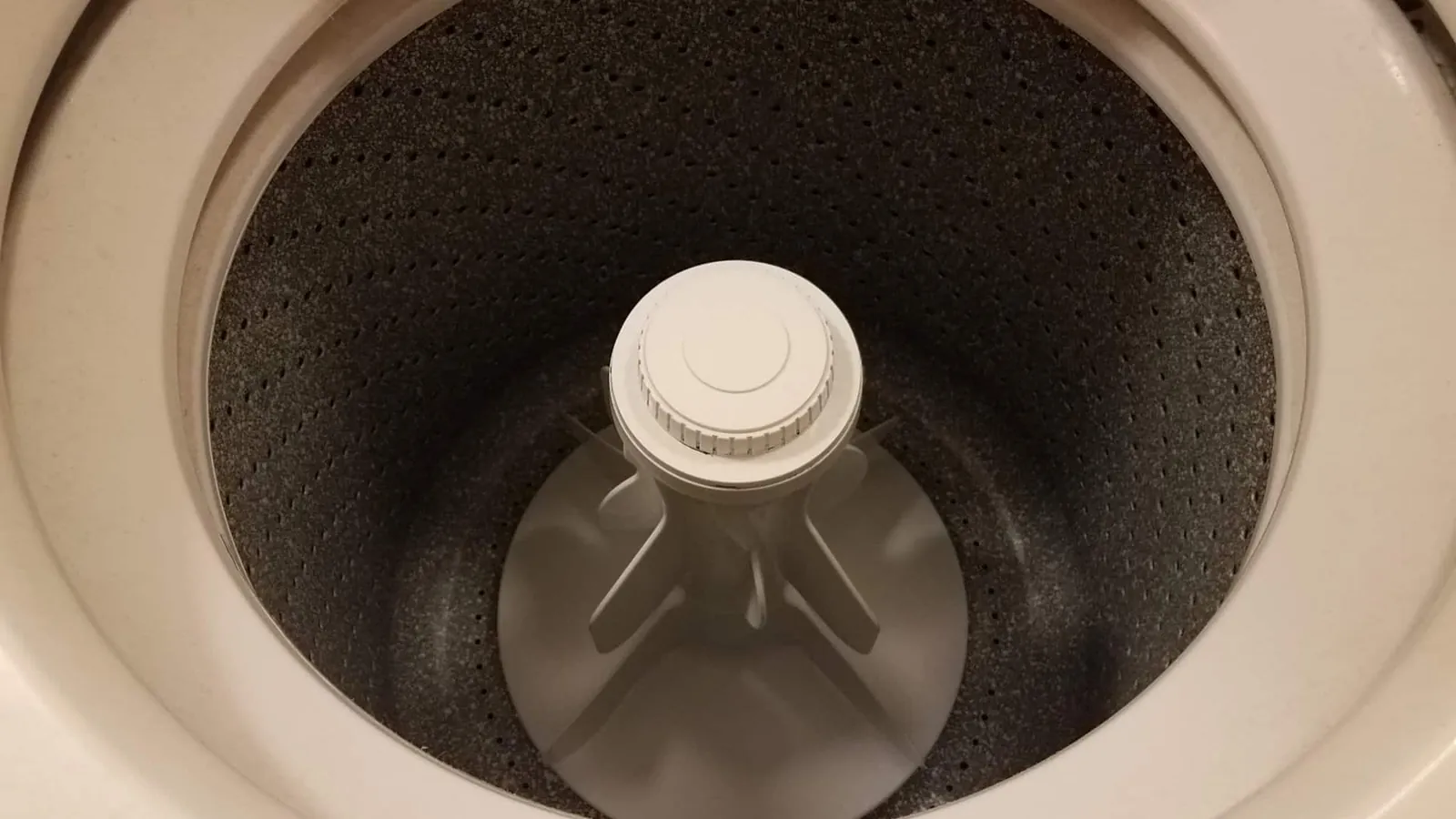
A washer won’t spin fast while water is still inside. The machine drains first, then spins. If the drain is blocked, the spin never starts, and the timer sits on the same number.
This cause looks different from an unbalanced load. An unbalanced load shakes and stops early. A drain problem stays quiet and just hangs there. You’ll often hear the pump running with no water moving.
Check the drain hose behind the machine first. Look for a kink, a squashed bend, or a hose pushed too far into the standpipe. Pull it out a little so water can flow.
If the hose looks fine, find the drain filter. Put a towel down first, because water will come out. Clean out lint, coins, and hair, then close it and run a drain and spin cycle.
The sign it worked is a full drum of water emptying in a few minutes. If the drum still holds water after that, the pump itself may be failing.
One more thing to check before you blame the pump: the standpipe. If the hose sits in a pipe that’s clogged or too narrow, water has nowhere to go and backs up into the drum. Pull the hose out and run a drain cycle into a bucket or laundry sink. If it empties fast that way, the pipe is the problem, not the machine.
The most common mistake here is forcing a spin cycle over and over. Each attempt runs the pump dry against a blockage, and that’s what actually kills it. If the drum won’t drain after one clean filter and one clear hose, stop running cycles and call for service.
A machine that isn’t sitting level
A washer that rocks on the floor will shake hard at high speed. This one shows up on every load, not just big ones, which is how you tell it apart from the first two causes.
Push down on each corner of the machine. If it moves, that foot needs adjusting. Most Amana washers have threaded feet you can turn by hand or with a wrench. Lower the foot until it touches the floor, then tighten the lock nut against the base.
Check the floor too. A washer on a weak or sloped wooden floor will shake no matter how level the feet are.
Test the floor before you blame the feet. Set a level on the floor where the machine sits. If the bubble is off, or the boards give when you step near it, no amount of turning the feet will hold. In that case, move the machine to a solid floor or add bracing under it.
Once the machine sits solid, run an empty spin cycle. No rocking and no early stop means you’ve fixed it. If it still shakes with nothing inside, the problem is inside the machine — that’s a technician’s job.
When to stop and call someone
Stop and get help when the signs point inside the machine rather than at the load or the drain.
- The drum won’t turn by hand. A jammed drum means something has broken or come loose inside.
- You see water on the floor. A leaking machine can damage the floor and the electrics below it.
- A burning smell or smoke appears. Unplug it and leave it alone.
- The washer trips your breaker. A shorted motor or wiring isn’t a home fix.
- The same error code returns after every reset. The control or a sensor has failed.
Everything past this line needs training and tools most people don’t have. A capacitor inside a washer can hold a charge even when the machine is unplugged, so never touch the capacitor terminals yourself. For anything inside the housing, contact a qualified appliance technician or Amana’s own service network.
One test separates the two cases cleanly. Unplug the machine, then try to turn the drum by hand. If it spins freely, the problem is in the water or the controls and a technician can still fix it cheaply. If it won’t budge, stop turning it.
A washer that leaks only while filling usually has a loose hose clamp, which is a genuine do-it-yourself repair. Water that appears mid-cycle, or that keeps coming after you shut the supply valves, is coming from inside the tub seal.
Write down the error code before you call. Codes clear when the power cuts, and a technician who knows the code arrives with the right part instead of charging you a second visit to order it.
Related guides
Frequently asked questions
Can I keep using my Amana washer if it won’t finish the spin?
Yes, in most cases. An unbalanced load or a kinked hose won’t damage the machine, so you can fix it and run another cycle. Stop using it if you see water on the floor, smell burning, or the breaker trips — those point to an electrical or water fault that needs a technician.
Why does my Amana washer stop at the same point every time?
A repeated stop at the same minute usually means the machine can’t drain. The washer waits for the drum to empty before it spins, so the timer freezes. Check the drain hose for kinks and clean the drain filter, then run a drain and spin cycle to test it.
How long should the final spin take on an Amana washer?
A bulky or bedding cycle runs longer because the machine adds extra balance checks.
Is it safe to open the lid during the final spin?
It’s safe for you, but the machine will stop. Amana washers have a lid switch that cuts the spin the moment the lid lifts. Close it and press Start to resume. If the cycle won’t restart after you close the lid, the lid switch itself may have failed.
What happens if I overload my Amana washer?
The washer will stop the spin and may flash a code. Overloading also strains the bearings and the drive over time, which shortens the machine’s life. Fill the drum loosely — clothes should move freely when you push them down. Split a large load into two smaller ones instead.
Does it matter which cycle I choose?
Yes. The Bulky/Bedding cycle runs slower spins and longer balance checks, so it handles heavy items better. Normal and Heavy Duty spin faster and stop more often on a lopsided load. For a single heavy item, use Bulky/Bedding and add a couple of towels to balance the drum.
How do I reset my Amana washer to clear a stuck spin?
This clears the control board and cancels the frozen cycle. If the same stop returns right after the reset, the cause is physical — a load, a drain, or a level problem — not the control.
When should I repair instead of replace?
Repair makes sense if the machine is still relatively young and the fix is a drain pump, hose, or lid switch. Replace it if the drum bearing or transmission has failed, since the part and labor often cost more than a new basic top-loader. Get a written quote first and compare it to a new unit.
Conclusion
If you’ve checked the load and the drum still won’t turn, it’s worth calling a technician before you run another cycle. You’ll save yourself time and maybe a bigger repair bill. And if the machine does spin again, keep loads balanced from here on out.