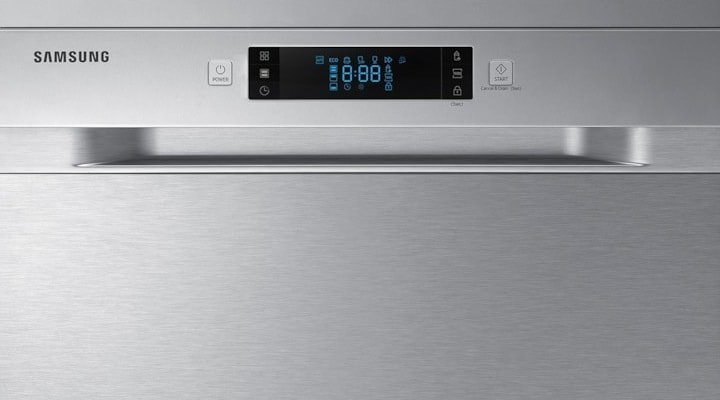
A 1E or IE code on a Samsung dishwasher almost always means the machine isn’t filling with water in the time it expects. Don’t keep running it — the machine has paused its cycle to protect itself, and running it again just repeats the fault.
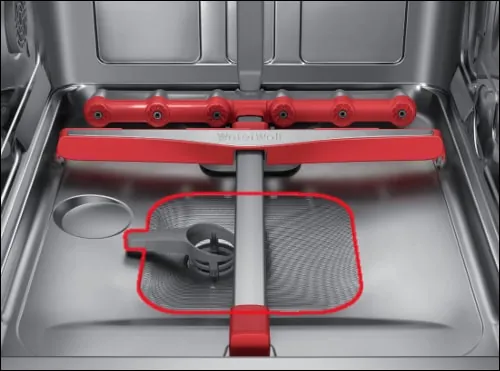
Open the door, pull out the bottom rack, and check the filter and the sump area for standing water or food debris. That one check confirms the cause in about five minutes.
If the sump is clear and dry, the fill problem is upstream. Shut off the water under the sink and check the supply valve behind the dishwasher — it should be open at least a full turn. A half-open valve is the most common cause we see, and it costs nothing to fix.
If the valve is open and the sump is clear, the inlet screen on the water line is likely clogged with grit. Unscrew the line at the valve and rinse the screen.
What the code tells you about your dishwasher
The code is the machine’s way of saying it waited for water and none arrived, or not enough of it. Samsung uses 1E and IE for the same fault — the letter and number swap depending on your model’s display. Here’s what different things you notice usually mean.
| What you notice | What it usually means | What to do first |
|---|---|---|
| Code appears a few minutes into the cycle | No water reached the tub | Check the water supply valve is open |
| Standing water in the bottom | Drain is blocked, not the fill | Clean the filter and sump |
| Water enters, then drains straight out | Drain hose is too low or kinked | Check the hose loop under the sink |
| Code only on some cycles | Inlet filter partly clogged | Remove and rinse the inlet screen |
| Water trickles in slowly | Low household water pressure | Run a tap and check the flow |
| Code after moving the dishwasher | Supply hose kinked behind the unit | Pull the unit out and check |
| Code with a humming noise | Inlet valve is trying but blocked | Turn off power, call a technician |
| Code every single time | Faulty inlet valve or pressure sensor | Book a service visit |
The water supply isn’t reaching the dishwasher
The most common reason for this code is simple: the water supply valve under your sink is closed or only part open. If someone turned it off for a repair and forgot to turn it back, the dishwasher fills with nothing and throws the code within a few minutes.
If the valve is open, the next suspect is the small mesh screen where the supply hose connects to the dishwasher — it catches grit and can clog solid over a year or two.
You can check both without tools. Look under the sink and confirm the valve is fully open. Then turn off the power at the breaker, close the valve, and unscrew the supply hose at the dishwasher end to inspect the screen. Rinse it under a tap and refit it.
If your home has low water pressure, the fill takes longer than the machine allows. Dishwashers need adequate household water pressure to fill in time, and the exact requirement sits in your model’s installation guide — check that page rather than guessing. You’ll know it worked when the cycle runs past the first five minutes without stopping.
The drain side is pulling water back out
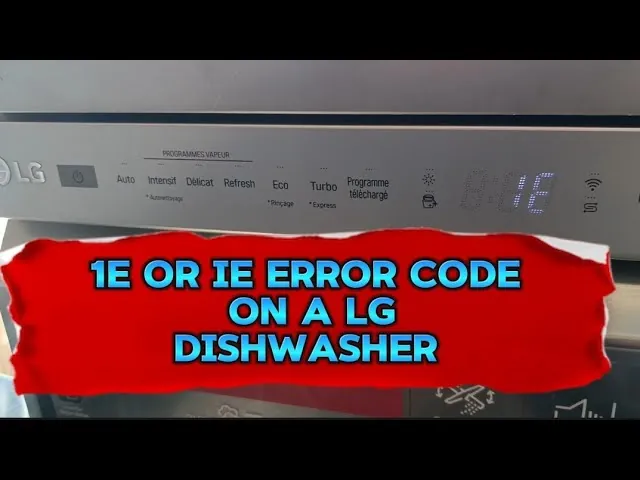
A dishwasher that fills fine but drains immediately will also throw a 1E or IE code, because the machine never holds enough water to wash. This happens when the drain hose is connected too low, letting water siphon out by gravity, or when the hose has a kink or a blockage. It’s a different mechanism from a blocked supply — here the water arrives and then leaves.
The confirming check takes under a minute. Start a cycle, wait for the fill sound, then open the door and look at the water level in the bottom. If the tub is nearly empty while the machine is still trying to fill, you’ve found it. If the tub holds a normal few centimeters of water, the problem is on the supply side instead.
The fix is to raise the drain hose into a high loop, at least 20 inches above the floor, before it connects to the sink trap or disposal. Check the whole run for kinks behind the cabinet. You’ll know it worked when the tub holds water through the wash phase instead of emptying straight away.
When the inlet valve or sensor has failed
If the supply is open, the screen is clean, and the drain hose is correct, the fault is usually inside the machine — a stuck inlet valve or a pressure sensor that’s reading wrong. This is the less common cause, and it’s the one you can’t fix yourself. You’ll know it’s this because everything outside the machine checks out and the code still returns on the very first fill attempt, every time.
Telling it apart from the first two causes is straightforward. A supply problem shows up as no water at all, a drain problem shows up as water that leaves too fast, and a valve or sensor fault shows up as water that arrives normally but the machine still reports the error. If you hear a hum at the fill point but no water moves, the valve is trying and failing.
This is where the do-it-yourself path ends. The inlet valve sits behind the lower access panel and connects to live wiring even when the machine is switched off at the panel. Testing or replacing it means working with mains voltage and water together, which is a job for someone trained to do it. Samsung’s own support pages list the code and direct owners to authorized service for internal parts.
When to stop and call a technician
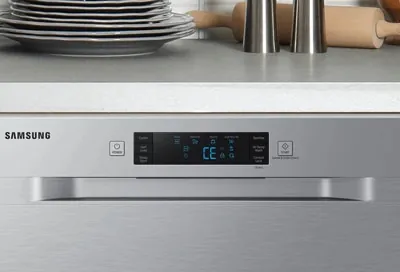
Stop and book a service visit if you see any of these:
- The code returns on the first fill of every cycle after you’ve checked the supply valve, the inlet screen, and the drain hose.
- You hear a humming or buzzing at the fill point but no water enters the tub.
- Water is pooling on the floor under or around the dishwasher.
- The code appears alongside a second error code on the display.
- You smell burning or the breaker trips when the dishwasher starts.
One test tells you whether you’re still in do-it-yourself territory. Put the machine on a rinse-only cycle and listen at the fill point for the first two minutes. Water running, no code: the fault is downstream, in the drain or the pump, and a technician is the right call. Silence, or a hum with no water: the inlet valve isn’t opening, and that part is behind the lower kick panel.
Anything past the supply valve, the filter, and the drain hose is technician work. The inlet valve, the pressure sensor, and the control board all sit behind panels that carry mains voltage, and a capacitor or live terminal can still hold a charge after you unplug the machine. Samsung’s warranty terms also exclude damage from unauthorized repairs, so opening those panels can cost you the cover.
Call Samsung support or a licensed appliance technician. If the machine is under warranty, use Samsung’s authorized service so the repair stays covered.
Related guides
Frequently asked questions
Can I still use my dishwasher with a 1E or IE code?
No, not until it clears. The machine stops the cycle to protect itself, so running it again just repeats the fault and wastes water. Fix the cause first, then run a short rinse cycle to confirm the code has gone. If it returns immediately, the fault is internal and needs a technician.
Why does my Samsung dishwasher show 1E instead of IE?
They’re the same fault on different displays. Samsung uses both 1E and IE for a water fill problem, and which one you see depends on your model’s screen. The meaning and the fix are identical, so treat them as one code. Check your model’s manual if you want the exact wording Samsung uses for your machine.
How long should a Samsung dishwasher take to fill with water?
A normal fill takes roughly 1 to 2 minutes at standard household pressure, which is usually between 20 and 120 psi depending on your home. If your supply pressure is at the low end, expect the fill to sit closer to the upper figure. The machine allows a set window before it throws the code, and that window is listed in your installation guide.
Is it safe to keep the dishwasher plugged in while I check it?
Yes, for the outside checks only. Looking at the supply valve, the drain hose, and the filter is safe with the machine plugged in. Turn the power off at the breaker before you unscrew any hose or remove any panel. Never reach behind the lower access panel with the power on.
What happens if I ignore the 1E or IE code?
The dishwasher won’t wash anything. It stops the cycle at the fill stage, so your dishes come out exactly as they went in, only wetter. Ignoring it won’t damage the machine further in most cases, but a slow leak from a failed valve can cause water damage over time. Fix it rather than running cycle after cycle.
Does the water temperature affect this error?
No, temperature isn’t the cause. The code is about water volume and fill time, not heat. A dishwasher that fills correctly with cold water will still fill correctly — it heats the water itself once it’s inside. If you’re chasing a temperature problem, that’s a different fault with a different code.
How do I reset a Samsung dishwasher after fixing the code?
Then run a short cycle to test. A reset only clears the message — it won’t fix the underlying cause, so do the checks first, then reset.
Does hard water cause a 1E or IE code?
It can contribute over time. Hard water leaves mineral scale that can clog the small inlet screen and the spray arms, slowing the fill enough to trigger the code. If your area has hard water, rinse the inlet screen periodically and run a dishwasher cleaner cycle as your manual advises.
Conclusion
The code is almost always a water supply problem you can check yourself in five minutes — the valve, the screen, or the drain hose. Work through those three before you call anyone, and you’ll fix most cases without a service visit. When the outside checks all pass and the code still returns, that’s your signal to hand it to a technician.