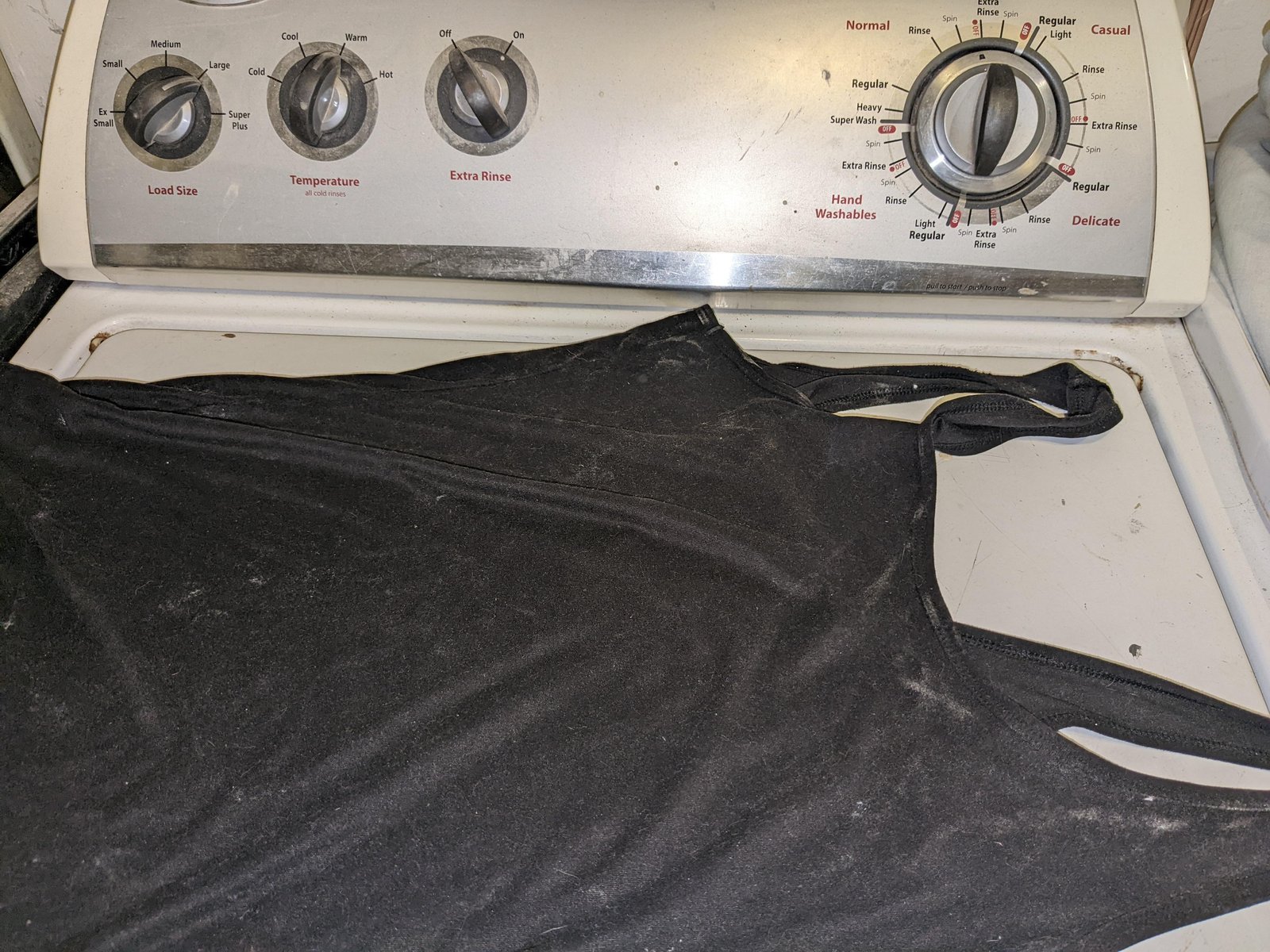
Lint on clothes after a wash usually comes from the washer itself, not the laundry. Most of the time it’s lint that’s already trapped inside the machine — in the drum, the filter, or the drain path — and the wash is just moving it onto your clothes. The fastest check: run an empty hot rinse with no detergent, then look at the drum and filter for grey fuzz.
Common reasons a washing machine leaves lint on clothes
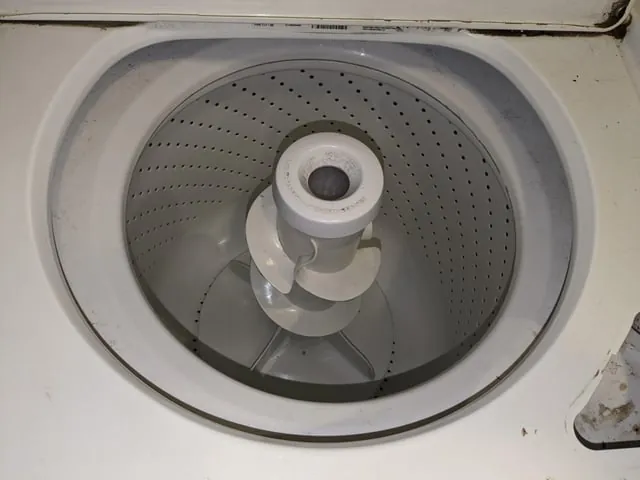
Lint doesn’t appear from nowhere. Something is either shedding fibers, failing to trap them, or pushing old debris back onto the load. Here’s how the likely causes stack up, from most common to least.
| Cause | How common | How to confirm it | Fix it yourself? |
|---|---|---|---|
| Overloaded drum | Very common | Clothes come out in tight wet clumps | Yes |
| Lint filter or trap clogged | Very common | Filter feels matted or won’t drain | Yes |
| Wrong wash settings | Common | You used a short, cool, low-water cycle | Yes |
| Fabric mix in one load | Common | Towels washed with synthetic shirts | Yes |
| Detergent overload | Sometimes | Drum smells sour, suds linger | Yes |
| Worn drum seals or bearings | Less common | Black streaks or a grinding noise | No |
| Drain pump or hose debris | Less common | Water pools, machine smells | No |
If you spot black marks or hear grinding, stop and call a technician. Everything above that line is a home fix.
Safety: Inside a mains-powered machine, the parts behind the outer cover can hold a dangerous electrical charge even after it has been unplugged — that’s why they sit behind a cover. Opening the housing, or testing or replacing anything behind it, is a job for a qualified technician, never a home repair.
An overloaded drum leaves nowhere for lint to go
An overloaded drum is the single biggest reason a washer leaves lint on clothes. When clothes are packed tight, water and detergent can’t move freely between them. Lint that sheds during the wash has no water path to the filter, so it settles back onto the fabric.
You can confirm this fast. Pull the load out after the spin cycle. If items come out in a compressed, damp clump instead of loose and separated, the drum was too full.
Here’s the fix. Fill the drum so your hand fits flat on top of the load with room to spare — roughly three-quarters full for a standard top-loader, and about two-thirds for a front-loader, since front-loaders tumble rather than agitate. Wash bulky items like blankets alone. If the load is already running, pause it, pull out a few items, and restart the cycle.
The cost is time, not money. You’ll re-run one cycle — usually 30 to 60 minutes depending on the setting — and the extra water and power that comes with it. That’s a small price next to a full load you have to rewash by hand.
One more thing: a packed drum also wears the machine faster. The motor and bearings work harder on every spin. If you overload often, you’re shortening the life of a part that’s expensive to replace.
A clogged lint filter traps nothing
A clogged lint filter is the second most likely cause, and it’s the easiest to fix. The filter’s whole job is to catch loose fibers before they reach the drain. Once it’s matted, those fibers stay in the water and land back on your clothes.
The tell is simple. If the filter feels like a solid felt pad, or water drains slowly, it’s blocked. A clean filter feels loose and lets water pass through freely.
Clean it every few loads, not every few months. Here’s the routine:
- Unplug the machine or switch off the breaker.
- Open the filter access door — check your manual for the exact spot, since it varies by model.
- Pull out the filter and rinse it under warm running water until the mesh is clear.
- Use an old toothbrush on stubborn fuzz, then rinse again.
- Push it back until it clicks, and close the door.
The whole job takes about 5 minutes. If your machine has a self-clean cycle, run it monthly as a backup — but it doesn’t replace a manual rinse.
A filter left clogged for months can also strain the drain pump, and that’s a repair, not a cleaning. Check your model’s manual for the exact filter location and cleaning interval, because designs differ.
Wash settings that spread lint instead of removing it
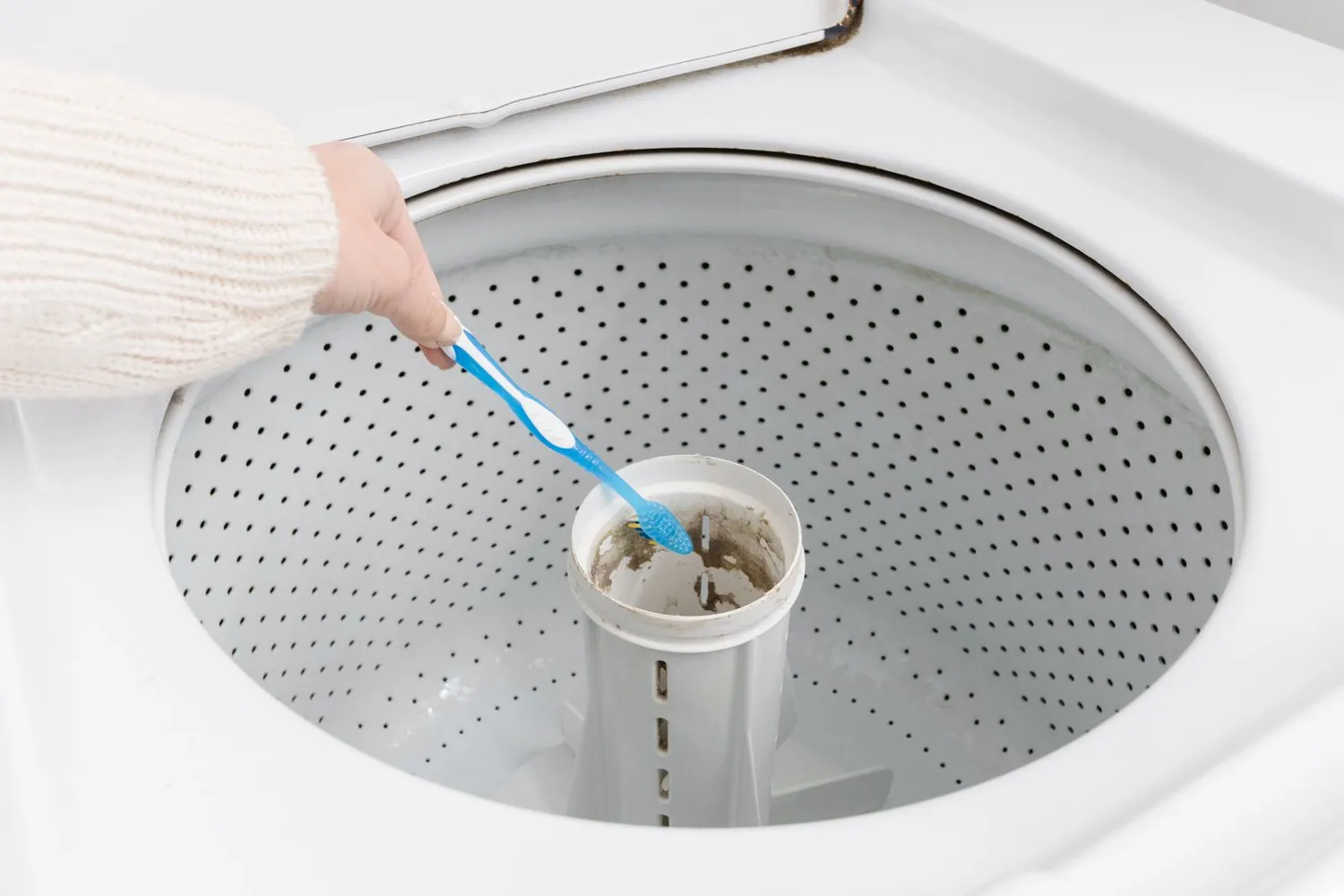
The wrong cycle settings can leave lint on clothes even when the drum and filter are fine. Short, cool, low-water cycles don’t give fibers enough time or water to separate and float away. The lint stays suspended and reattaches during the spin.
You can tell this is your cause if the drum and filter are both clean, but clothes still come out fuzzy. That points to the cycle, not the hardware.
Fix it by choosing a longer, warmer wash for lint-prone loads. A normal or heavy cycle with a warm rinse gives fibers more room to move. Add an extra rinse if your machine has that option — it flushes loose lint out before the spin.
For washing machines sold in the US, the Department of Energy sets the efficiency rules that shape how much water and energy each cycle uses, which is why modern machines run with less water than older ones. Less water means lint has fewer places to go, so cycle choice matters more than it used to.
The trade-off is real: longer, warmer cycles use more energy and take more time. If you’re washing lightly soiled clothes, that’s a waste. Save the heavy cycle for towels, bedding, and anything that sheds.
Why fabric mix matters more than you think
Washing heavy shedders with lint magnets in one load guarantees fuzz. Terry towels, flannel, and chenille shed fibers nonstop. Synthetics like polyester and nylon attract and hold those fibers. Put them together and the synthetics come out covered.
The clue is which items pick up the lint. If it’s always the dark synthetics and never the towels, the mix is your problem.
Sort by fabric type, not just color. Wash towels and blankets together. Wash synthetics and smooth cottons in a separate load. Turn fuzzy items inside out so loose fibers stay contained.
This costs nothing but a bit of sorting time. It’s the cheapest fix on this list, and for many people it solves the problem outright.
One limit worth knowing: some fabrics shed for their whole life, and no setting stops it. A new terry towel sheds more than an old one. You can read your own shedding level by shaking a dry item over a dark surface — the fuzz that falls is what your washer is dealing with.
Less common causes worth checking
A few rarer problems can also leave lint behind. Each has a clear clue, so you can rule them in or out fast.
- Detergent overload. Too much detergent leaves residue that traps lint. The clue is a sour smell and suds left after the rinse.
- Worn drum seals or bearings. Rubber breaks down and sheds black specks. The clue is dark streaks on clothes and a grinding sound during spin.
- Drain pump or hose debris. Old lint and gunk build up and get pushed back in. The clue is standing water and a musty smell.
- A blocked or kinked drain hose. Water can’t flush lint away. The clue is slow draining and a damp drum after the cycle.
- Hard water buildup. Minerals stop detergent working properly. The clue is stiff, grey-looking clothes even after a wash.
Seal, bearing, and pump work means opening the machine, and some parts hold a charge or sit behind sharp edges. That’s a licensed technician’s job. Call one if you see black specks or hear grinding — don’t open the housing yourself.
What a fix usually involves
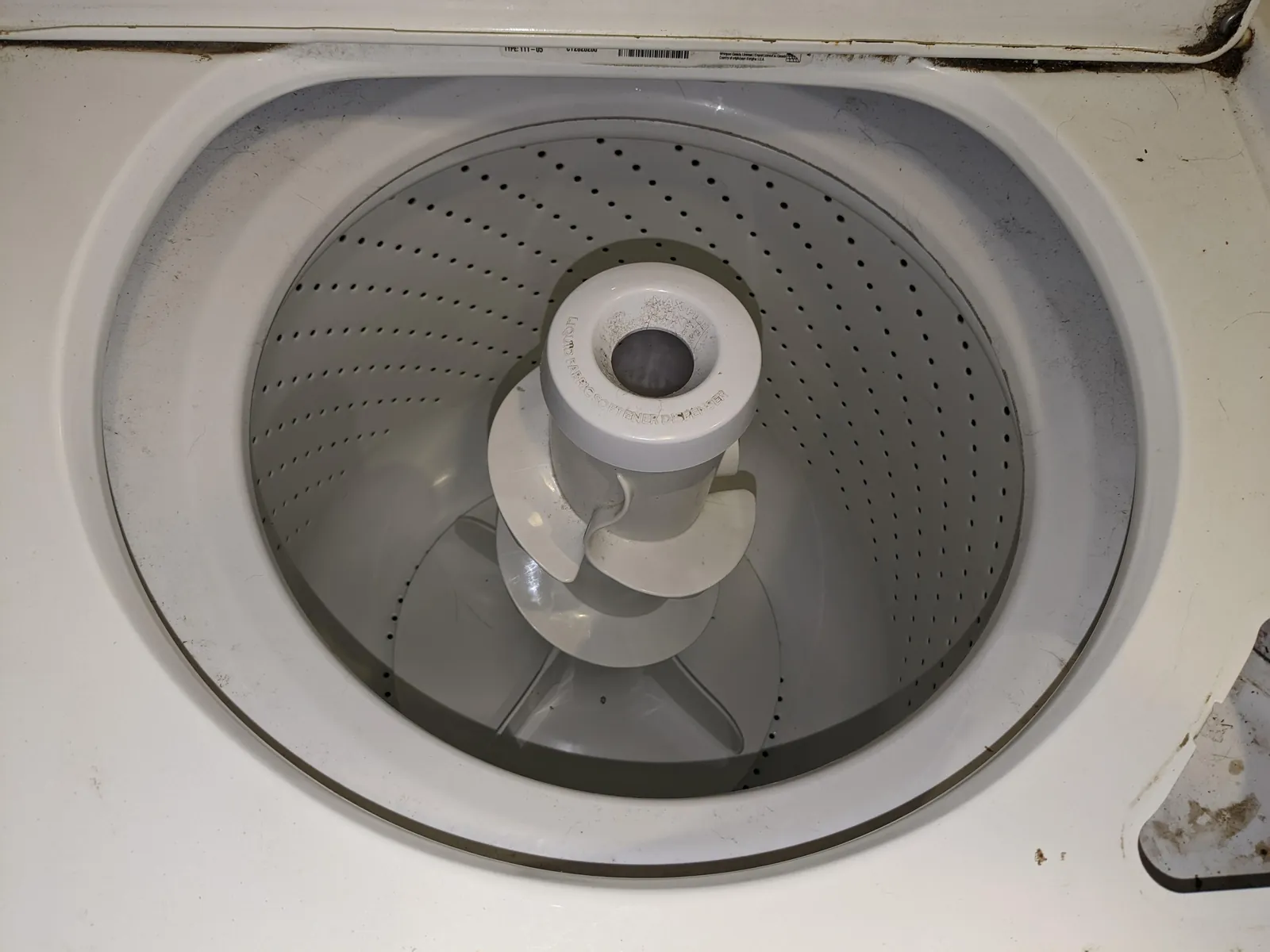
Most lint fixes cost you time, not money. Cleaning the filter is a few minutes with no tools. Re-sorting a load is just a habit change. Running a longer cycle costs a bit more in water and power, roughly the same as one extra shower’s worth of energy.
The bigger repairs are a different story. A new drum seal or bearing is a job for a technician, and the cost depends on your machine’s make, model, and age. It’s often a decent chunk of what a new machine would cost, so get a written quote before you agree. For anything under warranty, check the manufacturer’s official page for your model first — using a third-party repairer can void it.
If your machine is old and the repair quote is close to the price of a basic new unit, replacing it usually makes more sense. Get two quotes and compare. Ask the technician to name the exact part and the labor time before you decide.
Frequently asked questions
Why does my washing machine leave lint on dark clothes?
Dark clothes show lint more because the contrast is higher. The lint was likely always there, but you couldn’t see it on lighter items. Clean the filter and sort synthetics away from towels — that usually clears it up within one or two loads.
Can too much detergent cause lint on clothes?
Yes. Extra detergent leaves a sticky residue in the drum and on fabric, and loose fibers cling to it. Use the amount printed on the detergent label for your load size and water hardness, and run a hot empty rinse if the drum smells sour.
How often should I clean the lint filter?
Every few loads for a busy household, or at least once a month. If you wash towels and blankets often, check it weekly. Your machine’s manual gives the exact interval for your model, since filter designs vary.
Is it safe to keep using a washer that leaves lint?
Yes, if the cause is a clogged filter or a bad cycle. It’s not safe to ignore black specks, grinding noises, or standing water. Those point to worn seals or a failing pump, and a technician should check them before the next wash.
What happens if I ignore lint on clothes?
Nothing dangerous, but the problem gets worse. Lint builds up in the filter and drain path, which strains the pump over time. You’ll also rewash loads more often, which wastes water and wears out fabrics faster.
Does fabric softener stop lint on clothes?
No, and it can make things worse. Softener coats fibers and reduces their ability to release lint into the water. Skip it on lint-prone loads and use a longer rinse cycle instead.
How long does a lint fix take?
Filter cleaning takes about 5 minutes. Re-sorting and re-running a load takes 30 to 60 minutes, depending on your cycle. A technician repair for seals or bearings usually takes a single visit, but the wait for parts can add days.
Does it matter which cycle I use for lint?
Yes. Short, cool, low-water cycles leave more lint on clothes. A normal or heavy cycle with a warm rinse and an extra rinse option flushes more fibers away. The trade-off is more time and energy per load.
Conclusion
Most lint problems come down to one of three things: a packed drum, a dirty filter, or a cycle that’s too short and cool. Fix those first, and you’ll likely solve it without spending a cent. If black specks or grinding show up, stop and call a technician — that’s the one line you shouldn’t cross yourself.