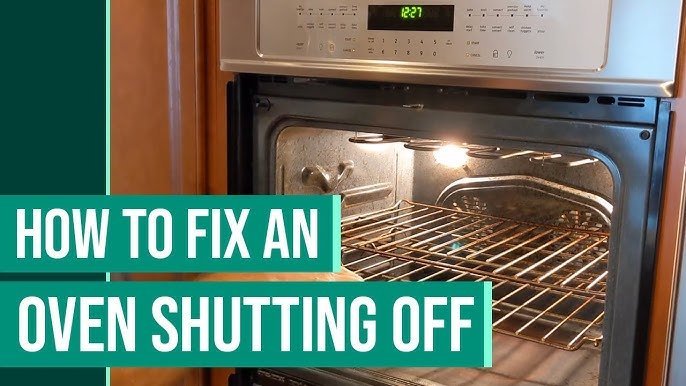
Most of the time, a Kenmore oven shuts off while baking because of a failing oven control board or a tripped safety thermostat. The fastest check: turn the oven on to Bake at 350°F and listen. If the display stays lit but the elements go cold, the board is losing its signal. If the whole oven dies, it’s power or the high-limit cutout.
Why your Kenmore oven keeps shutting off mid-bake
The table below ranks causes by how often each one turns out to be the real problem. Work down from the top — the first two rows explain most cases. Each row tells you what to check and whether it’s a job you can do yourself.
| Cause | How common | How to confirm it | Fix it yourself? |
|---|---|---|---|
| Failing control board | Very common | Display flickers or resets | Yes, with care |
| Tripped high-limit thermostat | Common | Oven dies, then works cold | Yes |
| Loose or burnt wire at terminal | Common | Burnt smell, scorched wire end | Yes, with care |
| Bad oven temperature sensor | Sometimes | Oven overheats before cutting out | Yes |
| Weak circuit breaker or outlet | Sometimes | Whole kitchen circuit trips | Yes |
| Faulty door switch or latch | Less common | Oven cuts out when door moves | Yes, with care |
| Failed relay on the board | Less common | Element never heats at all | No — technician |
A failing control board is the usual culprit
The control board is the small computer behind the display. It sends power to the bake element and reads the temperature sensor. When a relay or solder joint on that board weakens, the board loses its grip on the heat cycle. The oven cuts out partway through baking, sometimes with a click, sometimes silently.
Age is the main driver. Boards in older Kenmore models — those that have seen many years of heat cycles — fail more often because heat cycles slowly crack the solder joints. If your oven is newer than that, look at the rows below first.
Here’s the confirming test. Set the oven to Bake at 350°F and let it run for 10 minutes. Watch the display the whole time:
- If the display stays on but the oven goes cold, the board has stopped sending power to the element. That points to the board or its relay.
- If the display blanks or resets, the board is losing its own power supply. That points to the board or the wiring feeding it.
- If the oven reaches temperature, holds for a few minutes, then dies, note how long it ran. A repeatable time — say, always around 8 to 12 minutes — suggests a heat-related board fault.
Turn the breaker off at the panel before you touch any wiring. Pull the oven out, remove the back panel, and look at the board. Dark scorch marks, a bulging capacitor, or a burnt smell are your confirmation. Unplug the wire connectors one at a time and photograph them first.
When the high-limit thermostat cuts the power
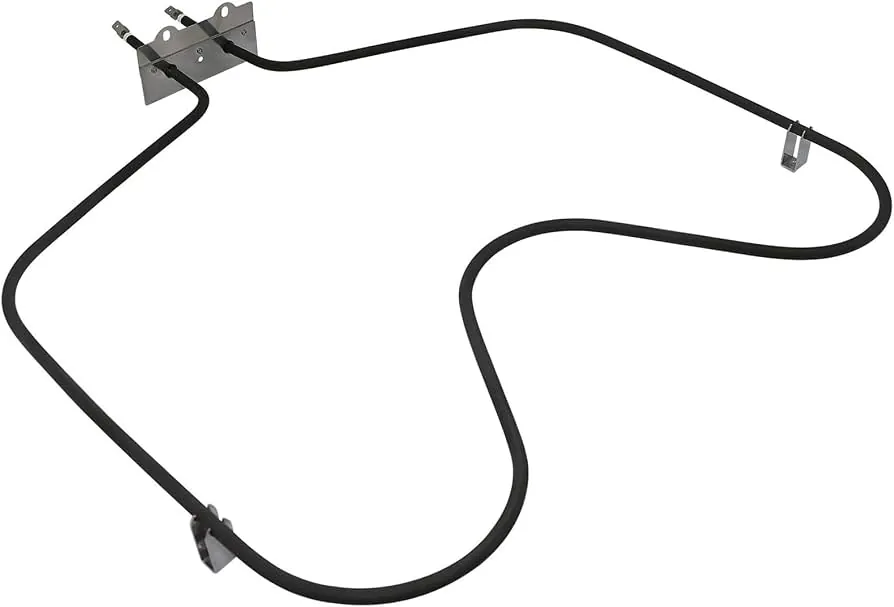
The high-limit thermostat is a safety switch that kills power when the oven cavity gets too hot. It sits near the top of the cavity, and it’s a different mechanism from the board — the board controls heat, the thermostat is a hard cutoff. You tell them apart by what happens after: a tripped thermostat leaves the oven completely dead until it cools, while a bad board usually leaves the display working.
A thermostat trips for one of two reasons. Either the oven genuinely overheated, or the thermostat itself has drifted and now trips at a normal temperature. Genuine overheating usually traces back to a bad temperature sensor or a stuck relay, so fix that first or the new thermostat will trip too.
To confirm, let the oven cool for 30 minutes, then test it. If it heats normally from cold and only cuts out after 10 to 20 minutes at 350°F, the thermostat is the suspect.
The fix is a direct swap: breaker off, back panel off, two wires off the old thermostat, new one in. It’s a 20 to 30 minute job and the part is one of the cheaper oven components — comparable to a decent oven thermometer.
One warning: never bypass a high-limit thermostat to “test” it. It’s the last line of defense against a runaway oven, and a bypassed oven is a fire risk. If you’re not comfortable working near the cavity wiring, call a technician.
Loose wires and burnt terminals
A loose or scorched wire connection at the terminal block or element causes the oven to cut in and out. Heat builds at the bad joint, resistance rises, and the connection fails intermittently — often right in the middle of a bake. This cause is different from a board fault because the oven usually comes back on its own after a few minutes, without you touching anything.
The clue is smell. A sharp, burnt-plastic or scorched-metal odor near the oven vent points straight at a failing connection. So does a plug or cord that feels hot to the touch.
Check it safely. Kill the breaker, pull the oven out, and inspect the terminal block at the back where the house wiring connects. Look for darkened wire ends, melted insulation, or a screw that turns freely. On the element connections, look for the same scorch pattern.
The fix depends on what you find. A loose screw just needs tightening. A burnt wire end needs cutting back to clean copper and re-terminating — a 15 to 20 minute job with a screwdriver and wire strippers. If the terminal block itself is melted, replace it; the part is inexpensive, similar in cost to a replacement oven light. If the damage reaches into the oven’s internal harness, stop. That’s technician work.
Less common reasons the oven quits
A few rarer causes are worth a quick check before you buy parts:
- Bad temperature sensor — the oven runs hot and the high-limit trips; confirm by comparing oven temperature to a separate oven thermometer.
- Weak circuit breaker — the whole kitchen circuit trips, not just the oven; check whether other appliances on that circuit also die.
- Faulty door switch or latch — the oven cuts out when the door is bumped; watch whether the shutdown lines up with door movement.
- Failed relay on the board — one element never heats at all; this needs board-level repair or replacement.
- Control panel ribbon cable — the display flickers when you press buttons; reseating the cable sometimes helps.
One limit worth naming: if the oven smells of gas, or you see arcing or sparking inside the cavity, stop and call a licensed technician or your gas utility. That’s past the point where a homeowner should keep going.
What fixing a Kenmore oven actually takes
A control board swap is the biggest job on this list. It needs a screwdriver, a phone camera for the wiring, and 30 to 60 minutes. Its price depends on your model number, so look that up on the rating plate inside the door frame and check the official Kenmore parts page for your exact figure.
A loose screw is free; you just need the time to pull the oven out and put it back.
If you call a technician, expect the labor to run several times the part cost, because you’re paying for the visit, the diagnosis, and the travel. Get a quote before you agree — most repair services will give a flat diagnostic fee and apply it to the repair.
For an oven well past its expected service life, compare the repair quote against a new oven before you commit. Sometimes the honest answer is that the repair costs more than the oven is worth.
Frequently asked questions
Why does my Kenmore oven shut off after a few minutes?
A failing control board is the most likely cause, especially if the display stays lit while the heat stops. A tripped high-limit thermostat is second. Test by running Bake at 350°F for 10 minutes and noting whether the display survives the shutdown. If it does, the board is the suspect.
Can I still use my oven if it keeps shutting off?
No — stop using it until you find the cause. An oven that cuts out mid-bake is often overheating or losing a connection, and both are fire risks. Unplug it or kill the breaker, then diagnose. Using it again “just to test” is how small faults become big ones.
How long does a Kenmore oven control board last?
Most control boards last many years in normal use, but heat exposure shortens that. Boards in ovens used daily at high temperatures often fail sooner. There’s no fixed lifespan — check your model’s rating plate and the official Kenmore parts page for your specific unit’s part availability.
Is it safe to replace the control board myself?
Yes, if you’re comfortable with basic electrical work. Kill the breaker, photograph every connector before removing it, and match the new board to your exact model number. If you’re not confident, a technician will do it safely. Never work on the oven with the power on.
What happens if I ignore a tripped high-limit thermostat?
The oven will keep shutting off, and if the underlying cause is a stuck relay or bad sensor, it can overheat repeatedly. That stresses every component and raises fire risk. Replace the thermostat and fix the root cause — don’t bypass the switch, ever.
Does it matter which replacement part I buy?
Yes. Kenmore ovens were made by several manufacturers over the years, so parts aren’t universal. Use your model number from the rating plate inside the door frame to find the exact part. A generic board may not fit or may not work with your oven’s wiring.
How much does a Kenmore oven repair cost?
Labor from a technician usually runs several times the part cost. Get a written quote first, and check the official Kenmore parts page for your model’s part price.
Can a power surge cause my oven to shut off while baking?
Yes, a surge can damage the control board or trip the breaker. If the shutdown started right after a storm or a power flicker, that’s a strong clue. Check the breaker first, then inspect the board for scorch marks. A whole-house surge protector prevents a repeat.
Conclusion
If your Kenmore oven shuts off while baking, start with the control board and the high-limit thermostat — they explain most cases. Kill the breaker, run the 10-minute test at 350°F, and let the display tell you which one it is. Fix the root cause, not just the symptom, and the oven will finish the bake.