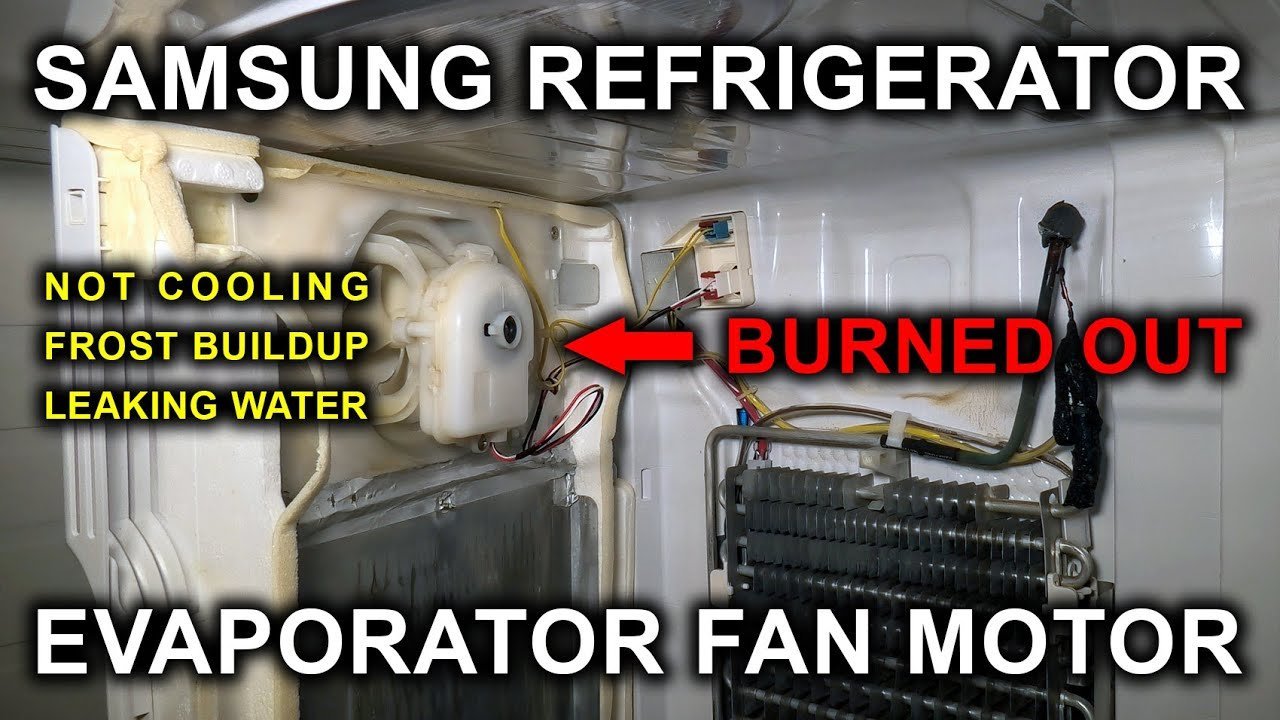
The fix starts with a full defrost. Unplug the fridge, leave the doors open for 24 hours with towels down, then plug it back in. If the fan spins and cold air returns, ice had jammed the blades. If the fan still sits silent, the motor or its sensor has failed. Ice buildup is the most common cause of a samsung fridge evaporator fan not working, because the fan sits right behind the freezer wall where frost forms first.
Why your Samsung fridge fan stops

The evaporator fan pulls air across the cold coils and pushes it into both compartments. When it stops, the freezer may still feel cold while the fridge section turns warm. Three things cause this most often, and you can narrow them down before anyone touches a screw.
Ice blocking the blades. Every time you open the door, moist air gets in. That moisture freezes on the coils and around the fan. Once frost builds thick enough, the blades hit ice and stop. This is the number one reason, and it’s the one a defrost can fix.
A failed fan motor. The motor runs on a small bearing that wears out. When it seizes, the blades won’t turn even with no ice in the way. A failing motor sometimes makes a buzzing, clicking or grinding noise before it dies completely.
A bad sensor or control board. The fridge decides when to run the fan based on temperature readings. If a sensor sends wrong numbers, or the control board stops sending power, the fan never gets the signal to start. This is less common but harder to spot.
Samsung publishes model-specific guidance in its own support pages, so check your exact model number there before assuming the worst.
Safety: Inside a mains-powered machine, the parts behind the outer cover can hold a dangerous electrical charge even after it has been unplugged — that’s why they sit behind a cover. Opening the housing, or testing or replacing anything behind it, is a job for a qualified technician, never a home repair.
Check the fan without opening anything
This check is for anyone with a warm fridge and a freezer that still works. You don’t need tools for most of it, and you never remove a panel.
First, listen. Press your ear to the freezer back wall. A working fan hums softly. Silence, or a repeated click, tells you the motor isn’t running.
Second, look for frost. Pull out the freezer drawers and look at the back wall. A thin, even layer is normal. A thick block of white ice, or ice creeping around the fan opening, points to a defrost problem.
Fourth, confirm the temperature. Put a fridge thermometer in the main compartment and leave it overnight. If it reads above 40°F, the fan or the airflow is the likely cause.
If none of this explains it, stop here. Anything past this point means removing panels, and that’s a technician’s job.
Defrost the fridge to clear ice
This fix is for the reader whose back wall is packed with frost. It costs nothing but a day of waiting, and it clears the most common cause.
- Unplug the fridge from the wall.
- Empty both compartments into coolers. Frozen food holds safely for about 4 hours in a closed cooler, per FoodSafety.gov cold food storage guidance, so plan around that window.
- Leave both doors open. Put towels and a shallow pan under the freezer to catch meltwater.
- Wait a full 24 hours. Ice deep in the coils needs time — 12 hours often leaves a core of ice behind.
- Wipe everything dry, then plug the fridge back in.
You’ll know it worked when the fan hums within a few minutes and the fridge section drops toward 37°F over the next several hours. If the fan stays silent after a full dry-out, ice wasn’t the problem, and you’re looking at a motor or a sensor.
Test the fan motor by hand
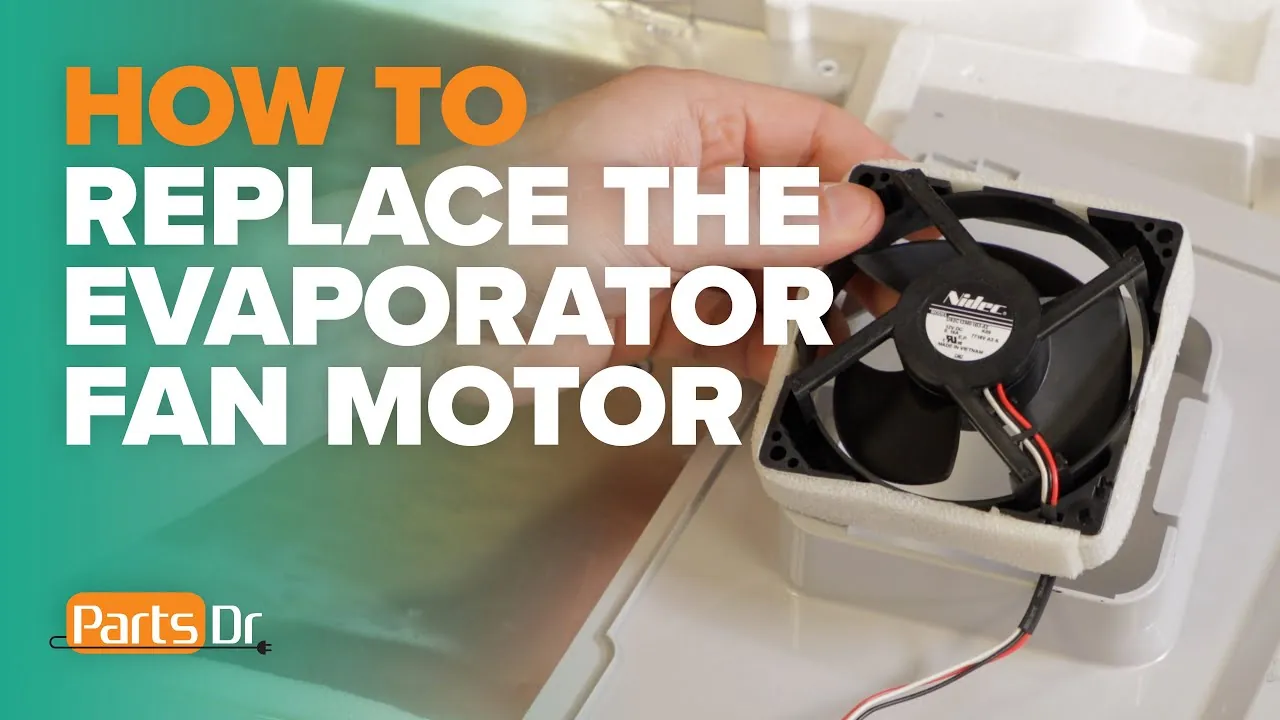
This one is for a reader who has already defrosted and still hears nothing. It’s a gentle push test, not a repair.
Unplug the fridge first. Then reach into the freezer and find the fan behind its plastic cover. On many Samsung models the cover clips off by hand, with no screws. Don’t force it — if it won’t release, stop and leave it.
With the cover off, try to spin the blades with one finger. They should turn freely and coast a little. If they feel gritty, stiff or won’t move at all, the motor bearing has failed. That’s your answer, and it means a new motor.
If the blades spin freely by hand but the fan won’t run when powered, the motor or its control signal is the problem. Plug the fridge back in and listen for a hum without movement — a humming motor that won’t turn is a dead motor.
A replacement evaporator fan motor for most Samsung models is a common part, and you can price it by your model number. The trade-off is real: the part is cheap, but fitting it means opening the freezer’s inner panel and disconnecting wiring. If you’re not comfortable with that, a technician is the safer call.
Call a technician when the board is involved
This is the fix for the harder cases — a fan that tests fine by hand but never gets power, or a fridge that keeps icing up after a full defrost.
Those two symptoms point past the fan itself. A repeated ice buildup after a proper 24-hour defrost usually means the defrost heater or its sensor has failed, so the fridge never melts its own frost. A fan that spins freely but stays dead points to the control board or a temperature sensor.
Both repairs sit behind live wiring and sealed panels. A technician has the meters and the model-specific wiring diagrams to trace the fault, and Samsung’s own service network can supply the correct parts for your model. This is worth the cost when your fridge is still relatively new and otherwise working well. On an older unit with a second fault already showing, put that money toward a new fridge instead.
What makes an evaporator fan worse
- Forcing the blades to turn while the fridge is plugged in. You can crack a blade or burn out a motor that was only iced up. Always unplug first.
- Chipping ice off the coils with a knife or screwdriver. One slip punctures the refrigerant line, and that turns a small repair into a dead fridge.
- A hair dryer on full heat against the back wall. The sudden heat can warp plastic parts and crack cold coils. If you use one, keep it on low and keep it moving.
- Packing the freezer completely full. Food pressed against the back wall blocks airflow and lets ice build faster around the fan.
- Ignoring a warm fridge for days. Food above 40°F for more than a few hours isn’t safe to keep, so a slow response costs you the contents too.
Stop the ice coming back

The habits below keep frost from building around the fan in the first place. None of them need tools, and together they cut the workload on your defrost system.
| If you’re doing this | Do this instead | Why |
|---|---|---|
| Leaving the door open while you load groceries | Take out what you need, then close the door | Every open second pulls in moist air that freezes on the coils |
| Pushing food against the freezer back wall | Leave a gap of a few inches | Air needs to move past the fan and over the coils |
| Setting the fridge as cold as it goes | Keep the fridge near 37°F and the freezer near 0°F | Colder settings make more frost and waste power |
| Skipping the door seal check | Wipe the seal and test it with a dollar bill | A weak seal lets warm air in all day |
| Never defrosting a manual-defrost freezer | Defrost it when frost reaches about a quarter inch | Thick frost chokes the fan and the airflow |
Related guides
Frequently asked questions
Can I use the fridge if the evaporator fan isn’t working?
No, not for long. The freezer may stay cold, but without the fan, cold air never reaches the fridge section. Food there warms above 40°F within hours, and that’s the range where bacteria grow fast. Move what you can into coolers with ice, and don’t trust the fridge section until the fan runs again and the temperature holds near 37°F.
Why is my Samsung fridge fan making a loud noise?
A grinding or buzzing fan usually means the motor bearing is worn or ice is hitting the blades. Unplug the fridge and defrost it for 24 hours first. If the noise returns once it’s cold again, the motor is failing and needs replacing. A clicking sound that repeats often points to the control board instead, which is a technician’s job.
How long does a Samsung evaporator fan last?
Most evaporator fan motors last a long time, but that varies with how hard the fridge works. A freezer kept packed and opened often runs the fan more, and heat in the room shortens motor life. There’s no fixed service life in the manual, so judge by symptoms — noise, then silence — rather than a calendar.
Is it safe to replace the evaporator fan myself?
Only if you’re comfortable working behind the freezer’s inner panel with the fridge unplugged. The part itself is simple, but the panel hides wiring and sharp coil fins. If you’re unsure, don’t. A technician has the right tools and can test the defrost system at the same time, which is often the real fault behind a dead fan.
What happens if I just ignore the fan?
The fridge section slowly warms while the freezer keeps working, so it’s easy to miss at first. Within a day or two, milk and leftovers spoil, and the compressor runs longer trying to compensate. Left long enough, constant running wears the compressor, and that’s the most expensive part in the fridge to replace.
How do I find the right fan part for my model?
Look for the model and serial plate inside the fridge, usually on the left wall or behind a drawer. Write that number down exactly, then search Samsung’s parts pages or an authorized parts seller for that model. A fan motor from a different model may look similar but won’t fit or run correctly.
Why does the fan stop when I open the door?
That’s normal on most Samsung fridges. A door switch cuts power to the fan so cold air doesn’t blow out into the room while you’re loading groceries. It only looks like a fault if the fan also stays silent with the door closed, which is when you should run the checks above.
Conclusion
A dead evaporator fan is usually ice, and ice is usually free to fix with a full 24-hour defrost. If the fan is silent after a proper dry-out, you’re choosing between a cheap motor swap and a technician’s visit — and on a fridge that’s still relatively new, the repair is almost always worth it.