
A blocked or clogged lint filter is the most common reason a clothes dryer leaks water. Stop running the dryer until you find the source, because water near live wiring is a shock risk. Pull out the lint filter and hold it up to a light — if you can’t see through the mesh, that’s your problem. Clean it with warm soapy water, let it dry fully, and run a short cycle.
What the leak is telling you
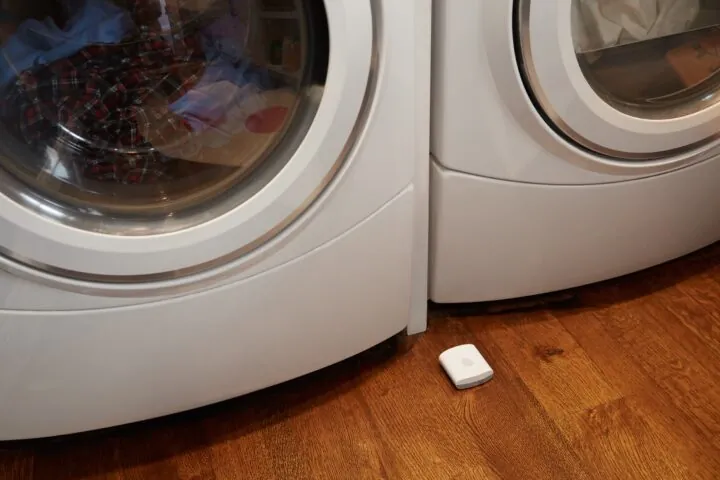
Where the water shows up points to the cause. Water at the front of the drum is different from water underneath the machine, and water on the floor by the vent is different again. Use the table below to match what you see to what it usually means, then do the first check listed. None of these checks need tools, and none of them mean opening the dryer’s housing.
| What you notice | What it usually means | What to do first |
|---|---|---|
| Water at the front, under the door | Door seal is worn or dirty | Wipe the seal, check for cracks |
| Puddle under the whole machine | Drain hose or internal line is loose | Check the hose at the back |
| Damp, steamy room near the vent | Vent hose is kinked or blocked | Feel along the hose for kinks |
| Wet clothes after a full cycle | Lint filter is clogged | Clean the filter with soap and water |
| Rust-colored water drips | Internal rust or a corroded part | Stop using it, call a technician |
| Water at the back, near the cord | Water is reaching live parts | Unplug it now, call a technician |
The lint filter is clogged
A clogged lint filter is the number one cause, and it happens because lint blocks airflow. When air can’t move through the dryer, the moisture has nowhere to go — so the load stays wet and the cycle runs long. Most people clean the filter after every load, but a thin film of fabric softener and dryer sheet residue builds up over time and you can’t see it. That film is what blocks the air.
The check takes under a minute and costs nothing. Pull the filter out and hold it up to a bright light. If light passes through the mesh easily, the filter is fine. If the mesh looks cloudy or you can’t see the light, it’s clogged. Run warm water through it — if water pools on top instead of running through, that confirms it.
The fix is simple: wash the filter with warm water and a little dish soap, use a soft brush, and rinse well. Let it dry completely before you put it back — a wet filter just adds more moisture. The sign it worked is a normal cycle time and dry clothes at the end. If your dryer still takes two cycles to dry a load after a clean filter, the blockage is deeper in the vent, not the filter.
The door seal is worn out

A worn door seal lets moist air escape at the front, and that air condenses into water on the cooler metal around the door. This is a different mechanism from a clogged filter — here the air moves fine, but it leaks out the wrong place. Over time the rubber seal hardens, cracks, or picks up lint and detergent film that stops it from sitting tight.
The check is a close look and a feel. Open the door and run your finger along the whole rubber seal. You’re looking for cracks, flat spots, or a gritty film. A seal that feels stiff instead of soft is on its way out. You can also close the door on a thin strip of paper — if you can pull the paper out easily at any point around the door, the seal isn’t gripping there.
The fix depends on what you find. If the seal is just dirty, wipe it with warm water and a cloth — no harsh cleaners, which dry out the rubber. If it’s cracked or flat, the seal needs replacing. You can buy a replacement seal for your model from the maker, and on most dryers it clips or screws into place without opening the housing.
You can tell this cause apart from a clogged filter by where the water is. Filter problems leave clothes wet and the dryer running long. A bad seal also leaves clothes wet, and the room around the dryer feels damp. If the load is wet and the front of the machine is damp, check the seal.
Water coming from the vent hose
A blocked or kinked vent hose pushes moist air back into the room instead of outside, and that moisture raises the humidity and can condense on cold surfaces. This cause is less common than the first two, but it’s the one to check if your dryer is in a cold room or a tight space. A crushed hose behind the machine, or a hose full of lint, does the same thing — the air can’t get out, so it comes back.
Telling this apart from the other two is easy. Filter and seal problems put water on or in the machine. A vent problem makes the room feel damp and steamy after a cycle, and can leave condensation on cold surfaces near where the hose exits. If the room feels damp and steamy after a cycle, the vent is the likely cause.
The check needs no tools. Pull the dryer out far enough to reach the back, and feel along the whole hose from the machine to the wall. Squeeze it gently — it should feel round and firm, not flat or crunchy. Look for kinks, crushed sections, or a hose that’s come loose from the wall fitting.
The fix is to straighten any kinks and clear the lint. If the hose is crushed or torn, replace it — a new vent hose is cheap and easy to fit. Keep the run as short and straight as you can. The sign it worked is a dry floor and a room that doesn’t feel damp after a cycle. For safety guidance on dryer vents and fire risk, the U.S. Consumer Product Safety Commission explains why a clear vent matters.
When to stop and call a technician

Most leaks are DIY fixes, but some mean you should stop now. If you see any of these, unplug the dryer and don’t run it again until a qualified technician has looked at it.
- Water near the power cord or plug. Water and live electricity together are a shock risk. Unplug it from the wall before you touch anything.
- Rust-colored or dirty water dripping from inside. This usually means an internal part is corroded, and that’s not a home fix.
- A burning smell along with the water. This points to an electrical fault or overheating. Stop and call for help.
- Water that keeps coming back after you’ve checked the filter, seal, and vent. The problem is internal, and opening the housing is technician-only work.
- Any sign of sparking, a tripped breaker that won’t reset, or a hot cord. These are electrical faults, not water problems.
The line is the housing. Inside a dryer there are live parts and a capacitor that can hold a dangerous charge even when the machine is unplugged. Never open the cabinet, and never test or replace internal parts yourself. Call a licensed appliance technician for anything inside the machine. If you rent your home, call your landlord first — in many places the repair is their responsibility, not yours.
Frequently asked questions
Can I still use my dryer if it’s leaking water?
No — unplug it and stop using it until you find the cause. Water near the power cord or internal wiring is a shock risk, and running a leaking dryer can also damage your floor. Most causes are simple fixes you can do in a few minutes. Only run it again once the leak has stopped and the area is completely dry.
Why is my dryer leaking water all of a sudden?
A sudden leak usually means something changed: the lint filter clogged up, the vent hose got kinked or crushed, or the door seal finally wore through. Check the filter first, then the vent hose at the back, then the door seal. One of these three accounts for most sudden leaks, and each check takes under five minutes.
How long does it take to fix a leaking dryer?
Most fixes take 10 to 30 minutes. Cleaning a lint filter takes about 5 minutes plus drying time. Straightening or replacing a vent hose takes 15 to 30 minutes. Replacing a door seal takes about 20 to 40 minutes, depending on your model. These times assume a standard front-loading or top-loading home dryer and no internal faults.
Is a leaking dryer dangerous?
It can be, yes. The main danger is water reaching live electrical parts, which is a shock and fire risk. A blocked vent also raises fire risk because lint is highly flammable. Unplug the dryer as soon as you notice a leak, and don’t plug it back in until the cause is fixed and everything is dry.
What happens if I ignore the leak?
The leak usually gets worse, not better. Water can damage your floor, walls, and the dryer’s own electrical parts. A blocked vent that you ignore also builds up lint, which is a fire risk. Fixing a small leak early is cheaper and safer than waiting for a bigger problem.
Does it matter which way the vent hose runs?
Yes, it matters a lot. A short, straight vent run lets air out easily. Long runs, sharp bends, and crushed sections trap moist air and push it back into the room as water. Keep the hose as short and straight as you can, and check it for kinks whenever you move the dryer.
How often should I clean the lint filter?
Clean the lint filter after every load, and wash it with warm soapy water about once a month to remove the invisible film of fabric softener and dryer sheet residue that blocks airflow.
Conclusion
If you’ve cleaned the filter and checked the vent but water still shows up, it’s time to call a technician. You shouldn’t ignore a leak that keeps coming back, since it’ll only get worse. Get it looked at before the damage spreads to your floor or walls.