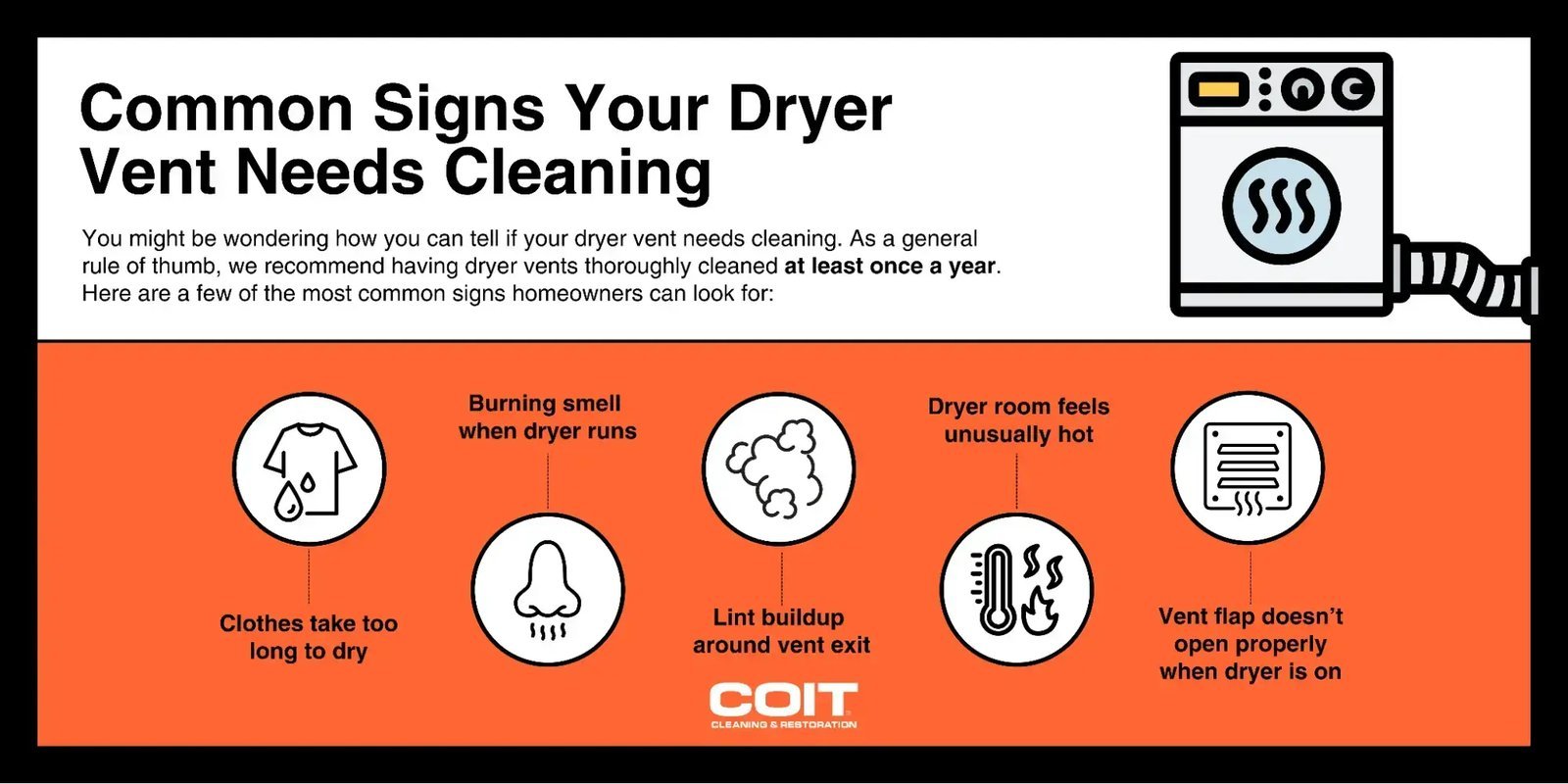
Clean the vent line once a year if you dry 1–2 loads a week, and every 6 months if you dry 4 or more loads a week or dry heavy items like towels and bedding. The lint screen and the duct right behind the dryer need attention far more often — after every load and every few months. Stretch a yearly job to two years and lint keeps packing the duct, so each load takes longer and the dryer runs hotter.
Count the people, not just the laundry. A household of two doing a load a week sits firmly in the yearly group. Add a baby, a dog, or a teenager in sports and you’re suddenly at five or six loads a week, which puts you on the six-month schedule even though nothing about the dryer changed.
The run length matters as much as the volume. A short straight duct to an outside wall clogs slowly. A long duct, one with elbows, or one that exits through the roof collects lint at every turn and is worth checking twice a year no matter how little you dry.
If you can’t remember the last cleaning, do it now and write the date on the machine with a marker. That single habit beats any schedule.
Dryer vent cleaning schedule by use

Use the table below as your starting point. The last column matters most — it’s an observation, not a date on a calendar. If you see the sign, the vent is due, no matter when you last cleaned it.
| How you use it | How often | What tells you it’s due |
|---|---|---|
| 1–2 loads a week, light fabrics | Once a year | Lint screen fills fast |
| 3–4 loads a week, mixed loads | Every 8–10 months | Dryer feels hot on top |
| 5 or more loads a week | Every 6 months | Clothes need a second cycle |
| Towels and bedding most days | Every 6 months | Damp smell in the drum |
| Long duct run over 15 feet | Every 4–6 months | Weak airflow at the outside flap |
| Pet bedding and hair-heavy loads | Every 3–4 months | Visible lint at the outside vent |
A long duct run collects more lint because the air slows down before it reaches the outside. The U.S. Fire Administration says failure to clean the dryer is the leading factor in dryer fires, so the schedule isn’t just about drying speed.
What happens when you skip dryer vent cleaning
The first change is time. Clothes take longer to dry because lint narrows the duct and blocks airflow. You notice it as a second cycle on towels, then a third on jeans. The dryer works harder to push the same air through a smaller gap, so it runs hotter and longer each time.
After a few months, heat builds up inside the drum and the duct. The outside flap may stop opening fully, or you’ll see lint collecting around it. The dryer’s safety thermostat can trip and shut the machine down mid-cycle. Some dryers have a thermal fuse that blows once and then needs replacing — check your model’s manual for where that fuse sits before you assume the machine has died.
Left for a year or more, lint packs against the heating element and the duct walls. Lint is highly flammable, and the combination of trapped heat and a full duct is what turns a slow dryer into a fire risk. The U.S. Fire Administration reports thousands of dryer fires each year, and the common factor in most of them is a vent that was never cleaned.
Eventually the duct can block completely. Air has nowhere to go, so the dryer overheats on every cycle and the high-limit switch cuts power. At that point, no amount of screen cleaning helps — the line itself has to be cleared. If you smell burning, hear a loud pop, or see scorch marks, stop using the dryer and call a technician. That’s not a job for a brush and a vacuum.
Signs your dryer vent needs cleaning now

Check for these today. Any one of them means the vent is overdue, even if you cleaned it recently.
- Clothes come out damp after a full cycle. Airflow is restricted, so moisture can’t leave the drum.
- The dryer top or door feels hot. Heat is trapped instead of venting outside.
- A burning or musty smell during the cycle. Lint is sitting against a hot surface — stop and check the duct.
- The outside flap barely moves. Hold a piece of tissue near it during a cycle; if it doesn’t flutter, airflow is weak.
- Loads take twice as long as they used to. The duct is narrowing and the dryer is working harder.
- Lint collects around the outside vent or on the ground below it. Lint is escaping the duct instead of traveling through it.
- The dryer shuts off mid-cycle. A safety switch has tripped — this is a stop-and-check sign, not a reset-and-ignore one.
What each dryer vent cleaning takes
A basic clean — pulling the lint screen, vacuuming the duct behind the dryer, and clearing the outside flap — takes about 20–30 minutes. You need a vacuum with a crevice tool, a long flexible brush, and a screwdriver if the duct clamp is screwed on. That’s the job most people can do themselves every few months.
A full line clean takes 45–90 minutes. You disconnect the duct from the back of the dryer, run a vent brush through the whole run, and vacuum out both ends. If the duct runs through a wall or up to the roof, add more time and expect to work from two ends. A ladder and a helper make the outside end safer.
The cost isn’t money — it’s the awkward part. You’re kneeling behind a machine, reaching into a space that’s dusty and tight, and reconnecting a clamp that’s hard to see. If your duct is short and straight, that’s a small job. If it’s long, has bends, or goes up through the roof, it’s a bigger one, and a pro with a rotary brush will do it faster than you will.
Check your dryer’s manual for the duct type and length your model allows. Some manufacturers set a maximum run length, and going past it means more frequent cleaning, not less.
How to go longer between dryer vent cleanings
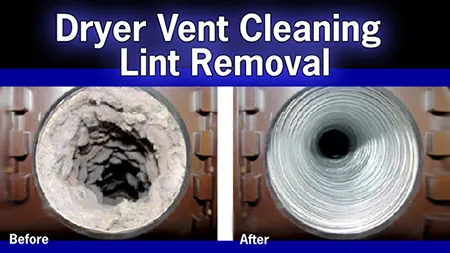
These habits genuinely stretch the interval. Each one targets a cause from the sections above.
- Clean the lint screen after every single load. A full screen pushes lint past it and into the duct — this is the single biggest factor in how fast the line clogs.
- Use a rigid or semi-rigid metal duct, not a flexible foil or plastic one. Flexible ducts sag and trap lint at every bend. Smooth metal lets air move and lint pass through.
- Keep the duct run as short and straight as possible. Every 90-degree bend slows airflow and gives lint a place to settle. Fewer bends, fewer cleanings.
- Check the outside flap monthly. A flap that sticks open or stays shut is a sign of lint buildup or a damaged hood — fix it early and the line stays clear longer.
- Wash the lint screen with soap and water every few months. Fabric softener leaves a film that blocks airflow through the mesh. A screen that looks clean can still be coated.
Frequently asked questions
How often should a dryer vent be professionally cleaned?
Once a year is the standard for a typical household drying 1–2 loads a week. Go to every 6 months if you dry 4 or more loads a week, have a duct run longer than 15 feet, or dry pet bedding. If you’ve never had it done and the dryer is more than a few years old, book it now and start the schedule from there.
Can I clean my dryer vent myself?
Yes, for a short duct that runs straight out a wall. You need a vacuum, a flexible vent brush, and about 30 minutes. Don’t do it yourself if the duct runs up through the roof, has multiple bends, or you can’t safely reach the outside end. A ladder near a roof edge is where this stops being a DIY job — call a pro instead.
What happens if I never clean my dryer vent?
The dryer gets slower, then hotter, then stops. Lint builds up in the duct, airflow drops, and each cycle takes longer. The U.S. Fire Administration names failure to clean as the leading cause of dryer fires, so the risk isn’t just a broken machine. Eventually a safety switch trips and the dryer won’t run at all until the line is cleared.
How long does it take to clean a dryer vent?
About 20–30 minutes for a short, straight duct you can reach from both ends. Allow 45–90 minutes if the duct is long, has bends, or goes through a wall. That assumes you already have a vacuum and a vent brush. If you’re renting equipment or working around a roof, add travel and setup time on top.
Is it safe to use a dryer with a clogged vent?
No. Stop using it until the line is clear. A clogged vent traps heat inside the machine and can ignite lint. If you smell burning or the dryer gets very hot on top, unplug it and get the duct cleaned before the next load.
Does a clogged dryer vent make clothes smell?
Yes. Trapped moisture and lint create a musty, damp smell that transfers to your clothes. You’ll notice it most on towels and anything left in the drum after the cycle ends. If clothes smell musty even after a full dry, the vent is the first thing to check — not the washer.
How do I know if my dryer vent is clogged?
Hold a piece of tissue near the outside flap while the dryer runs. If it doesn’t flutter or pull toward the vent, airflow is weak and the line is likely clogged. Other signs: clothes need two cycles, the dryer top feels hot, or lint collects around the outside opening. Any one of these means it’s time to clean.
Does a longer duct mean more frequent cleaning?
Yes. A duct run over 15 feet, or one with several bends, slows airflow and lets lint settle faster, so clean it every 4–6 months instead of yearly. Check your dryer’s manual for the maximum run length your model allows.
Conclusion
Pick a date you’ll remember, like when you change the clocks or pay a certain bill, and let it nudge you to check things. If it’s been a while, peek behind the dryer this weekend. You’ll likely spot lint you didn’t expect, and clearing it keeps your home safer.