
Your electric oven not working but stove top is usually a burned-out bake or broil element — or a tripped breaker that feeds only the oven circuit. Both are common, and both leave the burners working fine. The stove top and the oven often use separate wires inside the same appliance, so one can fail while the other keeps going. Unplug the oven or switch off its breaker, then look at the element: a blister, a crack, or a white chalky spot means it’s dead.
Why the electric oven stops working
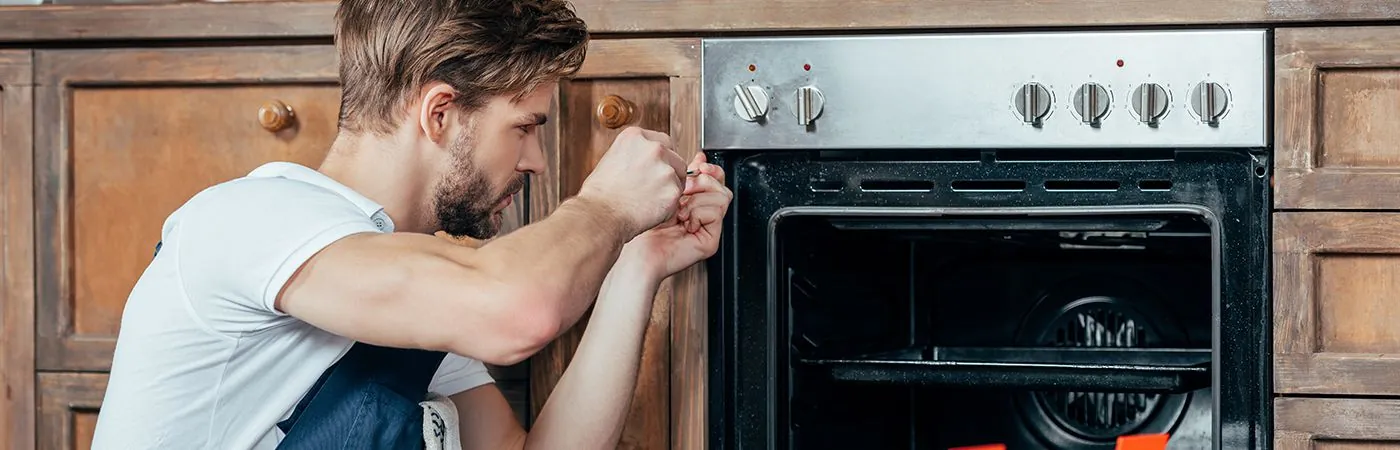
An electric range splits its power into two paths. The cooktop burners run on their own wiring and their own controls. The oven runs on a separate circuit inside the same box, with its own thermostat, its own relay, and often its own breaker in your panel. When only the oven stops, the fault sits on that second path.
The bake element is the most common failure. It heats and cools thousands of times over its life, and the metal sheath eventually cracks. Once air reaches the inner wire, the element burns through and stops heating. You’ll often see a blister or a chalky white patch on the surface.
The control board is the second common cause. It sends power to the element through a relay. When that relay sticks open, the element gets nothing, even though the display still lights up and the buttons still beep. A failed oven thermostat or temperature sensor causes the same result — the oven thinks it’s already hot, so it never turns the element on.
A tripped breaker is the third. Some homes wire the oven and cooktop to separate breakers. If only the oven breaker trips, the burners still work and the oven stays cold. Check your panel before you buy any part.
Safety: Inside a mains-powered machine, the parts behind the outer cover can hold a dangerous electrical charge even after it has been unplugged — that’s why they sit behind a cover. Opening the housing, or testing or replacing anything behind it, is a job for a qualified technician, never a home repair.
Test the element and the breaker first
This fix is for anyone with a dead oven and working burners. Start at the breaker panel. Find the double-pole breaker labeled for the range and look for a tripped switch — it sits halfway between on and off, not fully off. Flip it fully off, then back on. If it trips again right away, stop and call an electrician. That’s a wiring fault, not a part you can swap.
If the breaker holds, unplug the range or switch the breaker off again. Let the oven cool completely. Look at the bake element at the bottom of the cavity. A good element looks smooth and dark gray. A bad one shows a blister, a break, or a white chalky spot.
If the element looks fine, the problem is likely the control board or the sensor. Those need a technician. The U.S. Consumer Product Safety Commission tracks recalls on ranges and wall ovens — check your model there before you spend money on parts.
Reset the control board and check the door
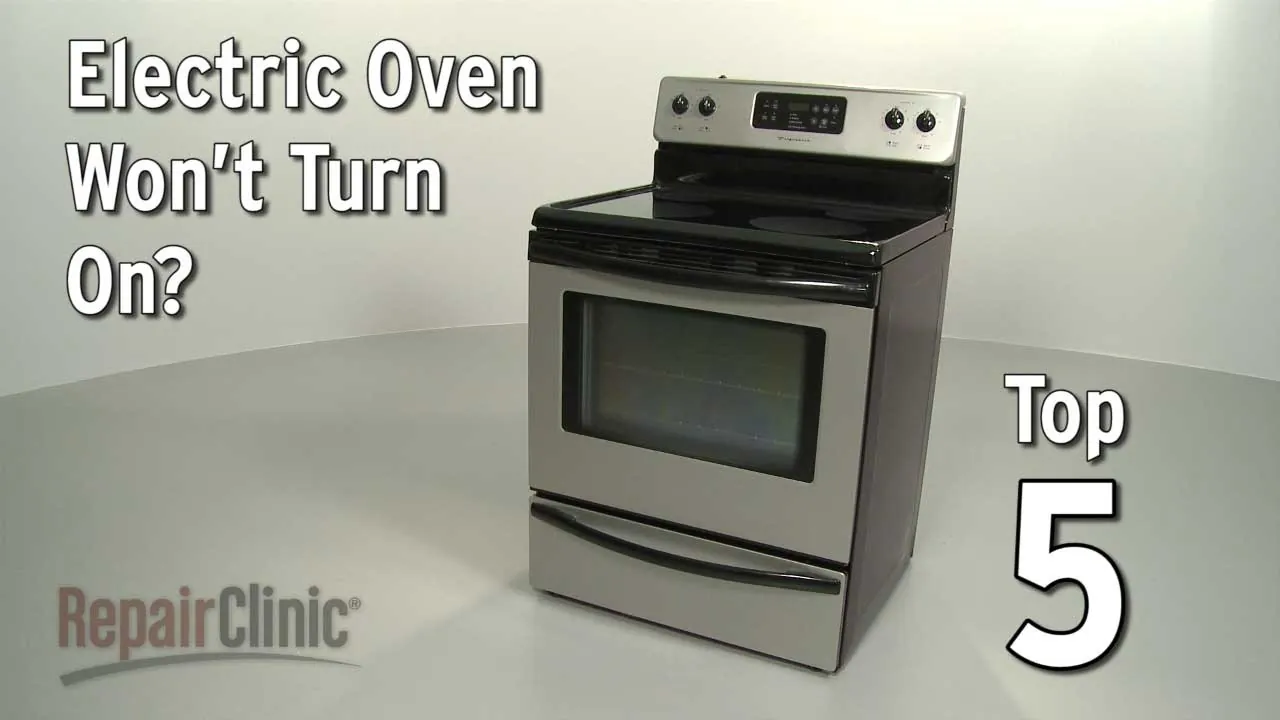
This fix is different in kind: it’s not about a part, it’s about the electronics. A control board can lock up after a power surge or a brownout. The display may look normal while the oven stays cold.
Switch the range breaker off at the panel. Wait a minute or so to let the board power down and reset. Switch the breaker back on. Set the oven to Bake at 350°F and give it 10 minutes. If the element glows, you’re done.
If it stays cold, check the door. Most ovens won’t heat if the door switch thinks the door is open. Push the door closed firmly and listen for the click. Look at the door latch and the hinge — a bent hinge keeps the switch open. On self-cleaning models, a locked latch also blocks the bake cycle.
Check the display for an error code. Codes starting with F mean a fault the board has logged. Look up your exact code in your model’s manual, not a generic list — the same code means different things across brands. If the board resets and the oven works, you’ve saved yourself a service call.
When it’s the board, the sensor, or the wiring
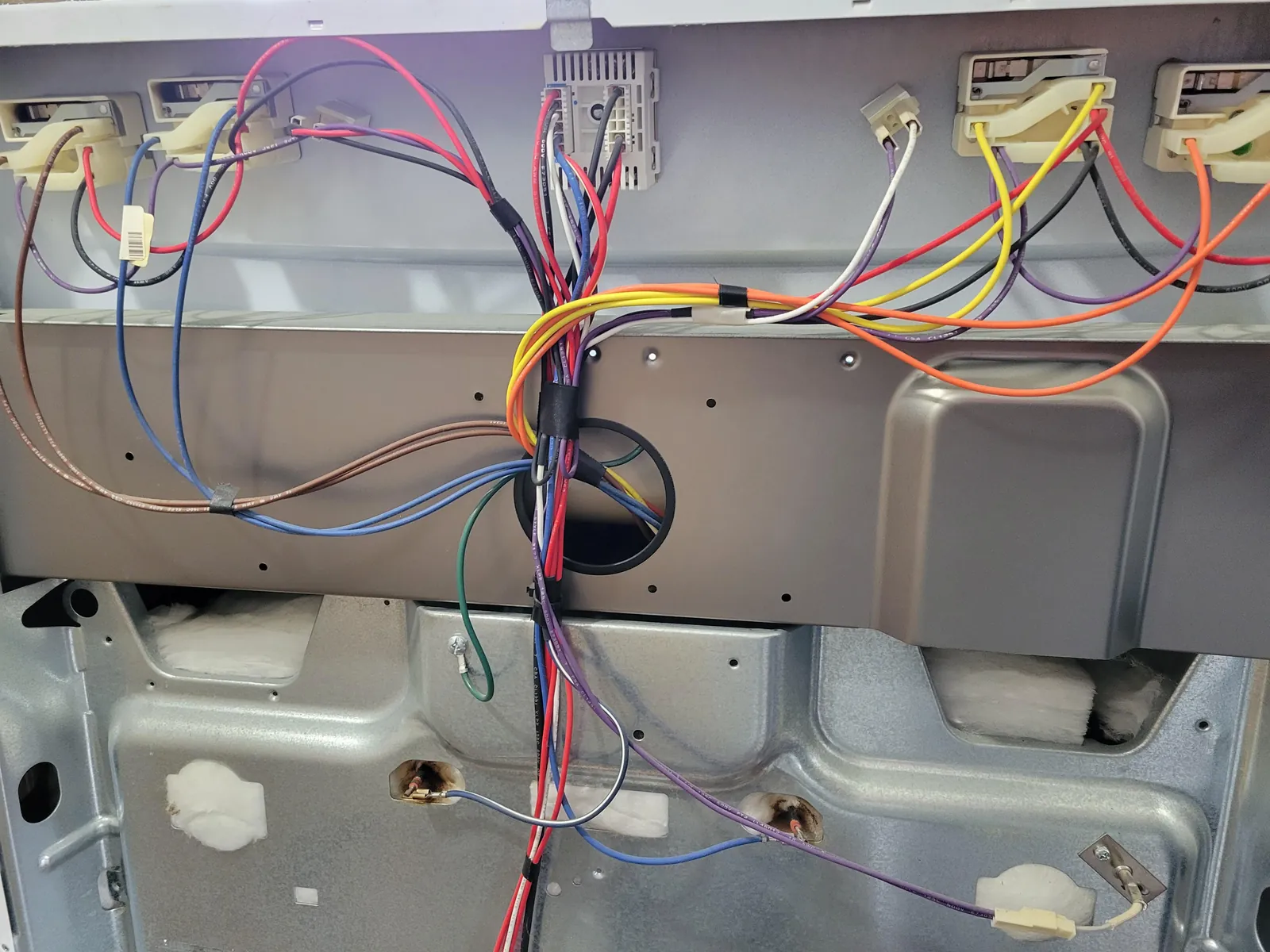
This is the fix for the harder cases, and it’s the one where you decide whether to pay. If the element tests good, the breaker holds, and a reset doesn’t help, the fault is inside the control board, the oven sensor, or the wiring between them. Those parts sit behind the back panel, near mains voltage.
Replacing a control board or an oven sensor is a job for a qualified appliance technician or an electrician. The parts sit behind the back panel near mains voltage, so leave the repair to a qualified technician. Don’t open the housing, and don’t touch the wiring. Call someone who does this for a living.
Is it worth it? If your range is fairly new and the repair costs less than half a new unit, repair usually wins. If it’s older and the board is the culprit, a new range often makes more sense. Get a written quote before you commit. For the exact part price on your model, check the manufacturer’s own parts page.
Popular oven advice that wastes your time
- “Just replace the element — it’s always the element.” It’s the most common cause, but if the breaker tripped or the board failed, a new element changes nothing and you’ve spent money for no reason.
- “Hold the door open a crack to make it heat faster.” That keeps the door switch open on many models, so the oven won’t heat at all. It makes a working oven look broken.
- “Reset it by unplugging for five seconds.” A brief interruption may not fully reset the board — leave it unplugged for a minute or so before restoring power.
- “If the display lights up, the oven is fine.” The display and the heating circuit are separate. A lit display tells you nothing about whether the element is getting power.
- “Flip the breaker a few times to clear the fault.” Repeated tripping means a real wiring fault. Keep flipping it and you risk damage — call an electrician instead.
Stop it happening again
One lead sentence: most oven failures come from heat stress, power surges, and skipped maintenance, and each has a simple counter-move. The table below sets what people often do against what actually protects the oven.
| If you’re doing this | Do this instead | Why |
|---|---|---|
| Leaving the oven on high heat for hours | Use the timer and don’t walk away for long cooks | Long high-heat runs stress the element and the board |
| Ignoring small power flickers | Add a whole-home surge protector | Surges damage the control board, the priciest part |
| Never cleaning the oven cavity | Wipe spills after each use, deep clean a few times a year | Burnt residue smokes, flavors food, and can ignite |
| Slamming the oven door | Close it gently and check the hinges yearly | A bent hinge keeps the door switch open |
| Replacing parts by guesswork | Test the element and breaker before buying anything | You avoid paying for parts you don’t need |
| Skipping the model recall check | Check your model on the CPSC recall list | Some faults are known safety issues, fixed free |
Related guides
Frequently asked questions
Why is my oven not heating but the burners work?
Because the oven and the cooktop use separate circuits inside the same range. The burners have their own wiring and controls, so they keep working when the oven’s bake element, control board, or oven breaker fails. The oven circuit is the one that stopped, not the whole appliance. Check the breaker first, then look at the bake element for visible damage.
How long does a bake element last?
Most bake elements last a long time, depending on how often you use the oven and how hot you run it. Heavy use and long high-heat cooking shorten that. There’s no fixed number — the lifespan depends on your cooking habits and your model. When it fails, you’ll usually see a blister or a chalky spot before it dies completely.
Can I use the stove top if the oven is broken?
Yes. The burners run on their own circuit, so you can keep cooking on the stove top while the oven is out. Just don’t leave the oven set to Bake — it’ll keep trying to heat and may log an error code. If you smell burning plastic or see smoke, stop and call a technician, because that’s not a normal element failure.
Is it safe to use an oven with a broken element?
No. A cracked element can short to the sheath and trip the breaker while you’re using it. Switch the range breaker off until it’s fixed. If you see a burn mark, a smell of burning, or scorching near the element, stop using the oven completely and have it checked. A damaged element is a fire risk, not just an inconvenience.
What does an F error code on my oven mean?
An F code means the control board logged a fault. The exact meaning depends on your brand and model — the same code means different things across makers. Look it up in your own model’s manual, not a generic list. Common causes include a failed temperature sensor, a bad control board, or a wiring problem. Most F codes need a technician to diagnose properly.
Why does my oven take so long to preheat now?
A slow preheat usually means the bake element is weakening or the oven sensor is reading wrong. The element still heats, just not as fast. If preheat time has crept up over months, the element is likely near the end of its life. Check for a blister or chalky spot, and compare your preheat time to the manual’s stated range for your model.
Should I repair or replace my electric oven?
Repair if the range is fairly new and the fix costs less than half a new unit. Replace if it’s older and the control board is the problem, since that’s the priciest part. Get a written quote first. For the exact part cost on your model, check the manufacturer’s parts page or ask the technician before you decide.
Conclusion
Most oven failures with working burners come down to three things: a dead bake element, a tripped oven breaker, or a failed control board. Check the breaker, look at the element, and try a full one-minute reset before you call anyone. If those don’t fix it, the fault is inside the electronics — and that’s a job for a technician, not a weekend project.