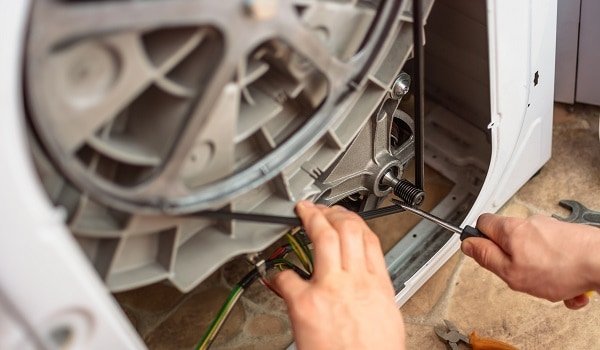
Most of the time, a Whirlpool washer that won’t spin clothes dry has an unbalanced load or a lid or door that isn’t fully latched. Those two account for the majority of “no spin” complaints. The fastest check: open the lid, spread the wet clothes evenly around the drum by hand, close it firmly, and start a Drain & Spin cycle. If the drum spins, you’ve found it. If nothing happens, the machine is telling you something else is wrong.
Whirlpool washer spins but clothes stay wet: the ranked causes
Here’s the thing about a no-spin problem — the symptom looks the same whether it’s a load issue, a lid issue, or something that needs a technician. The table below ranks the likely causes by how often each one turns out to be the real answer.
| Cause | How common | How to confirm it | Fix it yourself? |
|---|---|---|---|
| Unbalanced load | Very common | Drum thumps, then stops | Yes |
| Lid or door not latched | Very common | No spin at all, any cycle | Yes |
| Drain or pump blockage | Common | Water still sitting in drum | Yes, with care |
| Lid switch or lock failure | Sometimes | Lid closed, still no spin | No |
| Drive belt worn or slipped | Sometimes | Motor hums, drum silent | No |
| Control board or error code | Less common | Flashing lights, odd codes | No |
| Transmission or clutch worn | Rare | Grinding noise during spin | No |
Work down that list in order. The first two you can test in under five minutes with no tools.
Safety: Inside a mains-powered machine, the parts behind the outer cover can hold a dangerous electrical charge even after it has been unplugged — that’s why they sit behind a cover. Opening the housing, or testing or replacing anything behind it, is a job for a qualified technician, never a home repair.
The load is unbalanced or too heavy
An unbalanced load is the single most common reason a Whirlpool washer won’t spin clothes dry. The machine can’t spin safely when weight sits on one side of the drum, so it stops the spin to protect itself. You’ll usually hear a thumping or banging sound right before it quits.
The confirming test takes about two minutes. Open the lid or door, then push the wet clothes apart so they sit evenly around the drum. Don’t pack them down — just spread them. Close the lid firmly and run a Drain & Spin cycle. If the drum spins normally, the load was the problem.
One more thing to check while you’re in there: the load size. A single heavy item — a bath mat, a comforter, one pair of jeans — can throw the drum off balance on its own.
Add two or three towels to balance it out, or wash that item by itself on a Bulky setting if your model has one. Overloading works the same way. If the drum is stuffed past the top row of holes, pull some items out before you spin.
The fix costs you nothing but a few minutes. If the spin works after you redistribute the load, you’re done — no parts, no call. If it still won’t spin with a balanced load, move on to the next cause.
The lid or door isn’t fully latched
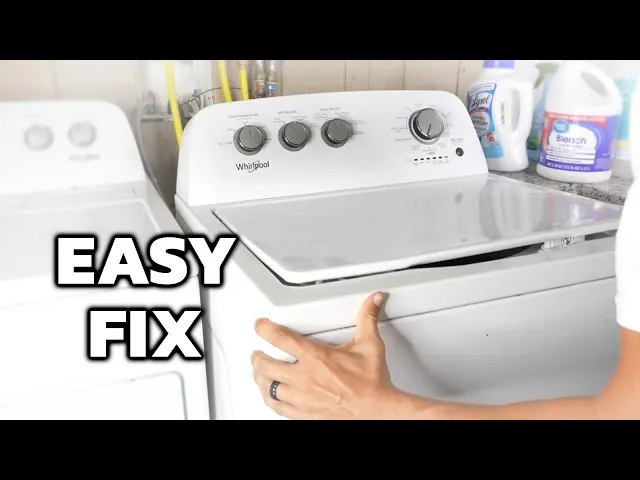
A Whirlpool washer won’t spin if it thinks the lid or door is open — that’s a safety feature, not a fault. Every modern top-load and front-load machine locks the drum before it spins. If the lock doesn’t engage, the spin never starts, and the cycle may just sit there or drain without spinning.
You can tell this cause apart from an unbalanced load by one clue: with an unbalanced load, the machine usually tries to spin and then stops. With a lid or door problem, it never tries at all. No thumping, no humming — just silence after the drain.
Here’s the check. Close the lid or door and press down firmly on the front edge. Listen for a click. On a top-loader, the lid should sit flat with no gap. On a front-loader, push the door until you feel it catch. If the machine still won’t spin, check for anything blocking the latch — a piece of clothing caught in the door seal, or a build-up of detergent around the strike plate. Wipe it clean with a damp cloth.
If the lid closes but the machine still won’t spin, the lid switch or door lock has likely failed. That’s a technician job — the switch sits behind the control panel, and testing it means working near live wiring. Don’t open the housing yourself.
Water won’t drain, so the spin never starts
A washer can’t spin with water still in the drum — the spin cycle only runs after the drain finishes. If you open the lid after a cycle and see standing water over the clothes, this is your cause. The machine isn’t failing to spin; it’s failing to drain, and the spin never gets its turn.
This cause is easy to tell apart from the first two: look at the water level. If the drum is full, it’s a drain problem. If the drum is empty and the clothes are just wet, it’s a spin problem.
Start with the drain hose. Pull the washer out far enough to see the back, and check that the hose isn’t kinked, crushed against the wall, or pushed too far into the standpipe. The hose should sit in the standpipe only a few inches deep — if it’s pushed down too far, it can siphon water back into the machine.
Next, check the drain hose for a clog. Disconnect it from the standpipe and look inside. Lint, hair, and small items like socks and coins collect there over time. Clear anything you find with your hand or a bottle brush.
If the hose is clear, the blockage is likely in the pump or the drain filter — and that’s where you should stop and call a technician. The pump holds water and sits near electrical parts, so it’s not a safe DIY job.
Rare causes worth knowing about
These come up far less often, but they’re worth a quick mention so you know what you’re looking at. If you’ve ruled out the three main causes, one of these is probably behind it.
- Lid switch or door lock failure — the machine won’t spin at all, even with the lid closed and latched. The switch itself has failed, and it needs a technician to replace.
- Worn drive belt — you’ll hear the motor humming but the drum stays still. Belts stretch and slip with age, and this is a technician repair on most Whirlpool models.
- Control board fault — the display flashes error codes or the cycle stops at odd points. Modern Whirlpool washers use electronic control boards, and a failed board can block the spin signal entirely.
- Transmission or clutch wear — a grinding or scraping noise during the spin, or the drum turns by hand but not under power. This is a major repair, and on an older machine it’s often the point where replacement makes more sense.
- Drain pump failure — the washer hums but never drains, and water stays in the drum. The pump has seized or the impeller is jammed.
Every item on this list needs a qualified technician. None of them are safe to diagnose or repair yourself — the washer holds water near live electrical parts, and opening the housing can void your warranty.
What a fix usually involves

The good news: the two most common fixes — redistributing the load and latching the lid — cost you nothing but a few minutes. No tools, no parts, no call. That’s the whole job for most people who land on this page.
If the drain hose is clogged, the fix is a bit more work. You’ll need to pull the washer out, disconnect the hose, and clear it by hand. Budget about 20 to 30 minutes, plus time to mop up the water that comes out. A replacement drain hose, if yours is cracked, is inexpensive.
The technician fixes — lid switch, belt, control board, transmission — are a different scale. A lid switch or belt replacement is one of the smaller repair bills you’ll face on a washer. A control board or transmission is several times that, and on an older machine the repair can approach the price of a new washer.
Get a written quote before you agree to anything, and ask the technician to confirm the diagnosis in plain words. For current pricing on parts, check Whirlpool’s official parts page or call their support line.
Related guides
Frequently asked questions
Why won’t my Whirlpool washer spin the clothes dry?
The most likely reason is an unbalanced load or a lid that isn’t fully latched — together these cause most no-spin complaints. Open the lid, spread the wet clothes evenly around the drum, close it firmly, and run a Drain & Spin cycle. If it spins, the load was the issue. If not, check for standing water in the drum.
How long does a Whirlpool washer spin cycle take?
A spin cycle runs a few minutes on most Whirlpool models, depending on the cycle you picked and the load size. A Bulky or Heavy Duty cycle spins longer than a Delicate cycle. If your machine stops early, it may be detecting an unbalanced load and shutting down.
Can I open the lid during the spin cycle?
No — the lid locks during the spin for safety, and opening it stops the cycle. On most Whirlpool top-loaders, the lock releases shortly after the drum stops turning. If you force the lid open while it’s spinning, you can damage the lid switch or the lock mechanism. Wait for the click before you lift it.
Is it safe to keep running the washer if it won’t spin?
It’s safe to run a Drain & Spin cycle to test, but don’t keep running full wash cycles that end with soaking-wet clothes. The extra weight puts strain on the drum, belt, and bearings over time. If two or three test spins fail, stop and get it looked at rather than running it again and again.
What happens if I overload my Whirlpool washer?
An overloaded drum can’t balance itself, so the spin stops or never starts. Clothes come out dripping wet. Over time, the extra weight wears the belt, bearings, and suspension. Keep the load below the top row of holes in the drum — if you can’t push the clothes down with one hand, it’s too full.
How much does it cost to fix a Whirlpool washer that won’t spin?
It depends on the cause. A clogged drain hose costs you nothing but time. A lid switch or belt replacement is one of the smaller repair bills — roughly the price of a mid-range pair of shoes. A control board or transmission is several times more. Get a written quote first, and compare it to the price of a new machine.
Does it matter which cycle I use for spinning?
Yes — cycle choice affects spin speed and time. A Delicate cycle spins slower and leaves more water in the clothes. A Heavy Duty or Drain & Spin cycle spins faster and longer. If your clothes come out wet on Delicate, that’s normal for the setting, not a fault. Switch to a higher-spin cycle for towels and jeans.
When should I call a technician instead of fixing it myself?
Call a technician the moment the problem isn’t a load, a latch, or a visible hose clog. Anything behind the control panel needs someone qualified, since those parts sit near live wiring and standing water.
Conclusion
If you’ve checked the simple stuff and the drum still won’t turn, it’s time to call a technician or look up your model’s error codes. Don’t keep running cycles hoping it’ll fix itself—that can burn out the motor. You’ll save money by getting it looked at early.