
If you’re deciding between a gas and electric stove, the monthly cost difference is real but smaller than most people expect: running a gas range typically costs about $3–$10 per month, while an electric range usually runs $8–$25 per month, depending on your local utility rates and how much you cook. Over a year, that gap adds up to roughly $60–$180 — meaningful, but rarely the deciding factor on its own.
Key Takeaways
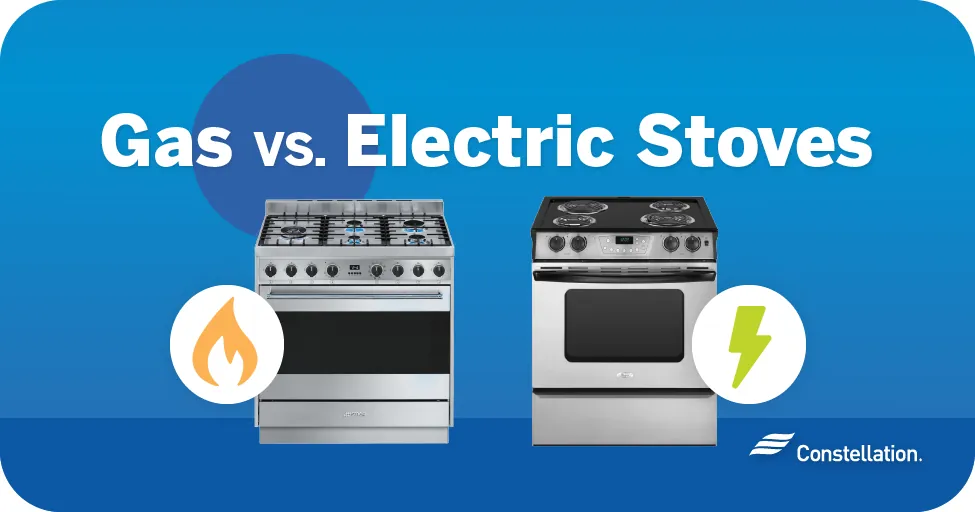
- Gas is usually cheaper to operate in most U.S. markets, but the gap narrows sharply where natural gas prices are high or electricity is cheap (think hydro-heavy states).
- The stove is one of the smallest energy loads in your kitchen. Your refrigerator, water heater, and HVAC dwarf it. Don’t expect a range swap to transform your bill.
- Installation costs can erase years of savings. Running a new gas line or a 240-volt circuit can cost $200–$1,500+, which is why the “cheaper to run” fuel isn’t always cheaper overall.
- Induction electric is the efficiency winner. It transfers roughly 85–90% of its energy to the pan, versus about 40% for gas, so it can close or reverse the cost gap.
- Your local utility rates decide everything. Pull your actual per-therm gas rate and per-kWh electric rate before trusting any national average.
- Ventilation and health matter too. Gas combustion produces indoor pollutants, so a working range hood isn’t optional.
How Much Does a Stove Cost to Run?
The honest answer is that a stove is a low-drain appliance. Cooking accounts for a small slice of a typical home’s energy use — often in the single digits as a percentage of total household consumption. That’s the context that makes the gas-versus-electric debate feel bigger than it is.
Here’s the rough math most cost comparisons are built on:
- A typical burner runs at 1,000–3,000 watts (electric) or 5,000–12,000 BTU/hr (gas).
- A household that cooks seriously might log 30–60 minutes of active burner time per day.
- Multiply that by your local rate, and you land in the $3–$25 per month range.
The reason the range is so wide is that two variables swing it hard: how much you cook and what you pay per unit of energy. A household that eats out five nights a week will barely notice the difference. A household that cooks three meals a day for a family of five will feel it.
The Two Numbers You Actually Need
Before you calculate anything, find these on your utility bill:
- Your electric rate, in cents per kilowatt-hour (¢/kWh). The U.S. average sits around 16–17¢/kWh, but rates range from under 10¢ to over 30¢ depending on state.
- Your gas rate, in dollars per therm (or per hundred cubic feet, CCF). The U.S. average is roughly $1.20–$1.50 per therm, but it swings seasonally and by region.
Write both down. Everything below is just arithmetic on those two figures.
Gas vs Electric Stove Monthly Cost: The Numbers
Let’s put real figures on the table. The table below assumes a household cooking about 45 minutes of burner time per day — a reasonable middle estimate — and uses mid-range U.S. utility rates.
| Scenario | Gas Cost/Month | Electric Cost/Month | Induction Cost/Month |
|---|---|---|---|
| Light cooking (1 meal/day) | $3–$5 | $8–$12 | $6–$9 |
| Average cooking (2–3 meals/day) | $5–$8 | $14–$20 | $10–$14 |
| Heavy cooking (family, batch cooking) | $8–$12 | $20–$30 | $14–$22 |
| High gas price region | $10–$16 | $14–$20 | $10–$14 |
| Cheap hydro electricity region | $5–$8 | $6–$10 | $4–$7 |
A few things jump out:
- Gas wins on raw fuel cost in most markets, but not by a landslide.
- Induction beats standard electric because it wastes less heat, which is why it lands between gas and conventional electric.
- In cheap-electricity regions, the electric advantage can vanish entirely.
Why Gas Is Usually Cheaper Per Unit
Natural gas has historically been cheaper per unit of delivered heat than electricity in most U.S. markets. That’s the core reason gas ranges cost less to run. The catch is that gas burners are inefficient — a lot of the heat escapes around the pan rather than going into your food. Even so, the fuel is cheap enough that gas usually still comes out ahead.
Why Electric Can Win Anyway
Electricity prices vary enormously by state. In places with abundant hydropower or nuclear generation, electric rates can be low enough that an electric or induction range undercuts gas. Meanwhile, in regions with high natural gas prices — or where you’re paying for propane delivered by truck rather than piped natural gas — the equation flips.
Pro Tip: If you heat with propane, your “gas” cost is much higher than piped natural gas. Propane ranges often cost more to run than electric, so don’t assume “gas is cheaper” without checking which gas you actually have.
The Installation Cost Nobody Mentions
This is where the monthly math gets ambushed. The operating cost is only half the story — the upfront cost to switch fuels can be brutal.
| Switch Type | Typical Cost Range | What’s Involved |
|---|---|---|
| Like-for-like swap (gas→gas, electric→electric) | $100–$300 | Delivery, hookup, haul-away |
| Electric → gas (gas line nearby) | $200–$600 | New gas line stub, shutoff valve, conversion |
| Electric → gas (no gas line) | $500–$1,500+ | Running a new gas line from the meter |
| Gas → electric (240V outlet exists) | $100–$300 | Cord, hookup |
| Gas → electric (no 240V outlet) | $400–$1,200+ | New dedicated 240V circuit, breaker, permit |
Here’s the trap: if switching fuels costs $800 and saves you $8 per month, the payback period is 100 months — over eight years. Most people replace a stove long before that. The monthly savings never materialize as real savings.
When Switching Fuels Makes Sense
Switching makes financial sense when:
- You’re already renovating and the walls are open (running a line or circuit is cheap).
- You’re replacing a failing stove anyway and the hookup already exists.
- You have a safety or health reason to move off gas.
- You’re adding induction for cooking performance, not just cost.
When It Doesn’t
Skip the switch if:
- You’d need to run a new gas line or 240V circuit from scratch.
- Your current stove works fine.
- You’re chasing monthly savings that won’t pay back the install cost.
Real-World Factors That Change the Math

National averages are a starting point, not your answer. These variables move the needle more than most people realize.
How Much You Actually Cook
A household that cooks one meal a day versus one that cooks three meals plus batch-cooks on weekends can see a 3x difference in range energy use. Be honest about your habits before you calculate.
Your Local Utility Rates
This is the single biggest swing factor. A 30¢/kWh electric rate versus a 10¢/kWh rate triples your electric cooking cost. Similarly, gas at $0.80/therm versus $1.80/therm more than doubles it. Pull your actual rates.
Appliance Efficiency
A modern ENERGY STAR-rated appliance uses less energy than a 20-year-old unit. If you’re comparing a new gas range to a new electric range, both are reasonably efficient — but if you’re comparing either to your ancient stove, the new one wins regardless of fuel.
Ventilation and Health Costs
Gas stoves produce combustion byproducts, including nitrogen dioxide, that can affect indoor air quality. The U.S. Environmental Protection Agency publishes guidance on indoor air quality and combustion sources. A properly sized and vented range hood — which you should run every time you cook with gas — adds a small amount to your electric bill but is a real cost of gas ownership. Electric and induction ranges don’t produce combustion pollutants at the cooktop.
Peak vs Off-Peak Rates
If your utility uses time-of-use pricing, running an electric range during peak hours (typically late afternoon and evening) costs more than running it midday or late at night. Gas doesn’t have this problem — its price is the same whenever you cook. This is a genuine, underrated advantage for gas in TOU markets.
Gas vs Electric vs Induction: Which Is Cheapest?
Let’s rank them by operating cost in a typical U.S. market, all else equal.
| Rank | Fuel Type | Typical Monthly Cost | Notes |
|---|---|---|---|
| 1 | Natural gas | $3–$12 | Cheapest fuel, but inefficient burners |
| 2 | Induction electric | $6–$22 | High efficiency offsets higher electric rate |
| 3 | Standard electric (coil/radiant) | $8–$30 | Least efficient; slowest to respond |
| 4 | Propane | $10–$25 | Fuel cost much higher than piped gas |
Induction is the sleeper pick. It’s electric, so it avoids gas combustion concerns, and it’s efficient enough to compete on cost with gas in many markets. Its downside is upfront price — induction ranges and cooktops typically cost more to buy than comparable gas or coil-electric models.
Efficiency Comparison
- Gas: roughly 40% of heat reaches the pan.
- Standard electric coil/radiant: roughly 65–75%.
- Induction: roughly 85–90%.
That efficiency gap is why induction can beat standard electric on cost even though both use electricity. It’s also why induction can approach gas on cost in markets where gas is expensive.
How to Calculate Your Own Number
Stop trusting averages and run your own math. It takes five minutes.
Step 1: Find Your Rates
Grab your most recent electric and gas bills. Note:
- Electric: ¢/kWh (divide total bill by kWh used if it’s not stated).
- Gas: $/therm or $/CCF.
Step 2: Estimate Burner Hours
Count your realistic daily cooking time. A simple approach:
- Breakfast: 10 minutes
- Lunch: 10 minutes
- Dinner: 30 minutes
- Total: ~50 minutes/day
Step 3: Apply the Formula
Electric: (burner watts × hours × rate) ÷ 1,000 = daily cost Gas: (BTU/hr × hours × rate per therm) ÷ 100,000 = daily cost
Multiply by 30 for your monthly figure.
Step 4: Add the Hidden Costs
- Range hood electricity (small, but real for gas).
- Any TOU surcharges.
- The amortized cost of installation if you switched fuels.
Pro Tip: If your calculated difference is under $5 per month, ignore it. At that level, choose based on cooking preference, safety, and installation cost — not pennies.
Non-Cost Reasons People Choose One Over the Other
Cost isn’t everything, and pretending otherwise leads to regret.
Why People Pick Gas
- Instant, visible heat control. You can see the flame and adjust it instantly.
- Works during power outages (you can light a burner with a match on many models).
- Preferred by many professional and serious home cooks for charring and wok cooking.
- Cheaper fuel in most markets.
Why People Pick Electric or Induction
- No combustion byproducts in indoor air.
- Induction boils water faster than gas — often in half the time.
- Easier to clean (flat glass surface).
- No gas line needed, which simplifies installation and permits.
- Safer around kids in some respects — no open flame, cooler surface (though induction surfaces still get hot from the pan).
What Actually Drives Your Bill

Here’s the uncomfortable truth: your stove isn’t why your utility bill is high. Compare the typical monthly costs:
| Appliance | Typical Monthly Cost |
|---|---|
| Refrigerator | $10–$20 |
| Water heater (electric) | $30–$60 |
| HVAC (seasonal) | $50–$200+ |
| Clothes dryer | $10–$25 |
| Range/stove | $3–$25 |
If you’re trying to cut your energy bill, the stove is one of the last places to look. Insulate your water heater, seal your windows, and adjust your thermostat first. The range is a rounding error by comparison.
Frequently Asked Questions
Is it cheaper to cook with gas or electric?
Gas is usually cheaper to operate in most U.S. markets, typically running $3–$12 per month versus $8–$30 for standard electric. But once you factor in the cost of running a new gas line or electrical circuit, electric can be cheaper overall — especially if you already have the right hookup.
How much does a gas stove cost per month?
A gas stove typically costs $3–$12 per month to run, depending on how much you cook and your local gas rate. Households that cook heavily or live in high-gas-price regions land at the top of that range; light cooks in cheap-gas areas land near the bottom.
Does an electric stove use a lot of electricity?
An electric stove uses a moderate amount — roughly 1,000–3,000 watts per burner. Over a month of typical cooking, that translates to $8–$30. It’s not a major load compared to your water heater, HVAC, or refrigerator, but it’s more than gas in most markets.
Is induction cheaper than gas to run?
Sometimes. Induction is far more efficient (85–90% versus about 40% for gas), which offsets electricity’s higher unit price. In markets with cheap electricity, induction can cost less than gas. In markets with expensive electricity, gas still wins.
How long until a gas stove pays for itself?
If you’re switching from electric and paying $800 to install a gas line, saving $8 per month, payback takes about 100 months — over eight years. Most stoves don’t last long enough for that to pay off, so switching purely for savings rarely makes sense.
Do gas stoves increase my electric bill?
No — gas stoves don’t use electricity for the burners (though the igniter and any electronic display draw a tiny amount). They increase your gas bill instead. The main added electric cost is running your range hood, which you should do every time you cook with gas.
Conclusion
Your next step is simple: pull your last electric and gas bills, find your actual rates, and run the four-step calculation above. If the monthly difference comes out under $5, choose the stove you’ll actually enjoy cooking on — and spend your energy budget on the water heater instead.
1 thought on “Gas vs Electric Stove Monthly Cost: Which Costs Less to Run in 2026”