Your freezer is too cold when it holds food below 0°F (-18°C). That’s the number to aim for. Most freezers run best at 0°F, and the sweet spot for the dial or panel is usually the middle setting. If yours sits at -10°F or lower, ice cream turns rock-hard and energy bills climb. The fix depends on one thing: whether the cold is steady or only happens sometimes.
Quick answers on a freezer that’s too cold
- Target temperature: 0°F (-18°C) is the standard for safe long-term frozen storage, set by the USDA Food Safety and Inspection Service. Below -10°F, food quality suffers and you’re paying for power you don’t need.
- First check: Put a fridge/freezer thermometer between two frozen items, leave it overnight, and read it in the morning. The panel display can be wrong by several degrees.
- If it’s steady and too cold: Raise the dial one number (or 5°F on a digital panel) and wait 24 hours before changing it again.
- If it only freezes hard at night or after door openings: The thermostat is likely fine — the issue is airflow, a door seal, or a defrost cycle.
- When to call a technician: If the temperature swings widely on its own, or the freezer runs nonstop, the thermostat, thermistor, or defrost system needs a pro.
Why a freezer gets colder than it should
A freezer doesn’t have one temperature — it has a target the thermostat keeps chasing. When the thermostat reads warm, it runs the compressor. When it reads cold enough, it stops. If the sensor is off, or the air around it’s blocked, the compressor keeps running past the point it should.
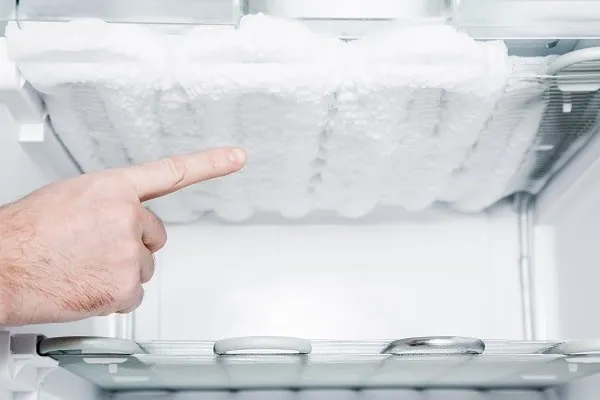
The thermostat sensor usually sits on the freezer wall or behind a panel. If ice builds up around it, the sensor reads colder than the food actually is, so the compressor runs longer. That’s why a freezer with a thick frost layer often runs colder than the dial says.
Defrost cycles matter too. Frost-free freezers warm up briefly every 8 to 12 hours to melt ice off the coils. If that cycle is stuck on or off, temperatures drift. A freezer that never defrosts builds ice; one whose defrost cycle runs too long or too often warms the food repeatedly.
Airflow is the third piece. Cold air needs to move around the food. A freezer packed tight against the back wall blocks the vents, and the thermostat reads a pocket of cold air instead of the whole box. That makes the compressor cycle oddly — sometimes too cold, sometimes not cold enough.
Finally, the room matters. A freezer in a garage or hot kitchen works harder. Most home freezers are rated for room temperatures between 0°F and 110°F, but performance drops at the edges. If your garage hits 90°F in summer, the freezer runs longer and the inside can dip below target.
None of this means the freezer is broken. It means the number on the dial isn’t the number in the box. You have to measure the box.
When the simple fix isn’t enough

The “turn it down one notch” advice works for a steady, slightly-too-cold freezer. It doesn’t work for every case. Here’s where the answer changes.
| Situation | What changes | What to do instead |
|---|---|---|
| Freezer in a hot garage | Compressor runs longer, inside dips cold | Move it indoors or use a garage-ready model |
| Thick ice on the back wall | Sensor reads false cold, runs nonstop | Defrost fully, then reset the dial |
| Door seal feels loose | Cold air escapes, thermostat overcorrects | Test with a dollar bill, replace the gasket |
| Digital panel reads -20°F | Sensor or board may be faulty | Check with a separate thermometer first |
| Freezer is nearly empty | Less thermal mass, faster temperature swings | Fill empty space with water jugs |
| Frost-free cycle runs long | Food thaws slightly, then refreezes | Call a technician for the defrost timer |
How to fix a freezer that’s too cold
Work through these in order. Each step takes a few minutes, and you’ll know within a day whether it worked.
-
Measure the real temperature. Put a fridge/freezer thermometer between two frozen items, not on a shelf. Leave it overnight, at least 8 hours. Read it before opening the door in the morning. If it reads 0°F or above, your freezer isn’t too cold — the panel is wrong.
-
Check the door seal. Close the door on a dollar bill so half hangs out. Pull it slowly. If it slides out with no resistance, the gasket is worn. Run this test at four points: top, bottom, and both sides. A bad seal makes the freezer work harder and run longer.
-
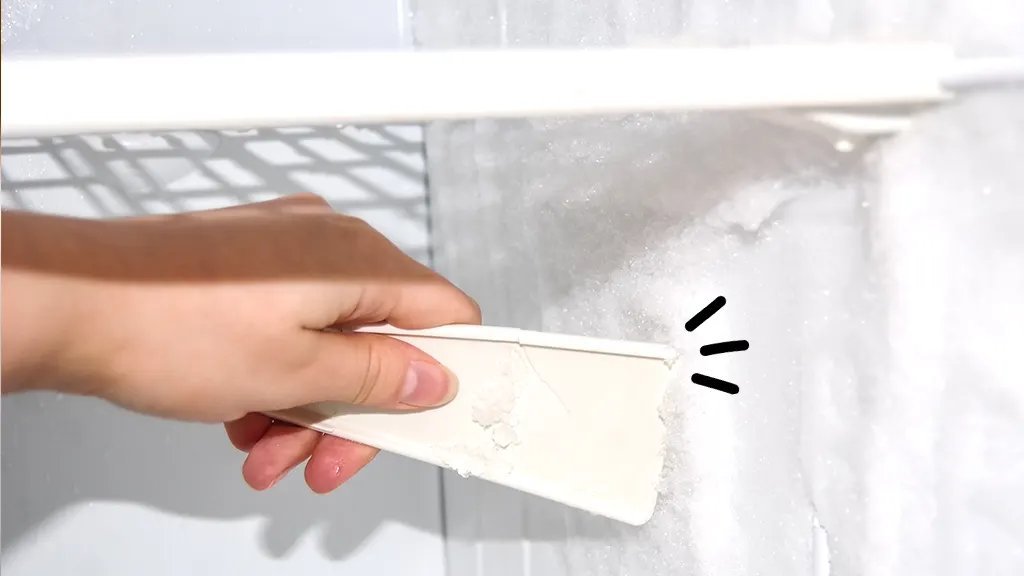
Look for ice buildup. Open the door and check the back wall and the vents. More than a quarter-inch of frost means the defrost system isn’t keeping up. Unplug the freezer, leave the door open for 24 hours with towels down, and let it thaw completely. Never chip ice with a knife — you can puncture a coolant line.
-
Clear the airflow. Pull food about 2 inches away from the back wall and the vents. Don’t stack items against the ceiling of the freezer. Cold air needs a path from the vents to the thermostat sensor, or the sensor reads the wrong spot.
-
Adjust the dial one step. Turn the dial one number warmer, or raise a digital setting by 5°F. Wait a full 24 hours before checking again. Freezers respond slowly because the food mass holds temperature. Changing the setting twice in one day tells you nothing.
-
Add thermal mass if it’s empty. A half-empty freezer swings in temperature. Fill empty space with sealed water jugs or bags of ice. This steadies the temperature and makes the compressor cycle less often.
-
Check the room temperature. If the freezer sits in a garage or utility room, note the high and low for a week. Most home freezers are rated for 0°F to 110°F room temperature, but they run best between 65°F and 80°F. If your space goes outside that, the freezer isn’t faulty — the location is.
-
Call a technician if it still runs cold. If the temperature stays below -10°F after all of the above, the thermostat, thermistor, or control board is the likely cause. Those parts sit behind panels and near live wiring. A capacitor can hold a lethal charge even when the freezer is unplugged, so this isn’t a do-it-yourself job.
Mistakes that make a freezer colder
- Turning the dial down without measuring first. People assume the panel is right. It often isn’t. You end up chasing a number the freezer never had, and food quality drops while you guess.
- Chip ice off with a knife or screwdriver. This is the fastest way to puncture an evaporator line. The repair costs more than a new freezer in many cases, and the coolant leaks out.
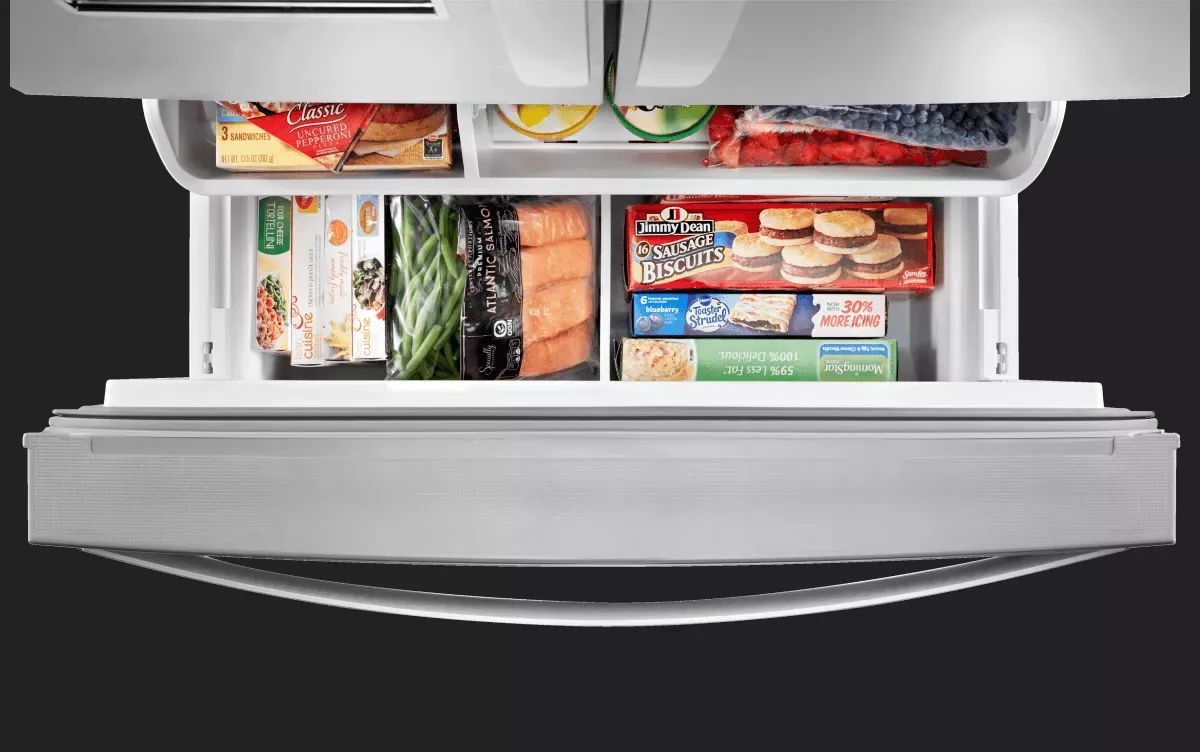
- Packing food tight against the back wall. It blocks the vents and the thermostat sensor. The freezer reads a cold pocket and keeps running, so the rest of the box gets colder than it should.
- Changing the setting twice in one day. A freezer takes 12 to 24 hours to settle after an adjustment. Two changes in a day means you’re reading the old temperature, not the new one.
- Ignoring a hot garage. A freezer rated for indoor use will struggle in a 95°F garage. It runs longer, dips colder inside, and wears out faster. The location is the problem, not the appliance.
Frequently asked questions
What temperature is too cold for a freezer?
Below -10°F (-23°C) is too cold for normal home use. The standard target is 0°F (-18°C), which keeps food safe and quality high. At -10°F or lower, ice cream gets hard to scoop, vegetables lose texture faster, and the compressor runs more than it needs to. Check your freezer with a separate thermometer before trusting the panel number.
Why is my freezer suddenly freezing everything solid?
A sudden change usually points to a failing thermostat, a stuck defrost cycle, or a blocked sensor. If ice has built up around the thermostat, the sensor reads false cold and the compressor won’t stop. Defrost the freezer fully, clear the vents, and measure again in 24 hours. If it’s still below -10°F, call a technician.
Is it safe to eat food from a freezer that’s too cold?
Yes, food stays safe at any temperature below 0°F. Cold doesn’t spoil food — it just changes texture. Ice cream, bread, and vegetables suffer most. Meat and fish handle very cold temperatures well. The bigger risk is a freezer that swings warm, not one that runs cold. Safety comes from staying frozen, not from the exact number.
How long does it take to fix a freezer that’s too cold?
Allow 24 hours after each adjustment before checking the temperature again. A freezer’s food mass holds cold, so the air changes fast but the food takes a full day to settle. If you change the dial, wait a day, then measure. Rushing the check means you’ll adjust again and overshoot in the other direction.
Can a freezer be too cold for the compressor?
Yes, in a way. A freezer that runs nonstop because the thermostat never reads “cold enough” wears the compressor out faster. Compressors are built for cycles — run, rest, run. Constant running builds heat and shortens the appliance’s life. If your freezer never seems to shut off, that’s the warning sign, not the temperature itself.
Does a fuller freezer run colder?
A full freezer holds temperature more steadily, but it doesn’t run colder. The extra mass resists temperature swings, so the compressor cycles less often. An empty freezer swings more and can dip colder during long run cycles. Fill empty space with water jugs or bags of ice to steady things without changing the setting.
What happens if I leave a freezer too cold for months?
Food quality drops first. Ice cream becomes unworkable, bread dries out faster, and vegetables lose texture. Energy use climbs because the compressor runs more. Over months, the extra wear shortens the compressor’s life. The food stays safe the whole time — it just doesn’t taste as good, and you pay more for the privilege.
When should I call a technician for a freezer that’s too cold?
Call one when the temperature stays below -10°F after you’ve checked the seal, cleared the vents, defrosted, and adjusted the dial. Also call if the freezer runs nonstop, if the temperature swings widely on its own, or if you hear clicking from the back. Thermostat, thermistor, and defrost timer repairs sit behind panels near live wiring — that’s technician work, not a weekend project.
Conclusion
A freezer that’s too cold is usually a setting problem, not a broken appliance. Measure the real temperature, check the seal and the vents, and adjust one step at a time. If it still runs below -10°F after a full day, the thermostat or defrost system needs a pro.