
Dishwasher soap not dissolving usually comes down to one thing: the water isn’t hot enough when the cycle starts, or the soap never gets wet in the first place. Most of the time it’s a loading or water-temperature problem, not a bad detergent. The fastest check is to run a short cycle with nothing in the machine and look at the dispenser cup right after it opens.
Why your dishwasher soap isn’t dissolving
| Cause | How common | How to confirm it | Fix it yourself? |
|---|---|---|---|
| Water too cold at start | Very common | Run hot tap before starting | Yes |
| Dishes blocking dispenser | Very common | Check cup after cycle | Yes |
| Detergent clumped or old | Common | Look for hard lumps | Yes |
| Dispenser door not opening | Sometimes | Watch it open mid-cycle | Yes, with care |
| Too little or too much soap | Sometimes | Check fill line | Yes |
| Spray arm blocked | Less common | Spin it by hand | Yes |
| Water inlet valve weak | Rare | Count fill cycles | No |
The pattern matters more than any single row. If two or three of the top causes are true at once, fixing just one won’t solve it.
Start with the top two rows together, not one at a time. Cold water and a blocked dispenser produce the same symptom, and each costs nothing to rule out.
Detergent is the row people misread. Powder that has sat open through a humid summer clumps into a brick that never dissolves, so the cup looks full at the end of the cycle. If the box is more than a few months old and has been stored under the sink, replace it before you touch anything mechanical.
The dispenser door is the one to watch rather than guess at. Run a cycle with the door propped open and watch. If it never swings, the spring or the latch is the problem, and forcing it will snap the plastic.
Count the fill cycles before you call anyone. A weak inlet valve usually shows up as the machine filling more slowly than it should, and that’s a repair, not a cleaning job.
Cold water at the start of the cycle
Most dishwashers pull a small amount of water at the beginning and heat it themselves, but many models rely on your home’s hot water line for the first fill. If that line is cold, the detergent sits in the cup with lukewarm water and never fully breaks down.
The symptom is powder left in the cup, or a white film on the door after the cycle ends. Run the kitchen tap until the water feels hot — 30 to 60 seconds is typical, but it depends on how far the machine sits from the water heater. Then start the cycle.
Check your manual for whether your model heats its own water. If it does, this isn’t your problem and you should look at loading instead. If it doesn’t, the tap trick costs you a minute and nothing else.
The U.S. Department of Energy notes that most of a dishwasher’s energy goes to heating water, which is why many modern models use less of it than older ones.
Dishes blocking the dispenser cup
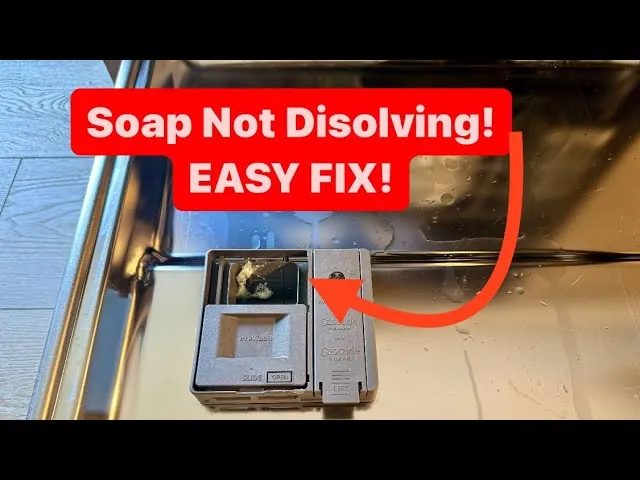
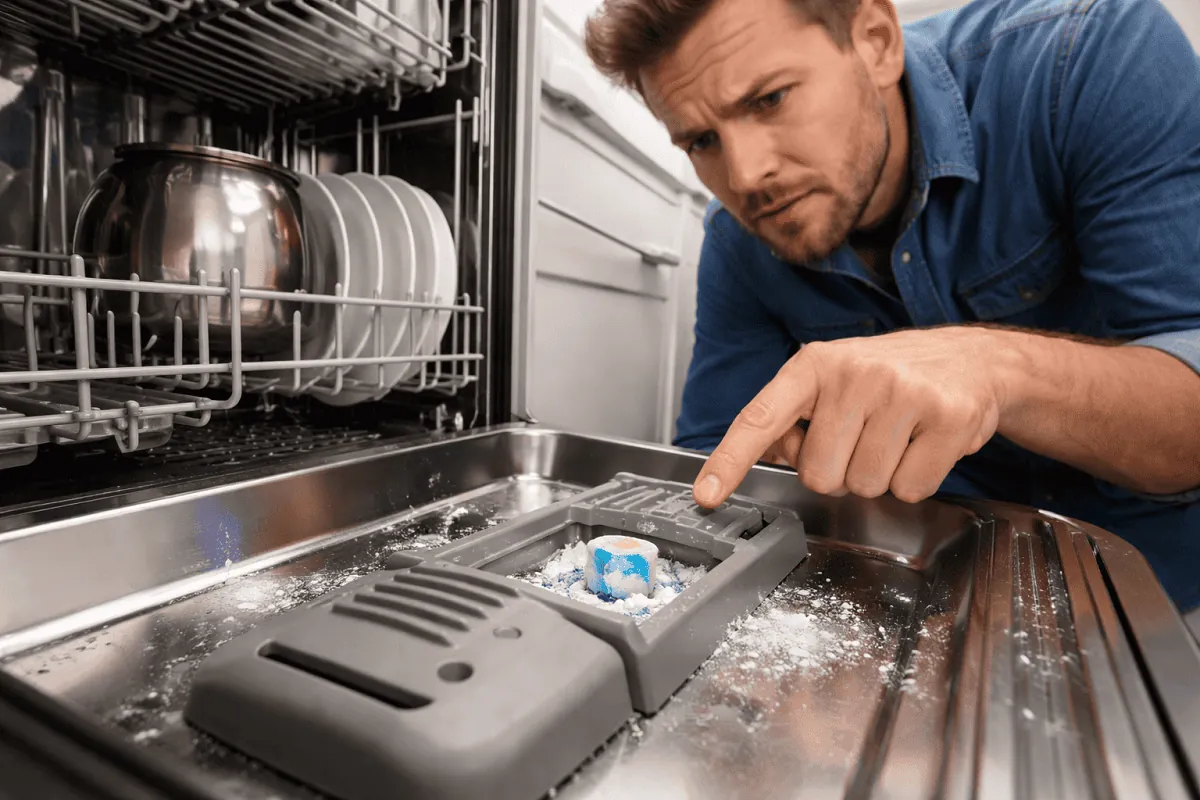
A plate or bowl sitting in front of the detergent cup stops the door from opening, or blocks the water jet that’s meant to flush the soap out. The soap stays put, the door stays shut, and you find a full cup at the end.
To confirm it, run a cycle and open the door about 15 minutes in. If the cup is still closed and a dish is pressed against it, you’ve found it. Move tall items to the sides and back, never in front of the dispenser.
The fix is free and takes seconds. Leave a gap of at least 2 inches between the dispenser and anything you load. Face plates and bowls toward the center spray, not toward the door.
The mistake is loading by size instead of by position. A baking sheet that fits fine on the bottom rack can still be the culprit if it stands in the dispenser’s path, and people rearrange the whole load before they think to check that one spot.
If the door opens fine but soap still sits there, the problem is water reaching the cup, not the loading. That points to a blocked spray arm — spin it by hand and check the holes.
One more thing worth knowing: some machines run the dispenser door on a wax motor that releases a few minutes into the wash, not at the start. If you open the door early and the cup is still shut, that alone proves nothing. Wait until the main wash is underway before you blame your loading.
Old or clumped detergent
Powder and pods absorb moisture. Once they clump, water can’t get inside the lump and the center stays dry through the whole cycle. This shows up as a hard brick in the cup or a pod with its film still intact.
Store detergent somewhere dry, and keep the box or bag sealed. If your powder is already lumpy, break it up or replace it. Pods that stick together in the bag are a sign the storage spot is too humid.
A cheap test: drop a clumped scoop into a glass of warm water. If it breaks apart on its own within a minute, it’s still fine to use. If it sits there like a stone, the powder has taken on enough moisture that it will do the same in your machine, and no amount of extra dose will fix it.
Check the fill line on the cup too. Overfilling packs powder so tight that water only wets the top layer. Underfilling means there’s not enough soap to do the job, but it won’t leave residue — it just won’t clean.
If your machine has a pre-wash compartment, use it. That first small dose gets flushed early and helps the main wash. Skip it and the main cup does all the work alone.
Less common causes
- Dispenser door spring is broken. The door stays shut or opens late. Listen for a click about 10 minutes into the cycle — silence points here.
- Spray arm holes are clogged with food or hard water. Spin the arm by hand; it should turn freely. A toothpick clears the holes.
- Water inlet valve is failing. The machine fills too slowly, so there’s not enough water to dissolve anything. Count the fill — it should take under a minute.
- Hard water is leaving mineral scale. You’ll see white chalky buildup inside the machine, not just on dishes. A rinse aid helps, but scale on the heater needs a proper descaling cycle.
- Wrong detergent for your machine. Some older models need powder, not pods, because the cup can’t hold a pod flat.
Anything past the spray arm and the dispenser door is technician work. The inlet valve sits behind the machine and connects to live water lines, and the heater and wiring inside the tub carry mains voltage even when unplugged. Call a qualified appliance technician for those.
What fixing it actually takes
The cheap fixes — loading, hot water, fresh detergent — cost you nothing but a few minutes and a change of habit. Start there, because most people find their answer in the first three causes without spending anything.
If you need a new dispenser assembly, expect a part in the range of a mid-priced kitchen item, plus labor if you don’t fit it yourself. The cost depends on your model and whether the part is still made. Get a real quote from the manufacturer’s parts page or a local repair shop rather than guessing.
A spray arm is usually the cheapest part to replace and often the easiest to fit. A water inlet valve sits in the middle — more involved, and worth paying someone if you’re not comfortable with water lines.
Time-wise, a dispenser swap runs about an hour for someone who’s done it before. A valve replacement takes longer because you’re working behind the machine. Ask the shop for a flat quote before they start.
Frequently asked questions
Why is my dishwasher soap not dissolving?
The most common reason is cold water at the start of the cycle, followed by dishes blocking the dispenser door. Run your hot tap for 30 to 60 seconds before starting, and make sure nothing sits in front of the cup. If both are fine, check whether your detergent has clumped from moisture.
Can I use regular dish soap in the dishwasher?
No. Hand dish soap foams heavily and will overflow the machine, potentially flooding your kitchen floor. Use only detergent made for dishwashers. If you’ve already added hand soap by mistake, stop the cycle, drain it, and run a rinse cycle with no detergent until the foam is gone.
How long should a dishwasher cycle take?
A normal cycle runs about 2 to 3 hours on most modern machines, and an eco cycle can run longer. If your cycle finishes in under an hour, the water may not be getting hot enough to dissolve the soap. Check your manual for the expected time on your chosen setting.
Is it safe to put the detergent in the bottom of the dishwasher?
It’s safe but not ideal. Powder tossed in the tub gets flushed during the pre-wash and is gone before the main wash starts. That leaves the main wash with no soap at all. Use the dispenser cup unless your manual says otherwise.
What happens if I use too much dishwasher detergent?
Too much soap leaves a white film on dishes and can leave residue inside the machine. It won’t damage the dishwasher, but you’ll need to run an extra rinse cycle. Stick to the fill line on the cup, and use less if your water is soft.
Does it matter which detergent I use?
Yes, it matters for older machines. Pods need a flat, dry cup to sit in, and some older dispensers can’t hold them properly. Powder works in almost any machine. Check your manual for what your model recommends.
How often should I clean my dishwasher?
Clean the filter regularly, and run a descaling cycle as often as needed if you have hard water. A clogged filter and mineral scale both stop water from reaching the detergent properly. Your water hardness decides how often you need the descale, so check your owner’s manual for guidance.
Can hard water stop detergent from dissolving?
Yes. Hard water leaves mineral scale on the heater and spray arms, and that scale reduces how well water flows and heats. You’ll see white chalky buildup inside the tub. A rinse aid and a regular descaling cycle are the fixes.
Conclusion
Most people solve this in ten minutes once they know where to look. Run the hot tap, clear the front of the dispenser, and check your detergent for clumps. If the soap still won’t dissolve after that, the problem is mechanical — and that’s the point to call someone.