A GE dishwasher that won’t start and just beeps usually has a control lock or a door-latch problem. Most of the time, the beeping is the machine telling you it can’t begin the cycle — not that a major part has failed. The fastest check is to press and hold the Start or Lock pad for 3 seconds and watch for a lock icon on the display.
What usually makes a GE dishwasher beep instead of start
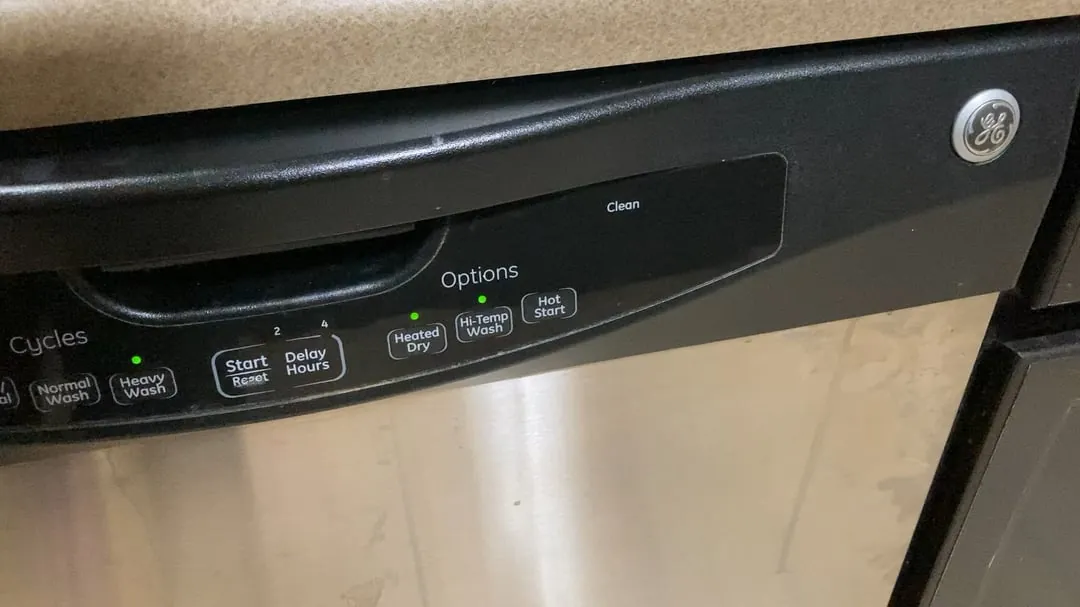
The beeps are a signal, and where they come from narrows the cause fast. GE dishwashers beep for a control lock, an unlatched door, a stuck key, a drain or water fault, or a power problem after an outage. Rank the likely causes with the table below, then work down it.
| Cause | How common | How to confirm it | Fix it yourself? |
|---|---|---|---|
| Control lock is on | Very common | Lock icon lit on display | Yes |
| Door not fully latched | Very common | Door moves when pushed | Yes |
| Keypad stuck or wet | Common | One pad feels dead | Yes with care |
| Drain or water fault | Sometimes | Standing water in tub | Yes with care |
| Power glitch after outage | Sometimes | Clock or display reset | Yes |
| Flood switch tripped | Uncommon | Water in base pan | No |
| Control board failure | Uncommon | No response at all | No |
The last two rows are where you stop. A tripped flood switch or a dead board needs a technician, because both sit behind the housing and involve parts a home user shouldn’t touch.
Safety: Inside a mains-powered machine, the parts behind the outer cover can hold a dangerous electrical charge even after it has been unplugged — that’s why they sit behind a cover. Opening the housing, or testing or replacing anything behind it, is a job for a qualified technician, never a home repair.
Control lock is on
Control lock is the single most common reason a GE dishwasher beeps and won’t start. It’s a child-safety feature that disables every pad except the lock itself, so the machine beeps to tell you the press didn’t register. The lock icon on the display confirms it.
To clear it, press and hold the pad labeled Lock or Control Lock for 3 seconds. On most GE models the icon disappears and the dishwasher accepts a start command. On some models the lock clears through Start held for 3 seconds instead — check your model’s control panel, since the exact pad varies by series.
If the icon won’t clear after three tries, the pad itself may be stuck. Wipe the panel with a damp cloth and dry it fully, then try again. A wet or greasy keypad can hold a phantom press.
One detail trips people up: on several GE series the lock re-engages by itself a short while after you clear it. If the icon comes back without anyone touching the panel, you aren’t fighting a fault, you’re fighting a setting that keeps resetting.
Hold the lock pad until the icon goes out, then start a cycle within a few seconds. If it stays off through the wash, the panel is fine. If it returns before you can press Start, the control is locking on its own and the board needs service.
This fix costs you about a minute and no money. If the lock clears and the dishwasher still beeps, move to the door latch. Control lock is a setting, not a fault — nothing is broken when this is the cause.
The door isn’t latching fully
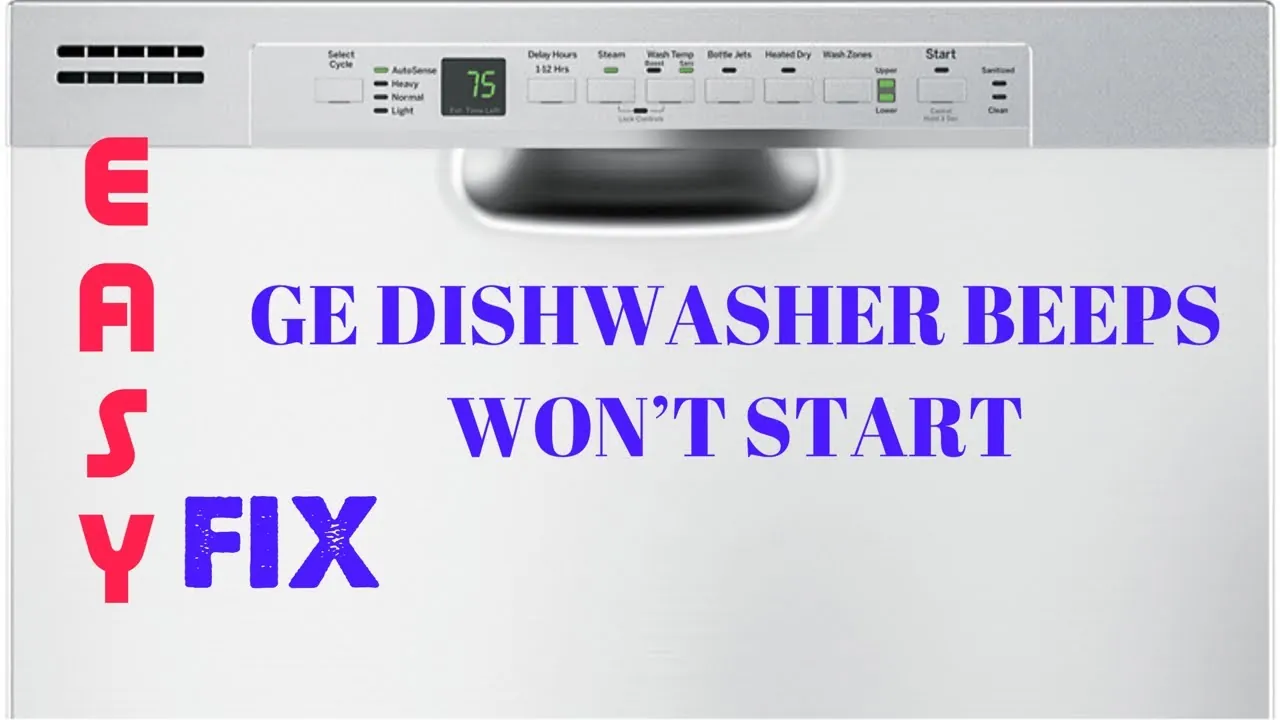
A door that looks closed but isn’t latched will beep every time you press Start. The latch has to trip a switch inside the frame before the control board allows a cycle. If that switch never closes, the board beeps and waits.
Tell this apart from control lock by checking the display: no lock icon means the door is the suspect. Push the door firmly at the top center until you hear or feel a click. Then press Start once.
If it still beeps, open the door and look at the latch strike on the tub frame. Food debris, a bent strike, or a worn latch can stop it seating. Clean the strike with a soft brush, then close and test again. A misaligned door can also be the cause — check that the dishwasher sits level, because a unit tipped forward won’t latch cleanly.
Latch parts are cheap and the swap takes about 15 minutes with a screwdriver on most GE models. If the latch is fine and the door still won’t register, the door switch itself may have failed, and that’s a technician job.
Standing water points to a drain fault
Water sitting in the bottom of the tub will stop a GE dishwasher from starting, and it beeps to flag the fault. The machine won’t run a wash cycle if it can’t confirm the tub drained first. This is a different mechanism from a lock or latch — the beeping comes from a sensor, not a setting.
Check the tub before anything else. If you see standing water, the drain path is blocked. Pull the bottom rack and remove the filter assembly, then rinse it under the tap. Grease and food film build up there and slow draining over months.
Next, check the air gap on the sink, if you have one, and the garbage disposal knockout plug. A disposal that was recently replaced often still has its knockout plug in place, which blocks the dishwasher drain completely. That’s a common miss after a new disposal install.
Clear the filter and the drain hose, then run a short rinse cycle to confirm the tub empties. If water remains after that, the drain pump or check valve is the problem — call a technician.
Less common reasons for the beeping
These causes are rarer, so check the three above first. Each has one clue that points to it.
- Power glitch after an outage. The control board can lock up mid-cycle. Kill power at the breaker for 1 minute, restore it, and try again.
- Flood switch tripped. Water in the base pan lifts a float and cuts the cycle. You’ll see water under the unit — this needs a technician, since the base pan sits behind the housing.
- Control board failure. No pad responds and no display shows. Board replacement is a technician job and the part is model-specific.
- Door switch failure. The latch clicks but the machine still won’t start. Testing it means reaching live wiring — stop and call a pro.
- Wiring or harness fault. Intermittent beeps with no pattern. This is diagnostic work for someone with the right tools.
The flood switch and control board are the two where a home user should stop. Both involve opening the housing and working near live wiring, so leave them to a technician. Name the fault to your technician and let them handle it. The GE appliance support page lists model-specific guidance and owner’s manuals you can check before you call.
What fixing it actually involves
Clearing a control lock costs you a minute and nothing else. A door latch is a small part and about 15 minutes with a screwdriver — comparable to swapping a light switch, not a whole fixture. A drain filter clean is free and takes 5 minutes.
The drain pump, door switch, flood switch, and control board are the jobs that need a technician. Each one sits behind the housing or near live wiring, and each part is model-specific. A technician visit covers the diagnosis and the labor, and the part is billed on top.
Cost depends on your model, your region, and whether the part is in stock. Get a written quote before work starts, and ask whether the repair is worth it against a new unit. For a machine past its expected service life, a board or pump repair often costs a large share of a new dishwasher.
Two things decide most of these calls. If the machine is relatively new and the rest of it works, repair usually wins. If it has already had one major part replaced, the second failure is the signal to stop.
Ask the technician for the diagnosis fee in writing before anyone comes out. Some waive it when you approve the repair, some do not, and that difference is real money on a job you might decline.
Skip the online part number lookup unless you have the model and serial plate in hand. The same dishwasher sold in two years can take two different boards, and a wrong board isn’t returnable once it has been fitted.
Frequently asked questions
Why does my GE dishwasher just beep and not start?
Control lock is on most of the time. Press and hold the Lock or Control Lock pad for 3 seconds and watch for the icon to clear. If there’s no lock icon, the door latch is the next suspect — push the door firmly until it clicks, then press Start.
Can a GE dishwasher beep because the door is open?
Yes. The latch has to trip an internal switch before the board allows a cycle. If the door looks shut but the switch never closes, the machine beeps and waits. Push the top center of the door until you feel a click, then press Start once.
How long does it take to fix a GE dishwasher that won’t start?
A control lock clears in about a minute. A door latch swap takes roughly 15 minutes with a screwdriver. Drain and pump repairs run longer and need a technician, so book a visit and expect the job to take under an hour of labor plus the part.
Is it safe to keep pressing Start when my dishwasher beeps?
No. Repeated presses won’t clear a lock or a latch fault, and on some models they can trigger a longer lockout. Find the cause first — check the lock icon, then the door, then the tub for standing water — and fix that before pressing Start again.
What happens if I ignore the beeping?
Nothing breaks right away, but the dishwasher won’t run. If the cause is standing water, leaving it lets the water sit and smell. If it’s a flood switch, the leak continues. Clear the simple causes and call a technician if the beeping stays.
Does it matter which pad I hold to clear the lock?
Yes. Most GE models use the Lock or Control Lock pad held for 3 seconds. Some series use Start held for 3 seconds instead. Check your model’s control panel or the owner’s manual, since the correct pad varies by series.
Can a power outage cause my GE dishwasher to beep?
Yes, sometimes. A power glitch can leave the control board locked up mid-cycle. Turn the dishwasher off at the breaker for 1 minute, restore power, and try a start. If it still beeps, work through the lock and latch checks.
When should I call a technician instead of fixing it myself?
Call a pro for a flood switch, a control board, a door switch, or any wiring fault. Those sit behind the housing and involve live voltage. Name the symptom and the checks you’ve done, and let the technician test and replace the part safely.
Conclusion
If the beeping continues after you’ve tried the basics, it’s worth calling a technician or checking your manual for model-specific reset codes. You’ll save time and money by describing exactly what you hear and see. That way, you won’t be guessing at parts you don’t need.