
Frost build up in freezer happens when warm, moist air gets inside and freezes on the coldest surface. The fix: find the air leak first, then defrost fully.
The most common cause is a door that doesn’t seal — a worn gasket, a bent hinge, or food stuck in the way. Run a dollar bill around the door edge and pull it out at points along the way. If it slides out with no drag, that spot is leaking.
A failed gasket is the usual culprit, and it’s a cheap part on most models. A bent hinge or a door that sags is a different job and worth a technician.
Unplug the unit, empty it, and let the ice melt with the door open before you do anything else. Don’t chip at it.
Why frost keeps coming back
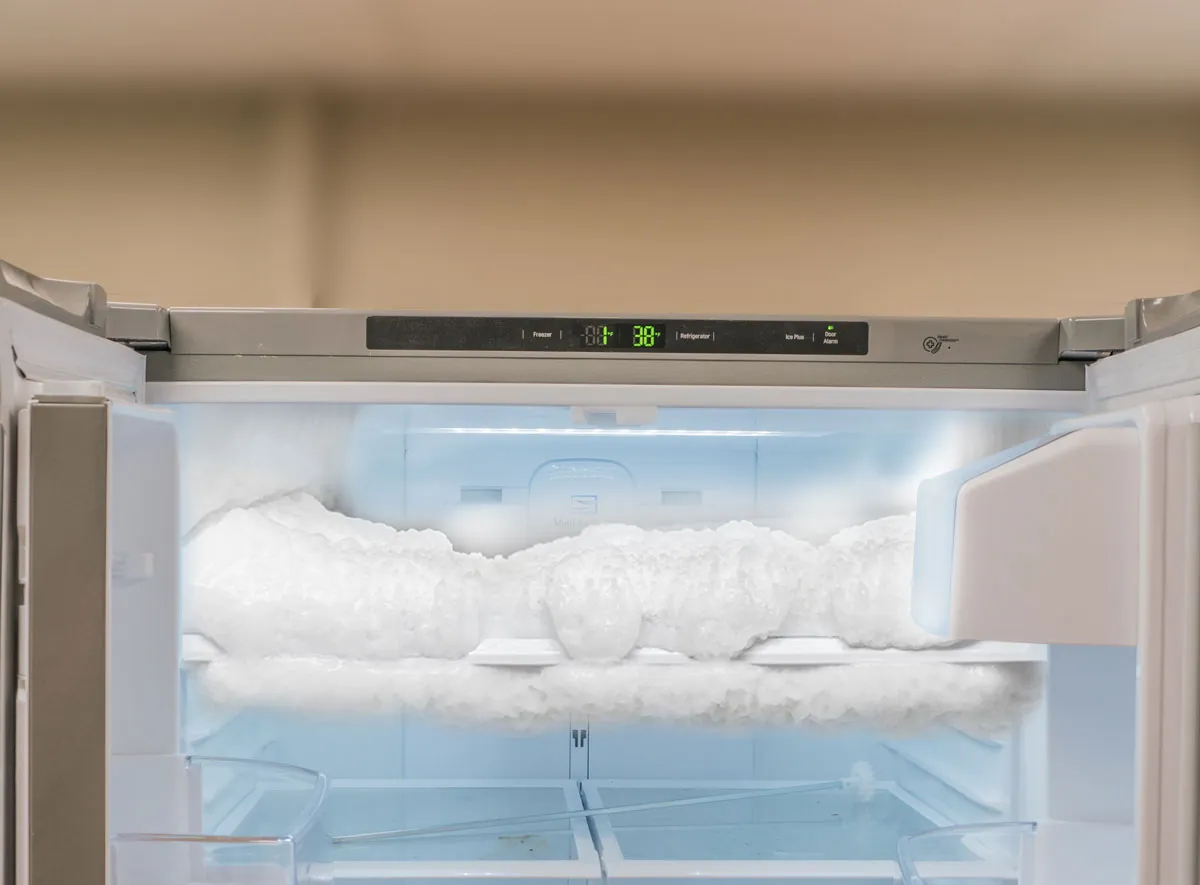
Frost needs two things: moisture and a cold surface. Your freezer always has the cold surface. So the real question is where the moisture comes from. Almost always, it’s air from your kitchen getting in.
The door seal is the first suspect. A gasket that’s cracked, flattened, or dirty lets a thin stream of humid air in all day. That air hits the evaporator coils, drops its moisture, and turns to frost. Over weeks, it builds into a layer.
The second cause is how you use the door. Every time you open it, you trade cold dry air for warm damp air. Leaving it open while you decide what to cook, or opening it ten times during dinner prep, loads the freezer with moisture. A full freezer recovers fast. A nearly empty one doesn’t.
The third cause is what you put inside. Uncovered leftovers, open ice cream tubs, and warm food straight from the pot all release water vapor. That vapor freezes on the walls. A blocked or iced-over drain hole makes it worse — meltwater can’t escape, so it refreezes.
If your freezer has a self-defrost cycle and frost still appears, the heater or timer may have failed. That’s a technician’s job, not yours.
Check and fix the door seal
This is the fix for most people, and it’s free. It’s for you if frost builds up fast — within a week or two of defrosting — and you can see ice near the door opening or along the frame.
First, clean the gasket. Warm water with a little dish soap, a soft cloth, and run it along the whole seal. Sticky residue and crumbs stop the gasket from sitting flat. Dry it well.
Then test it. Close the door on a dollar bill so half hangs out. Pull it slowly. If it slides out with no resistance, the seal is loose at that spot. Test every few inches around the frame.
If the gasket is loose, try a hair dryer on low to soften it, then press it back into shape. For a bent door, check the hinge screws — a door that sags won’t seal no matter how good the gasket is.
If the gasket is cracked or flattened, replace it. Order the part using your model number from the manufacturer. Most gaskets push into a channel and need no tools.
You’ll know it worked when frost stops forming near the door within a week. If frost still builds up fast, the leak is somewhere else — or the defrost system has failed, and you should call a technician.
Control the moisture you put in
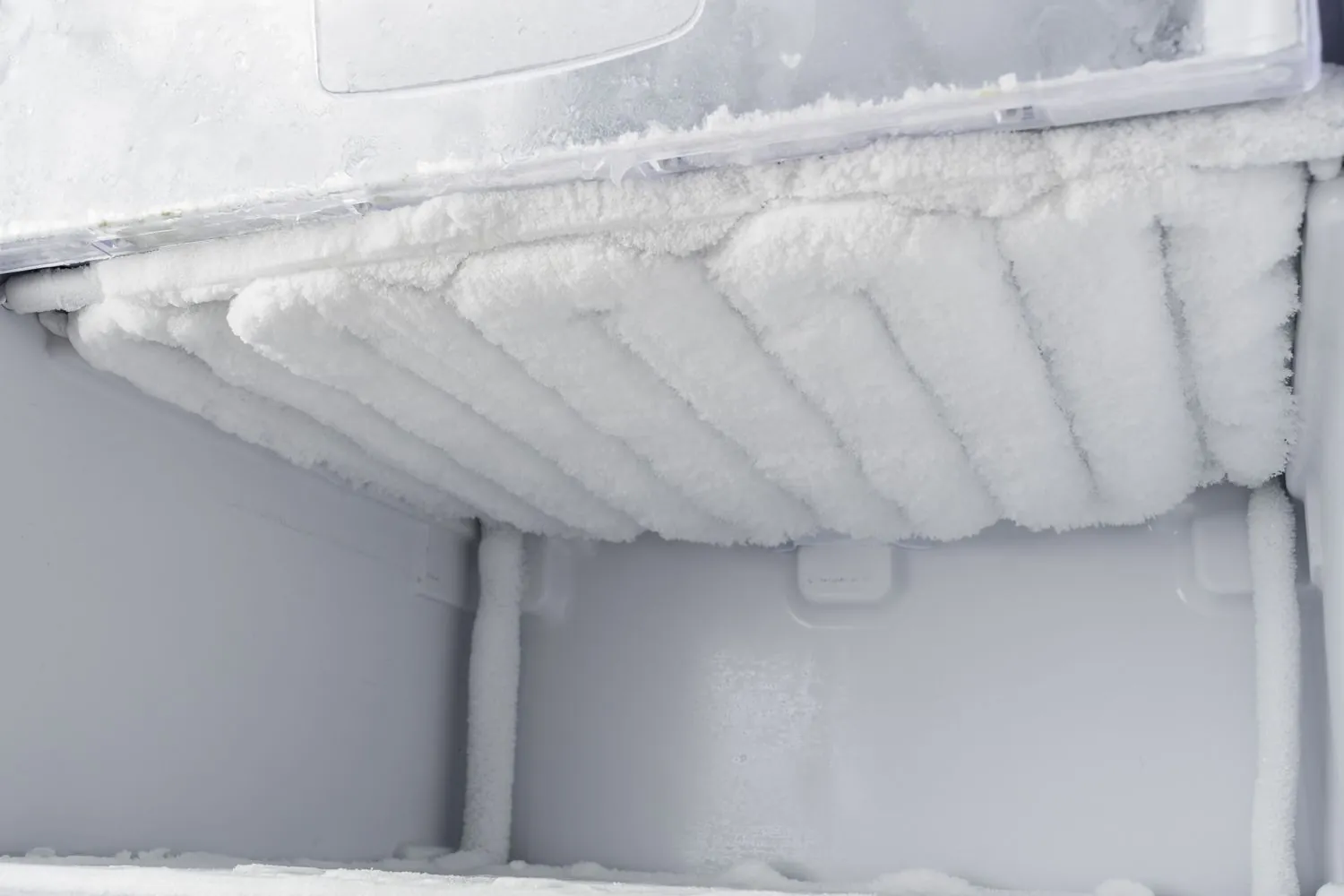
This fix works on the other side of the problem: the water already inside your freezer. It’s for you if the door seals fine but frost still appears, or if you store a lot of open containers.
Cover everything. Leftovers go in containers with lids, or get wrapped tight. A bowl of stew left open releases its water into the air, and that water ends up as frost on the walls.
Let hot food cool first. Putting a warm pot straight in adds a burst of steam. Let it sit on the counter until it stops steaming, then cover and chill it. Don’t leave it out more than two hours — the USDA FoodSafety.gov guidance on leftovers covers the safe cooling window.
Keep the freezer about three-quarters full. A full freezer holds the cold better than an empty one, so the compressor runs less and less warm air gets pulled in. If you’re short on food, add a few water bottles.
Check the drain hole. On frost-free models, it’s at the back, usually under the bottom drawer. If it’s blocked with ice or food, meltwater pools and refreezes. Clear it with a turkey baster of warm water.
You’ll know it worked when the walls stay clear between defrosts and there’s no ice on the floor of the freezer.
Defrost fully and do it right
This is the fix for a freezer that’s already iced up — more than a quarter-inch of frost, or a layer that’s closing in on your food. It’s worth the half-day because a heavy ice layer makes the compressor work harder and raises your power bill.
Plan it for a day when you don’t need the food. Unplug the freezer. Move everything to a cooler with ice, or to a second freezer. Keep the door open and let the ice melt on its own.
Speed it up safely with bowls of hot water on the shelves and a fan blowing into the open door. Towels on the floor catch the meltwater — a lot comes out. Never use a knife, screwdriver, or ice pick. One slip punctures a coil, and the repair costs more than a new freezer in many cases.
Once it’s clear, wipe everything dry. A dry freezer frosts more slowly than a damp one. Plug it back in, let it reach temperature, then reload.
This isn’t worth it if frost is only a light dusting — you’d waste a day. Save the full defrost for when ice is actually costing you space or money.
What makes frost worse
-
Chipping ice with a knife or screwdriver. It’s the fastest way to puncture a coolant line. A punctured coil means a sealed-system repair, and on a basic freezer that often costs more than replacing the unit. If the ice is too thick to pull out by hand, unplug the unit and let it melt. No tool is worth that risk.
-
Running a hairdryer on high inside the freezer. The heat can crack plastic shelves and liners, and water plus electricity near an outlet is a real shock risk. Use hot water bowls instead. Set them on a towel so they don’t slide, and keep the door closed between refills.
-
Ignoring the door because “it’s just a little frost.” A thin layer insulates the coils, so the compressor runs longer and longer. What starts as a dusting becomes a thick block within weeks. Once you can’t see the back wall, you’ve waited too long.
-
Packing food tight against the back wall. It blocks air circulation and traps moisture right where the coldest surface is. Leave a gap of a couple of inches. The same goes for the vents on a frost-free model — cover those and you get ice in a unit that was built to avoid it.
-
Defrosting the freezer and skipping the drain hole. Meltwater refreezes in the channel, and you’re back to square one within days. Pour a cup of hot water down it before you start, and check it again when you finish.
Stopping it from coming back
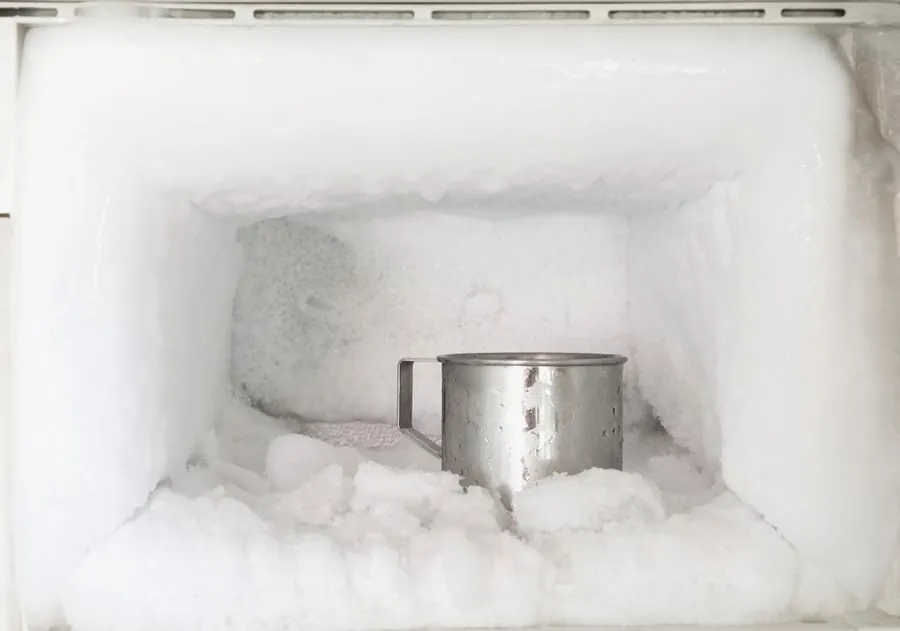
Small habits keep frost away far longer than any single deep clean. Set your freezer to the right temperature and let the machine do its job.
| If you’re doing this | Do this instead | Why |
|---|---|---|
| Leaving the door open while you unpack groceries | Decide what you need before you open it | Every open second pulls in humid kitchen air |
| Storing leftovers in open bowls | Use lidded containers or wrap tight | Open food releases water vapor that freezes on the walls |
| Letting the freezer run nearly empty | Keep it about three-quarters full | A full freezer holds cold and runs the compressor less |
| Setting the temperature as cold as it goes | Aim for 0°F, per the FDA’s refrigerator and freezer guidance | Colder than needed wastes power and won’t stop air leaks |
| Waiting until ice is thick to defrost | Defrost at about a quarter-inch of frost | Thin frost is quick to clear; thick ice costs you money |
| Skipping the door seal test | Run the dollar-bill test every few months | A loose gasket is the number one cause of fast frost |
Frequently asked questions
How long does it take to defrost a freezer?
Most freezers take 3 to 6 hours with the door open and bowls of hot water inside. A freezer packed with thick ice can take 12 to 24 hours. Speed it up with a fan pointed at the open door and fresh hot water every 30 minutes. Never use a knife or an ice pick — one slip can puncture a coil.
Is frost in the freezer dangerous?
No, light frost itself isn’t a health risk — it’s frozen water. The problem is what it does to the machine: it insulates the coils, so the compressor runs longer and your power use goes up. Thick ice can also block the door from sealing, which makes the frost grow faster. Defrost when it reaches about a quarter-inch.
Why does my freezer frost up so fast?
A bad door seal is the usual reason. Run the dollar-bill test around the frame — if the bill slides out easily, air is getting in. Other causes are opening the door often, storing uncovered food, or a blocked drain hole. If your freezer is frost-free and still ices up, the defrost heater or timer may have failed, and that needs a technician.
Can I just scrape the frost off?
No. Scraping with a knife, screwdriver, or ice pick is the single most common way people wreck a freezer. The evaporator coils sit just behind the wall, and one puncture releases the refrigerant. That repair usually costs more than a new freezer. Use hot water and patience instead — it’s slower but safe.
How often should I defrost my freezer?
Defrost when frost reaches about a quarter-inch, which for most homes is every 6 to 12 months. If you’re defrosting more often than that, you have an air leak to fix first. Frost-free models handle this themselves, but they still need the drain hole checked and cleared a few times a year.
What temperature should my freezer be?
Set it to 0°F. That’s the standard the FDA recommends for safe long-term frozen storage. Colder settings won’t stop frost from forming — frost comes from moisture in the air, not from the temperature setting. If your freezer can’t hold 0°F, the door seal or the compressor may be the problem.
Does a full freezer frost up less?
Yes. A freezer that’s about three-quarters full holds the cold better, so the compressor runs less and less warm air gets pulled in when you open the door. If you’re short on food, fill the empty space with water bottles or crumpled newspaper. Just don’t block the air vents at the back.