
Washing a top loader takes about 60 to 90 minutes, and you don’t need to take anything apart. Run a hot cycle with 2 cups of white vinegar, then a second short cycle with 1/2 cup of baking soda, and wipe the drum, the fabric softener cup and the lid edge by hand. This method suits anyone with a standard top-loading machine and a free afternoon.
What to gather before you start
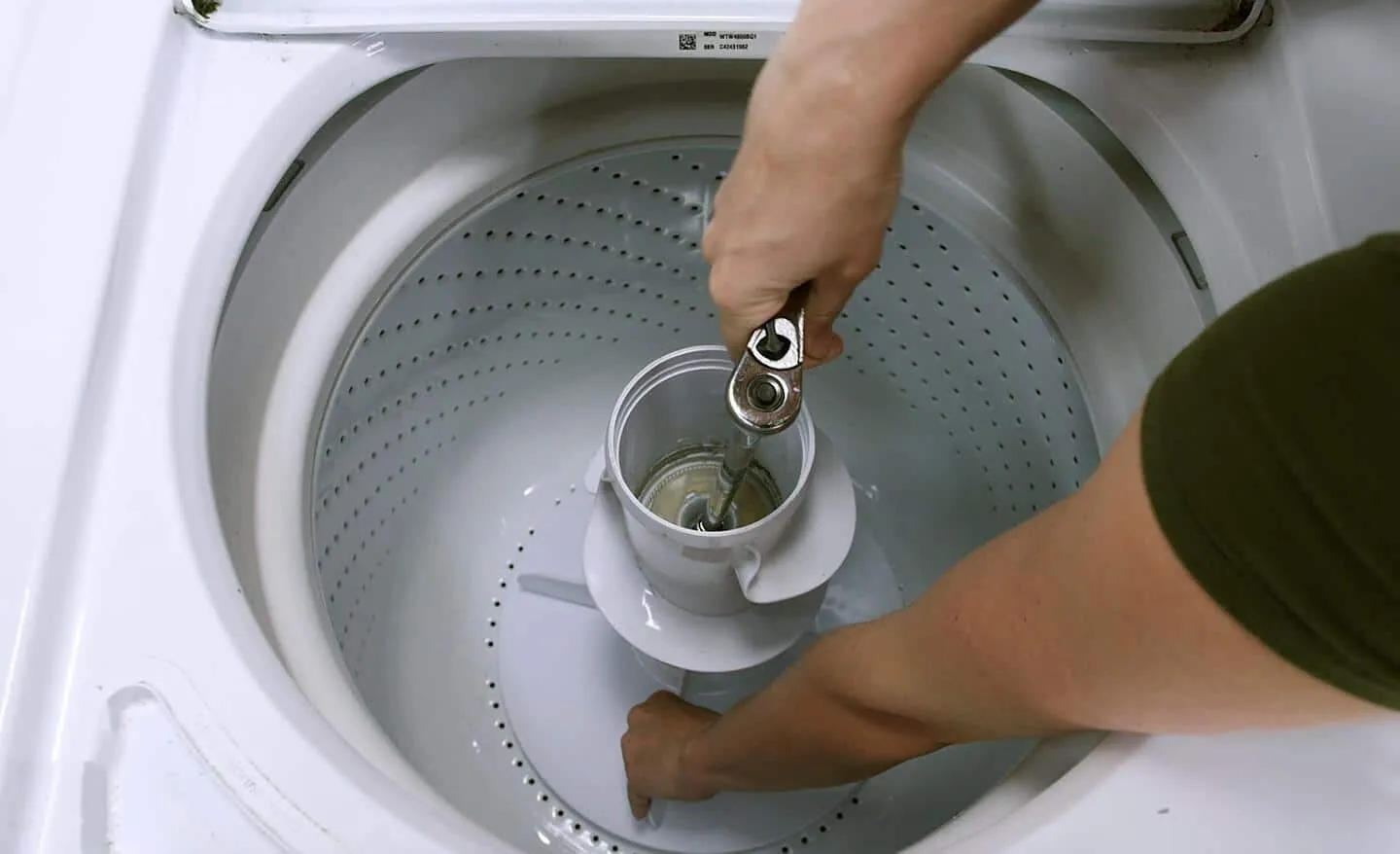
- White vinegar, 2 cups — the clear kind, not apple cider, which can leave a smell and color behind.
- Baking soda, 1/2 cup — fresh box, not one that’s been open in the cupboard for two years.
- A microfiber cloth or two soft rags — nothing abrasive, since a scratched drum holds dirt.
- An old toothbrush — for the fabric softener cup and the rim of the lid.
- Dish soap, a few drops — for greasy residue around the top edge.
- A bucket or a large bowl — to catch water when you rinse the filter, if your model has one.
- Rubber gloves — the water that comes out of the drum can be gray and gritty.
- Your machine’s manual — you’ll need it to find the filter and the correct cycle name.
A splash of distilled white vinegar works fine in place of a specialty washing machine cleaner. Bleach does not — it can damage rubber seals and it reacts badly if any vinegar is still in the drum. If your machine is still under warranty, check the manual first, because some makers list approved cleaners only. Call the manufacturer’s support line if you’re unsure.
How to clean a top loading washing machine
- Unplug the machine or flip the breaker. Water and electricity don’t mix, and a top loader can start on its own if a cycle is paused. Stay unplugged until step 8.
- Set the water level to the highest setting and choose the hottest cycle. Fill the drum with hot water only — no clothes, no detergent. If your machine has a “Clean Washer” or “Tub Clean” cycle, use that instead; it runs longer and rinses harder.
- Pour in 2 cups of white vinegar once the drum is full. Let it agitate for 2 minutes, then pause the cycle and leave it sitting for 30 minutes. The acid loosens soap scum and mineral film. Tip: if your water is very hard, add 10 more minutes of soak time.
- Wipe the drum, the lid and the top rim while it soaks. Use a cloth dipped in warm water with 2 drops of dish soap. The rim and the lid hinge collect the most grime because water sits there.
- Pull out the fabric softener cup and the bleach dispenser, if your model has them. Soak them in warm soapy water for 10 minutes, then scrub the inside corners with the toothbrush. Softener leaves a waxy film that plain rinsing won’t remove.
- Let the vinegar cycle finish, then run a full hot rinse cycle with no additives. This clears the loosened dirt out of the pump and the drain hose.
- Add 1/2 cup of baking soda to a short hot cycle. It neutralizes any vinegar left behind and freshens the drum. Careful: never mix vinegar and baking soda in the same load — they cancel each other out and you lose both effects.
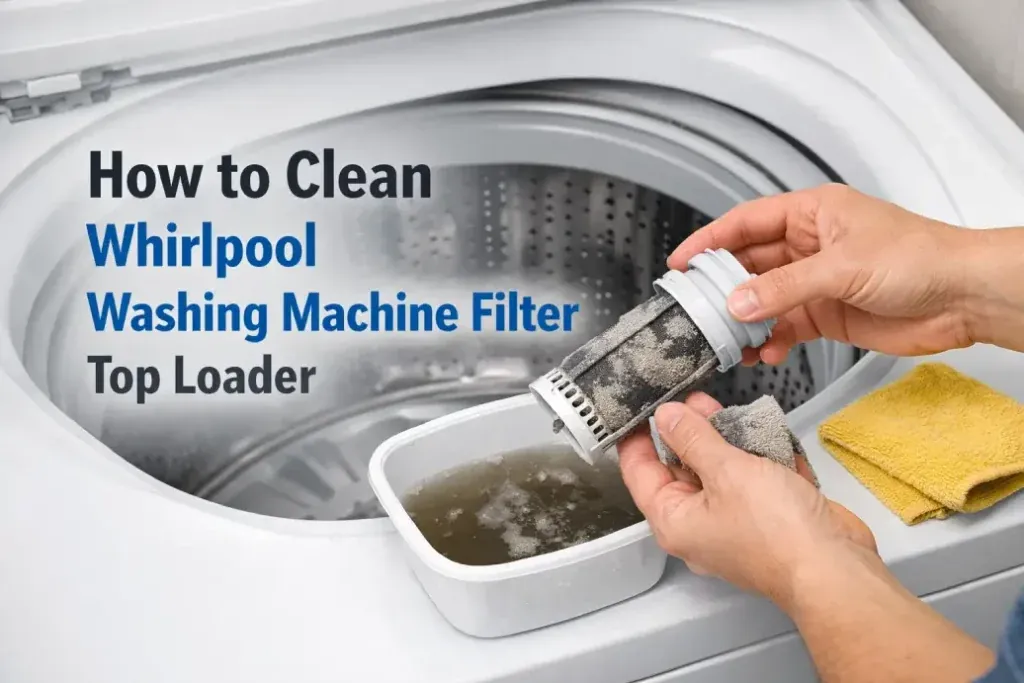
- Clean the lint filter or the drain pump filter, if your model has one. Check the manual for the location. Some top loaders hide it behind a panel at the bottom front. Put a towel down first, because water will come out.
- Wipe the outside, plug the machine back in, and leave the lid open for an hour. Airflow dries the drum and stops that damp, musty smell from coming straight back.
If your machine smells like burning, trips the breaker, or shows an error code you can’t clear, stop and call a technician. Anything past cleaning — wiring, the motor, the control board — isn’t a homeowner job.
How the job changes with your machine
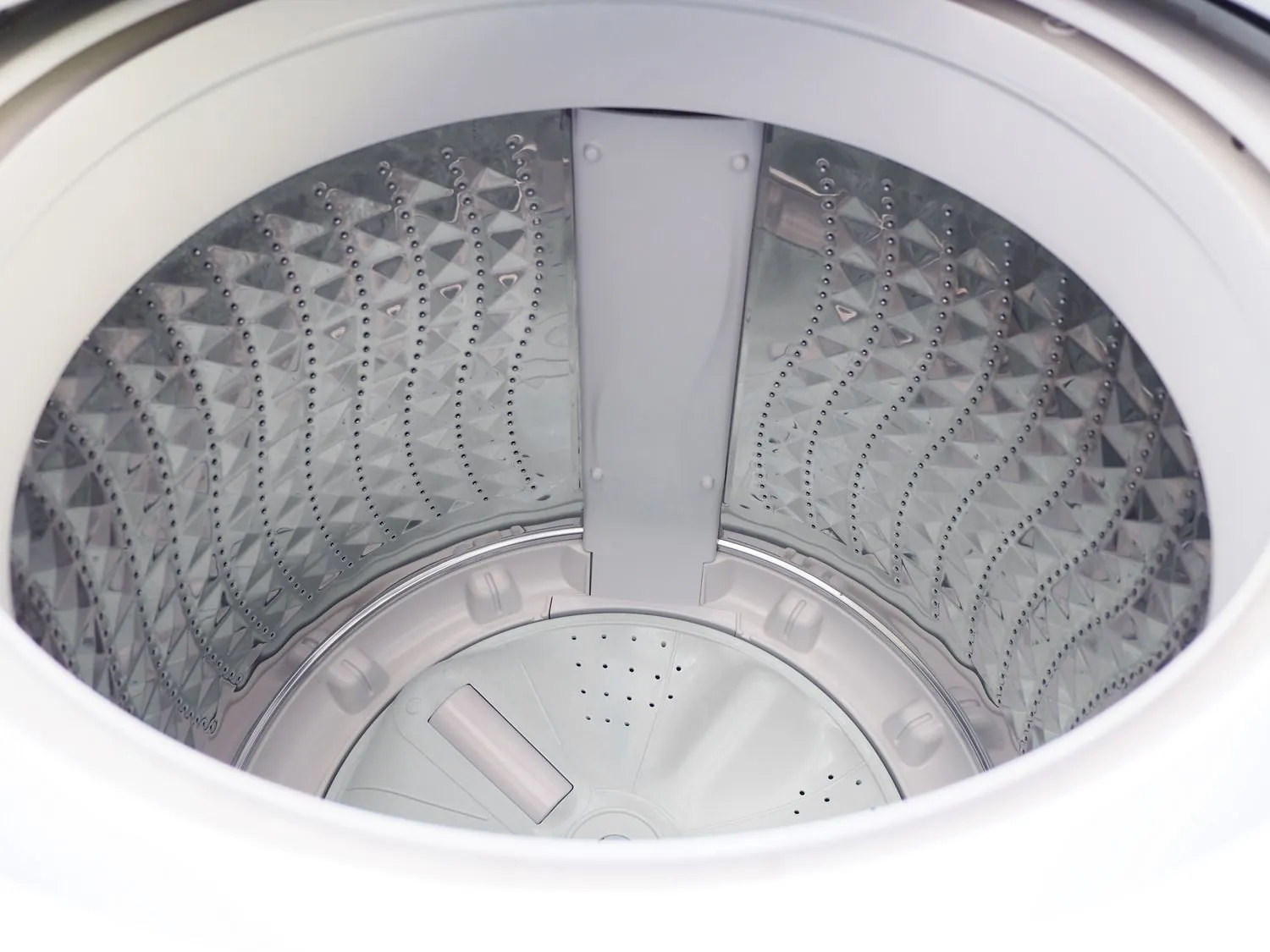
The time and effort shift a lot depending on what you’re working with. A basic machine with no filter is a quick job; a high-efficiency model with a pump filter and a dispenser drawer takes longer.
| Your situation | Time it takes | What’s different | What to watch |
|---|---|---|---|
| Basic top loader, no filter | About 60 minutes | One vinegar cycle and a wipe-down is enough | Don’t skip the rinse cycle |
| Machine with a fabric softener cup | 75 to 90 minutes | The cup needs a 10-minute soak | Softener film builds up fast |
| High-efficiency (HE) model | 75 to 90 minutes | Use less vinegar — 1 cup, not 2 | Too much suds can trigger an error |
| Very hard water area | 90 minutes or more | Add a longer soak and a second rinse | White mineral crust on the drum |
| Machine that smells strongly | 2 hours, or two rounds | Repeat the whole process after a week | A smell that returns means a drain issue |
Start with the shortest version and repeat it if the smell lingers. Overshooting with strong chemicals on the first try can damage seals you can’t easily replace.
How to tell it worked
A clean machine smells like nothing at all. Run your finger along the inside of the drum — it should come away dry and free of gray film. The lid edge and the softener cup should look the same color they were when the machine was new. If a white chalky line still sits at the water line, that’s mineral scale and it needs another vinegar soak.
A poor result looks different. The drum still feels slick or gritty, the softener cup stays cloudy, and a musty smell comes back within a few days. That smell usually means residue is still trapped in the dispenser or the drain area, not that the drum itself is dirty.
The quality problem this job is prone to is using too much product. Extra vinegar or cleaner doesn’t speed things up — it leaves residue that traps new dirt and can wear the rubber seals over time. Three things prevent it: measure the vinegar instead of pouring freely, always run a plain rinse afterward, and leave the lid open so the drum dries.
The rules, and what to do after
There’s no single government standard for home washing machine cleaning, but manufacturers set the real limits. Whirlpool and other major brands publish their own guidance in the owner’s manual, and that’s the document that matters for your warranty. If your manual says no vinegar, follow it — some seals aren’t rated for acid.
After the cycle finishes, clear out any lint, pull the dispenser cups out to dry, and leave the lid open. Record the date you cleaned it, so you know when the next one is due. How often you need to clean depends on how much you use the machine, so check your owner’s manual for the guidance that applies to your model.
If the machine is still under warranty and something looks damaged, don’t try to fix it yourself. Call the manufacturer or a licensed appliance technician. Opening the cabinet or touching internal parts can void the warranty and, on some models, leave a capacitor holding a dangerous charge.
Other ways to handle it
Use a commercial washing machine cleaner
Tablets and powders made for washing machines are the simplest swap. You drop one in and run a hot cycle, so the job takes about 50 minutes instead of 90. They cost more per use than vinegar, but they’re formulated for HE machines and won’t upset the suds sensor. Check the package for the correct dose for your drum size.
Call a technician for a deep service
An appliance technician can pull the drum, clear the drain pump and check the hoses. This costs real money — ask for a quote first — and it’s worth it if the smell keeps coming back or you see standing water. The visit usually takes an hour or two on site. This is the right call if you suspect a blockage you can’t reach.
Run a monthly maintenance rinse
Instead of one big clean, run a short hot rinse with 1 cup of vinegar regularly. Each round takes about 30 minutes and keeps residue from ever building up. It’s less work in total and the machine stays fresher, though it won’t fix a machine that’s already badly soiled.
Frequently asked questions
How often should I clean my top loading washing machine?
Every 30 days if you run 4 or more loads a week, and every 2 to 3 months if you wash less. Machines in hard water areas need it closer to monthly, because minerals build up faster. Your owner’s manual gives the figure the maker recommends for your exact model, so check there first.
Can I use bleach instead of vinegar?
You can use bleach on some machines, but never mix it with vinegar — the combination releases a gas that’s harmful to breathe. Bleach also degrades rubber seals over time. If you want to use it, run it in a separate cycle with no vinegar in the drum, and check your manual to see if bleach is approved for your model.
Why does my washing machine smell bad after cleaning?
The smell is usually coming from the drain pump filter, the drain hose or the dispenser cup — not the drum. Clean those parts by hand and run one more hot rinse. If the smell returns within a week, there’s trapped water or residue somewhere you haven’t reached yet, and a technician should look at it.
Is it safe to put vinegar in my washing machine?
Yes, for most top loaders, at 1 to 2 cups in a full drum of water. The risk is with the rubber door seal and some plastic parts on certain models, which is why some makers say no. Check your manual, and if it’s silent on the topic, call the manufacturer’s support line before you pour.
How long does the whole cleaning take?
About 60 to 90 minutes from start to finish, including the 30-minute vinegar soak. A machine with a fabric softener cup or a pump filter adds 15 to 30 minutes. If your water is very hard, add another 10 minutes to the soak and run a second rinse.
What happens if I skip the rinse cycle?
Leftover vinegar stays in the drum and can leave a sour smell on your next load of clothes. It can also slowly wear rubber seals. Always run one full hot rinse with no additives after the vinegar cycle, and leave the lid open so the drum dries out completely.
Conclusion
A top loader stays fresh when you clean it on a schedule, not when it starts to smell. Set a reminder for the first of the month, keep white vinegar and baking soda on hand, and the whole job becomes a 60-minute routine you barely think about.