
A brand new Samsung fridge that’s not cooling is usually still in its first 24 hours of power, and the fix is to leave it alone. Plug it in, let it stand upright, and wait. The most common cause is simple: the compressor hasn’t finished its first long cooling run yet.
Why a new Samsung fridge runs warm at first

A fridge doesn’t chill the whole cabinet at once. It pulls heat out of the air and the walls slowly, one cycle at a time. On a brand new unit, the first run is the longest one it will ever do. The inside starts at room temperature, so there’s far more heat to move than on any normal day after that.
Second, the door gets opened a lot in the first day. You’re loading shelves, checking the display, moving things around. Every open door dumps cold air onto the floor and pulls warm, damp room air back in. That warm air also carries moisture, which is why a new fridge often shows condensation or frost on the back wall while it’s still settling.
Third, the fridge needs air around it. If it’s pushed flat against the wall or boxed in by cabinets, the condenser can’t dump the heat it’s collecting.
One more thing worth knowing: a fridge that’s just been delivered on its side needs to stand upright before you plug it in. The oil in the compressor needs to drain back down. If you plugged it in straight away, unplug it, let it stand, then start again.
If you’re not sure of the exact settling time for your model, check the paper setup sheet in the box or Samsung’s support page for that model number. Don’t guess from a forum.
Let it run 24 hours before you judge it
This fix is for anyone whose fridge is under a day old and feels warm inside. It’s the first thing to try, and for most people it’s the only thing needed.
- Check the fridge is plugged into its own wall outlet, not an extension lead or a power strip.
- Set the fridge temperature to 37°F (3°C) and the freezer to 0°F (-18°C). These are standard refrigerator temperatures.
- Close both doors and don’t open them for at least 4 hours.
- After 4 hours, check the freezer first. It should already feel cold.
- Leave it a full 24 hours before you check the fridge compartment properly.
If the freezer is cold but the fridge is still warm at 24 hours, that’s normal — the fridge side is fed cold air from the freezer, so it always lags behind. If the freezer is also warm at 24 hours, something else is wrong and you should call Samsung support.
A cheap fridge thermometer on the middle shelf tells you the truth. The display on the door tells you what the fridge wants to be, not what it is.
Don’t fill it yet. An empty fridge cools faster and more evenly than a packed one.
Give the fridge room to breathe
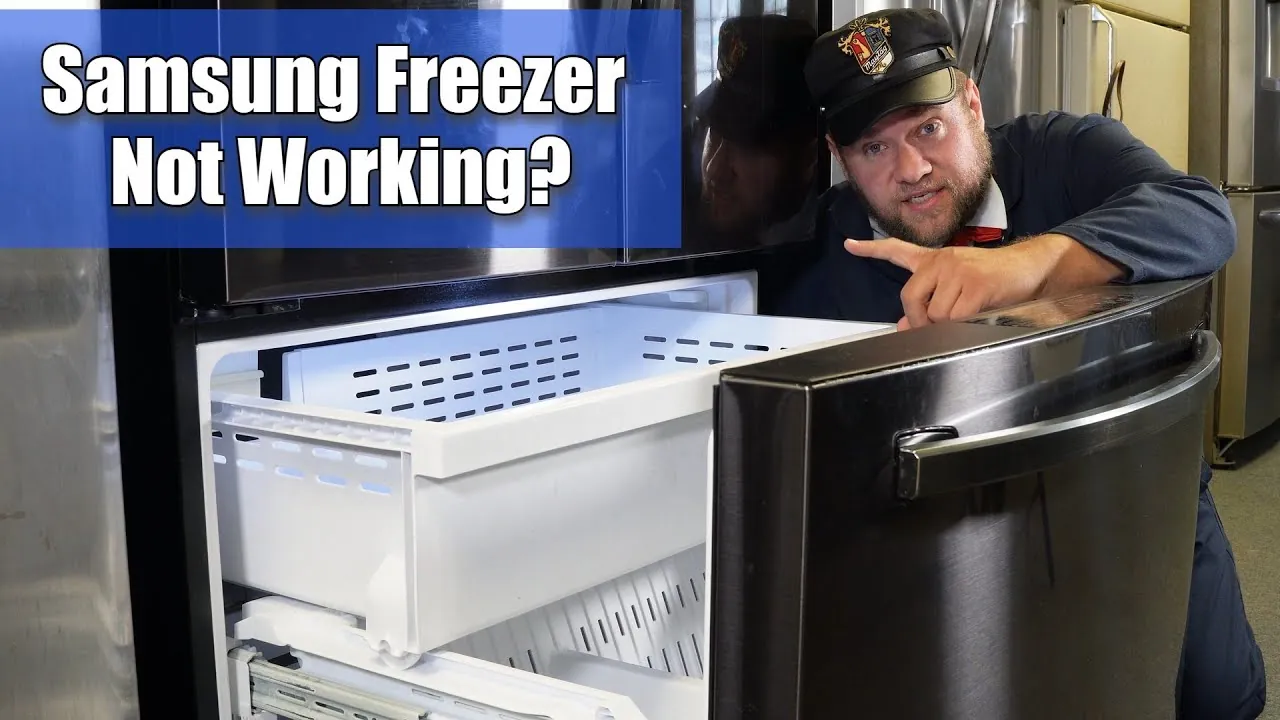
This fix is for a fridge that’s installed tight against a wall, tucked into a cabinet, or sitting in a hot room. It’s a different lever from waiting — you’re changing the conditions, not the time.
Heat has to leave the fridge. The condenser coils, usually at the back or hidden in the sides, get hot while the fridge runs. That heat goes into the room air. If the air can’t move, the fridge works harder and cools slower.
Pull the fridge out so there’s a gap at the back. Even a couple of inches at the back makes a real difference. Check the setup sheet for your model’s exact figures.
Next, look at the room. A fridge in a garage or a hot utility room will struggle in summer. Most fridges are rated for a specific room-temperature range, and outside that range they can’t hold temperature. That range is printed on the model’s rating plate inside the fridge.
Also check the fridge isn’t sitting in direct sun or next to an oven or dishwasher. Those push heat straight at it.
How to tell it worked: after 12 hours with proper clearance, the back or sides should feel warm to the touch, not hot, and the fridge should be closing in on 37°F. If the sides are too hot to hold your hand on, that’s a service call, not a DIY job.
Call Samsung support while it’s under warranty
This is the fix for the harder cases, and it costs you nothing but time. A brand new fridge is under Samsung’s manufacturer warranty, and that’s exactly what it’s for.
Call Samsung support or the store you bought it from. Have your model number and serial number ready — both are on a plate inside the fridge. Tell them the freezer temperature and the fridge temperature, and how long it’s been plugged in. That’s the information they’ll ask for first.
They may run you through a reset. On many Samsung models you can hold two buttons on the display for a few seconds to restart the control board. Only do the reset the support agent describes for your model — button combinations differ, and guessing can change settings you then have to fix.
If they send a technician, that’s the right outcome. Don’t open the back panel yourself. A fridge has mains voltage inside, and the capacitor can hold a lethal charge even when it’s unplugged. Compressor, sealed system and control board work is technician-only.
Is it worth the effort? Yes, every time, while it’s under warranty. A sealed-system fault on a new fridge is rare but real, and a repair you pay for yourself is expensive. If the fridge is out of warranty and the repair quote is high, that’s when you weigh repair against replacement — but on a brand new unit, that choice shouldn’t come up.
What makes a new fridge worse
- Packing it full on day one. A packed fridge has no room for cold air to move between items. Wait until it’s at temperature before you load it.
- Turning the temperature to its coldest setting. This doesn’t cool it faster. It just makes the compressor run longer and can freeze food on the shelves once it does catch up.
- Opening the door every hour to check. Each check dumps the cold air you’re waiting for. Use a thermometer and look once.
- Plugging it into an extension lead. A fridge draws a lot of current at startup. A shared or cheap lead can trip or under-supply it. Use the wall outlet.
- Laying it down and plugging it straight in. If it traveled on its side, stand it upright first and give the compressor oil time to settle. Check your model’s setup sheet for how long.
Stop it happening again

The habits that keep a new fridge cooling well are the same ones that keep it working for years. Small changes, done every week, matter more than any single fix.
| If you’re doing this | Do this instead | Why |
|---|---|---|
| Checking the door display for the real temperature | Put a thermometer on the middle shelf | The display shows the target, not the actual air temperature |
| Loading the fridge the day it arrives | Wait until it hits 37°F, then load it in stages | An empty fridge reaches temperature faster and more evenly |
| Pushing the fridge flat to the wall | Leave the clearance your model’s sheet asks for | The condenser needs moving air to dump heat |
| Stacking items against the back wall vent | Keep a gap at the back | Blocked vents stop cold air reaching the front shelves |
| Leaving the door open while you unpack shopping | Take everything out first, then load in one go | Every open door loses cold air and adds warm, damp air |
Close the door on a piece of paper and pull it out. If it slides out easily, the seal isn’t gripping and cold air is escaping.
Frequently asked questions
How long does a new Samsung fridge take to get cold?
Give it 24 hours. Most new fridges reach their set temperature within 24 hours of being plugged in, with the freezer getting cold first. If your fridge is still warm inside after a full 24 hours with the doors closed, that’s when you call Samsung support rather than wait longer.
Why is my freezer cold but my fridge warm?
That’s normal on a new unit. The fridge compartment gets its cold air from the freezer, so it always cools second. If the freezer is cold at 4 hours but the fridge is still warm, keep waiting up to 24 hours. If the fridge is still warm after that, book a service call.
Is it safe to put food in a brand new fridge that isn’t cold yet?
No. Perishable food left above 40°F for more than 2 hours can grow bacteria that make you sick. Keep milk, meat and cooked leftovers out until the fridge reads 37°F. The USDA’s FoodSafety.gov guidance is the reference to follow on cold storage times.
Can I speed up a new fridge cooling down?
Not much, and you shouldn’t try. Setting it colder doesn’t cool it faster, and it risks freezing food later. The real speed-ups are leaving the doors shut, keeping the fridge empty, and making sure it has clearance at the back for air to move.
What temperature should I set my Samsung fridge to?
Set the fridge to 37°F (3°C) and the freezer to 0°F (-18°C). These are standard refrigerator temperatures. If your model uses a numbered dial instead of degrees, check the setup sheet for what each number means.
Why does my new fridge feel hot on the sides?
That’s the fridge doing its job. The condenser is dumping heat from inside the cabinet into the room, and on many models those coils sit in the side walls. Warm sides are normal. Sides too hot to hold your hand on are not — call support.
What happens if I plugged it in right after delivery?
Unplug it and let it stand upright for a few hours before you plug it back in. If it traveled on its side, the compressor oil needs time to drain back down. Check your model’s setup sheet for the exact time — it varies by model, and the sheet is the only place that figure is right for yours.
Conclusion
A new fridge that feels warm on day one is almost always just a fridge that hasn’t finished its first long run. Shut the doors, give it 24 hours, and check the freezer first. If the freezer is cold and the fridge is catching up, you’re fine. If both are warm after a full day, your warranty is there for exactly this — use it.