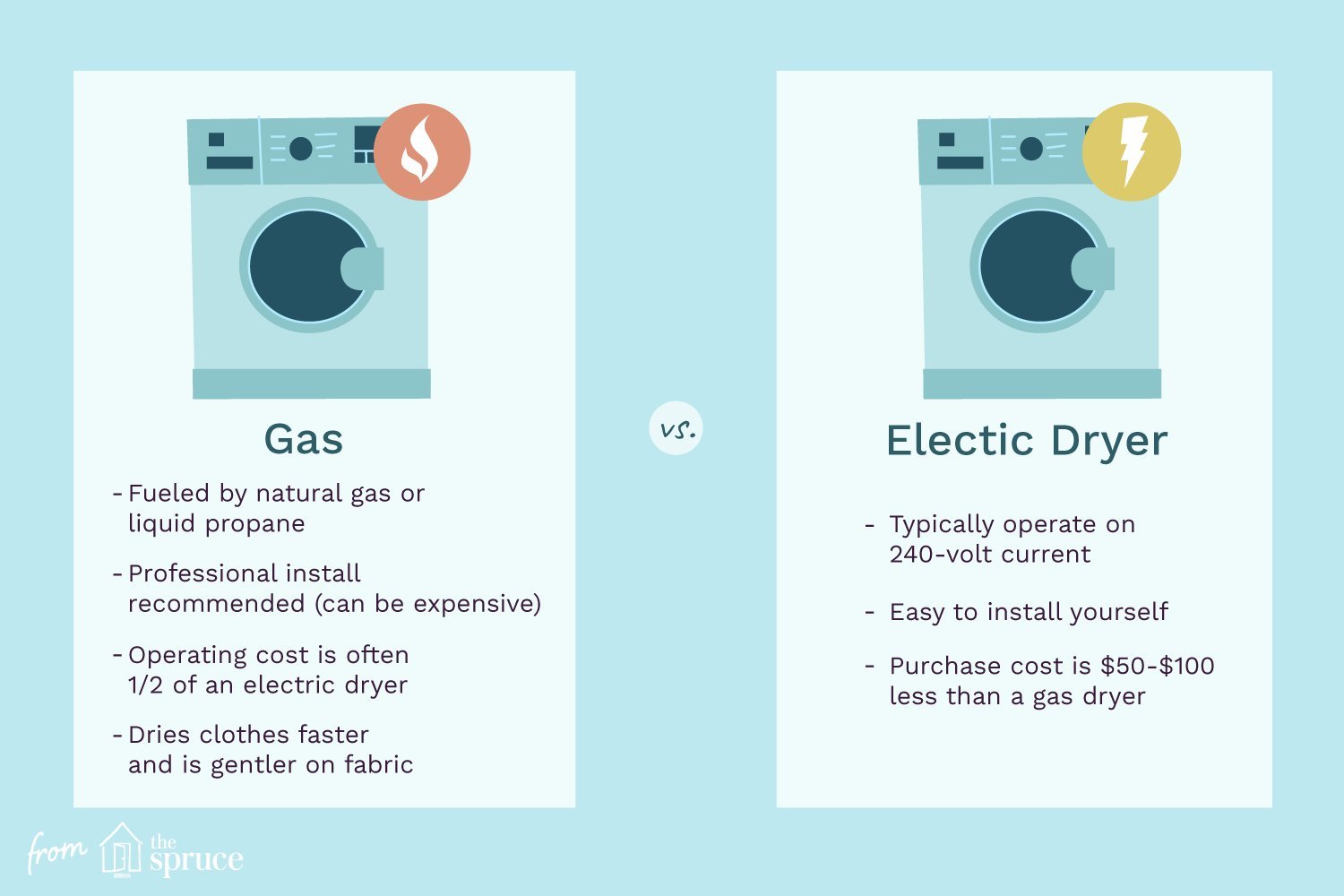
For most households, the real answer to the gas vs electric dryer question comes down to one thing: whether a gas line already exists where the dryer will sit. If it does, a gas dryer usually costs less to run and dries faster. If it doesn’t, an electric dryer wins on simplicity and upfront cost — and a heat pump electric dryer can beat both on efficiency. This guide covers the differences, the real operating costs, installation requirements, and how to pick the right one for your laundry room.
Key Takeaways

- Gas dryers cost roughly $30–$70 more upfront than comparable electric models, but typically save $20–$50 per year on fuel in areas with low natural gas prices.
- A 240-volt outlet is mandatory for any standard electric dryer — a standard 120-volt wall outlet won’t work, and converting costs $200–$500.
- Adding a gas line where none exists runs $200–$600, which can wipe out years of fuel savings.
- Heat pump dryers use 30–50% less electricity than standard electric models but cost $1,000–$1,800 and take longer per load.
- Venting is required for gas dryers and most electric dryers — only ventless condensing and heat pump models skip it.
- Match the dryer to the hookups you already have unless you plan to stay in the home long enough to recoup conversion costs.
How Gas and Electric Dryers Actually Work
Both machine types do the same job — tumble wet clothes through heated air — but they generate that heat differently, and that difference drives everything else.
The heat source
A gas dryer burns natural gas or propane in a burner assembly to heat air. A electric dryer runs electricity through a resistive heating coil. A heat pump dryer — a newer electric variant — doesn’t create heat at all; it uses a refrigerant loop to move heat from the air back into the drum, similar to how a refrigerator works in reverse.
What that means for drying speed
Gas burners reach operating temperature fast and produce intense heat, so gas dryers often finish a load in 30–45 minutes. Standard electric dryers typically run 40–60 minutes per load. Heat pump dryers are the slowest, often 60–90 minutes, because they operate at lower temperatures.
Why moisture sensors matter more than fuel type
Modern dryers from LG, Samsung, Whirlpool, and GE use moisture-sensing technology that shuts the machine off when clothes are dry. This feature saves more energy than the fuel choice in many cases, because it prevents the 10–20 minutes of pointless tumbling that a timed cycle causes.
Gas vs Electric Dryer: Side-by-Side Comparison
| Factor | Gas Dryer | Standard Electric Dryer | Heat Pump Electric Dryer |
|---|---|---|---|
| Typical purchase price | $700–$1,300 | $600–$1,100 | $1,000–$1,800 |
| Installation cost (new hookup) | $200–$600 for gas line | $200–$500 for 240V outlet | $0–$150 (standard outlet) |
| Average load time | 30–45 min | 40–60 min | 60–90 min |
| Annual energy cost | $40–$85 | $80–$150 | $30–$60 |
| Venting required | Yes | Yes (unless ventless model) | No |
| Lifespan | 10–13 years | 10–13 years | 12–15 years |
| Best for | Homes with existing gas lines | Homes with 240V hookups | Eco-focused buyers, tight spaces |
Costs vary by region, utility rates, and model. The table reflects typical U.S. market ranges, not a single national average.
What Each Type Costs to Buy and Install
The sticker price is only part of the story. Installation is where gas and electric dryers diverge sharply, and it’s the factor most buyers underestimate.
Purchase price
Gas and electric dryers of the same brand and capacity sit within $50–$150 of each other, with gas usually the pricier option because of the added burner components. A mid-range Whirlpool or GE electric dryer runs $600–$900; the gas equivalent runs $700–$1,000.
Installation and hookup costs
- Electric dryer with existing 240V outlet: $0–$50 for a new cord or vent kit.
- Electric dryer needing a new 240V circuit: $200–$500 for an electrician, plus permit fees in some jurisdictions.
- Gas dryer with existing gas line and valve: $0–$100 for a flexible connector and fittings.
- Gas dryer needing a new gas line run: $200–$600, and this is a job for a licensed plumber or gas fitter in most states.
- Vent installation or repair: $50–$250 depending on duct length and wall penetration.
Warning: Never install a gas dryer yourself unless you’re licensed and confident with gas fittings. A leak is a fire and carbon monoxide hazard, and many homeowners insurance policies exclude damage from unpermitted gas work.
Operating Costs: Which One Is Cheaper to Run?

This is where gas dryers usually pull ahead — but not always, and the gap has narrowed as electricity prices have shifted.
The math behind the savings
A typical electric dryer draws 4,000–6,000 watts per load. At the U.S. average residential electricity rate, that works out to roughly $0.50–$0.80 per load. A gas dryer uses about 20,000–25,000 BTU per load, costing roughly $0.20–$0.40 per load at typical natural gas rates.
Over 300 loads per year, that’s a difference of roughly $60–$120 annually in favor of gas — in regions where gas is cheap. In areas with high gas prices or low electricity rates, the gap can shrink to near zero.
Where heat pump dryers fit
A heat pump dryer uses 1,500–2,000 watts per load, roughly a third of a standard electric dryer. That drops per-load cost to $0.15–$0.30, making it the cheapest option to run in most of the country — even though it costs the most to buy.
The break-even calculation
If a gas dryer costs $100 more upfront but saves $80 per year, it pays for itself in about 15 months. If you need a $400 gas line run, break-even stretches to 6–7 years — longer than many people stay in a home. Run the numbers for your own utility rates before assuming gas is cheaper.
Installation Requirements You Can’t Skip
Getting the hookups wrong is the most common and most expensive mistake in dryer buying. Here’s what each type demands.
Electrical requirements
Standard electric dryers need a 240-volt, 30-amp circuit with a specific NEMA 10-30 or 14-30 receptacle. A regular 120-volt household outlet won’t power one. If your laundry room only has a standard outlet, you’re looking at an electrician visit.
Gas dryers, by contrast, plug into a standard 120-volt outlet — they only need electricity to run the motor, controls, and igniter.
Gas line requirements
A gas dryer needs a 3/4-inch or 1/2-inch gas supply line with a shutoff valve within reach, plus a flexible connector rated for dryers. If your home has no gas service at all, adding it can cost $1,000–$3,000 to bring the line from the street — a dealbreaker for many buyers.
Venting requirements
Both gas and standard electric dryers need a 4-inch rigid or semi-rigid metal duct venting to the outside. Flexible foil duct is a fire hazard and clogs easily. Ventless options — condensing electric and heat pump dryers — drain water to a reservoir or a nearby drain instead.
The U.S. Consumer Product Safety Commission maintains guidance on dryer vent safety, and the core rule is simple: shorter, straighter, metal duct runs are safer and more efficient than long, flexible ones.
Clearance and space
Gas dryers need slightly more rear clearance for the gas connector, typically 4–6 inches. Heat pump dryers run cooler and often need less clearance but may require a drain connection if you don’t want to empty a reservoir.
Pros and Cons of Each Type
Gas dryer pros
- Lower operating cost in most gas-served regions
- Faster drying thanks to higher heat output
- Runs on a standard outlet, freeing up your 240V circuit
- Often preferred by buyers in gas-heavy markets
Gas dryer cons
- Higher purchase price
- Requires a gas line and professional installation
- Produces combustion byproducts, so venting is non-negotiable
- Fewer models to choose from than electric
Electric dryer pros
- Cheaper to buy and simpler to install
- Widest selection of models, features, and sizes
- No gas line or combustion concerns
- Heat pump versions are the most efficient option available
Electric dryer cons
- Higher electricity bills with standard coil models
- Needs a dedicated 240V circuit
- Slower than gas in most comparisons
Heat Pump Dryers: The Third Option
Heat pump dryers deserve their own section because they’ve moved from niche to mainstream, with models from LG, Samsung, Bosch, and Miele now widely available.
They work by recirculating heated air through a closed loop rather than exhausting it. That means no vent, no outside wall penetration, and dramatically lower energy use. ENERGY STAR certifies many heat pump models, and the program notes they can cut dryer energy use substantially compared to standard electric models.
The tradeoffs: higher upfront cost, longer cycle times, and a condensate reservoir you either empty after each load or plumb to a drain. For apartments, condos, and homes where venting isn’t possible, they’re often the only practical choice.
Which One Should You Buy?
Skip the brand loyalty and answer these questions in order.
Do you already have a gas line?
If yes, a gas dryer is usually the better long-term buy. If no, the cost of adding one rarely pays off unless you plan to stay put for 7+ years.
Do you have a 240V outlet?
If yes, any standard electric dryer is a drop-in replacement. If no, compare the cost of an electrician against the cost of a plumber — they’re often similar, so let fuel prices decide.
How long will you stay in the home?
Under five years, buy the cheapest option that fits your existing hookups. Over ten years, efficiency gains start to matter more than upfront price.
Is venting impossible?
Then a heat pump or condensing electric dryer is your answer, regardless of fuel preference.
Maintenance and Safety Basics
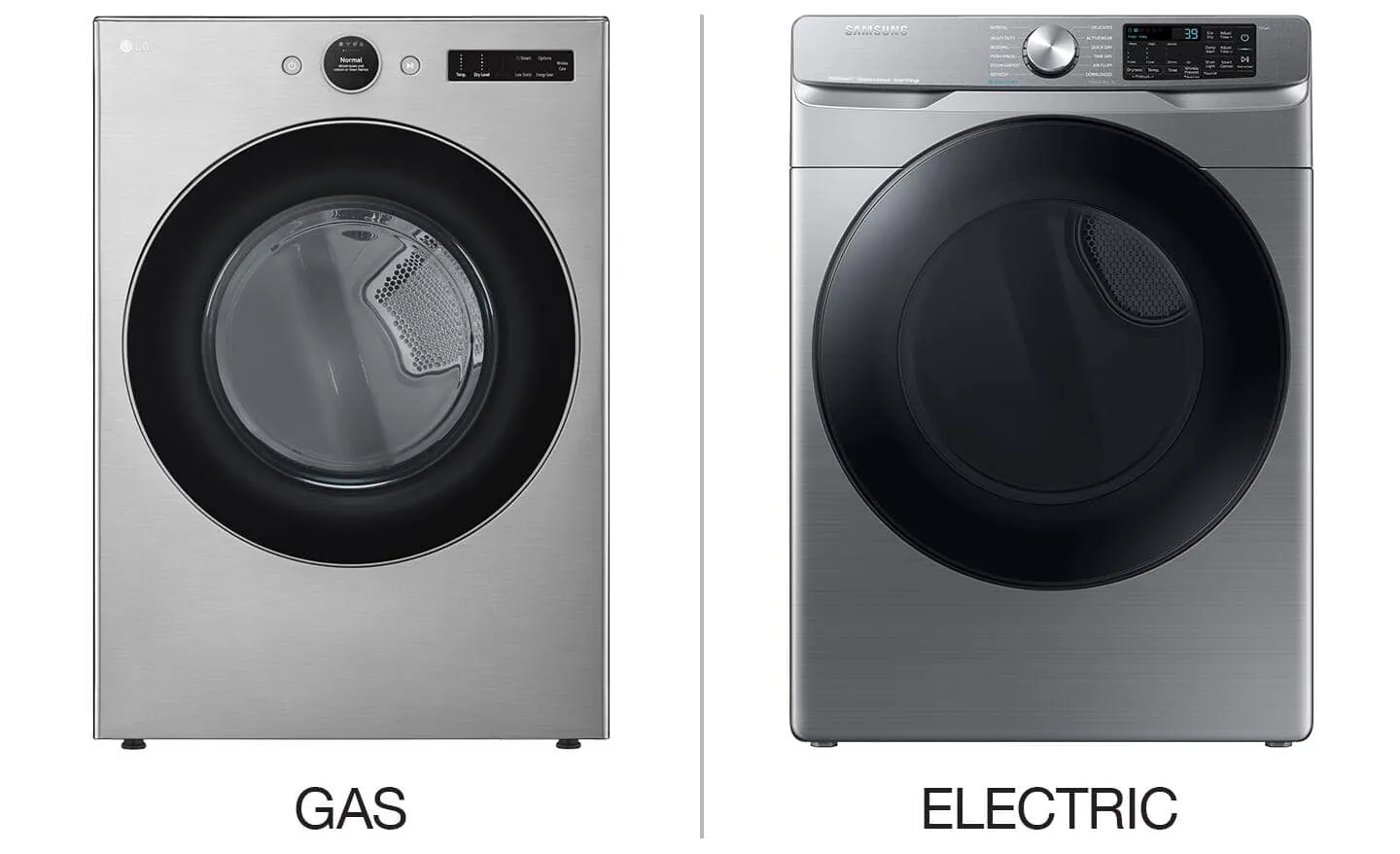
Whichever type you choose, a few habits extend the machine’s life and prevent the most common cause of dryer fires: lint buildup.
- Clean the lint filter after every load — this alone improves efficiency measurably.
- Inspect the vent duct twice a year for crushed sections or lint accumulation.
- Check the gas connector annually for cracks or corrosion if you own a gas dryer.
- Level the machine so the drum doesn’t wear unevenly.
- Replace plastic or foil vent duct with rigid metal immediately if you inherited one.
Pro Tip: If your dryer suddenly takes two cycles to dry a normal load, the problem is almost always a clogged vent or a failing moisture sensor — not the fuel type. Clean the vent before you shop for a new machine.
Frequently Asked Questions
Is a gas dryer better than an electric dryer?
Neither is universally better. Gas dryers cost less to run and dry faster where natural gas is available and cheap. Electric dryers cost less upfront and install almost anywhere. The right choice depends on your existing hookups, local utility rates, and how long you plan to stay in the home.
How much does it cost to switch from electric to gas?
Converting typically runs $200–$600 for a new gas line inside the home, plus $100–$300 for a licensed plumber’s labor and permit. If your home has no gas service at all, expect $1,000–$3,000 to bring the line from the street, which rarely makes financial sense for a single appliance.
Do gas dryers need electricity?
Yes. Gas dryers use a standard 120-volt outlet to power the drum motor, control panel, igniter, and moisture sensors. The gas only provides the heat. This is why gas dryers can plug into a normal wall outlet while electric dryers need a dedicated 240-volt circuit.
How long do dryers last?
Both gas and electric dryers typically last 10–13 years with regular maintenance. Heat pump dryers often reach 12–15 years because they have fewer high-heat components. Cleaning the lint filter and vent regularly is the single biggest factor in reaching the upper end of those ranges.
Can I convert a gas dryer to electric or vice versa?
Conversion kits exist for some models, but they’re brand-specific, rarely cost-effective, and often void the warranty. In practice, it’s cheaper and safer to buy the correct type for your hookups than to convert an existing machine.
Are heat pump dryers worth the extra cost?
For most buyers, yes — if you plan to keep the machine long enough. They use roughly a third of the electricity of a standard electric dryer, need no vent, and work in spaces where venting is impossible. The higher upfront price of $1,000–$1,800 typically pays back over 5–8 years.
Conclusion
Before you buy, measure your laundry space, confirm whether you have a 240-volt outlet or a gas valve, and check your last utility bill for your actual per-unit rates. Those three numbers will tell you which dryer belongs in your home far better than any brand advertisement.