
A Kenmore Elite refrigerator that stops cooling usually points to one of six things: a dirty condenser coil, a failed evaporator fan motor, a blocked defrost drain, a broken start relay, a bad thermistor, or a sealed-system leak. They all share one result — warm air in both compartments — but each one leaves a different clue behind. The clue is what separates them.
Kenmore Elite cooling problems at a glance

Each issue below has its own signature. Read the symptom, match it to the row, then work through that section. The table assumes a standard top-freezer or French-door Elite model — on a built-in model, the same parts sit in different places.
| What it’s called | Best for diagnosing | Example you’d notice |
|---|---|---|
| Dirty condenser coil | Warm fridge, warm freezer, compressor hot | Coils behind the kick plate caked in dust |
| Failed evaporator fan | Freezer cold, fridge warm | No fan noise when you open the freezer door |
| Blocked defrost drain | Water under crisper drawers | Ice mound on the freezer floor |
| Bad start relay | Clicking, then silence | Compressor clicks every few minutes, won’t run |
| Faulty thermistor | Wrong temperature, no pattern | Fridge runs nonstop or barely runs at all |
| Sealed-system leak | Slow warming over weeks | Low refrigerant, oily residue on tubing |
Start with the condenser coil
A condenser coil packed with dust and pet hair is the most common cause, and it’s the one you can fix yourself in about 20 minutes. The coil sits behind the kick plate at the bottom, or behind a panel on the back. When it can’t shed heat, the compressor runs hotter and longer, and both compartments drift warm.
This suits anyone who hasn’t pulled the kick plate off in a year or more. It’s not for you if the back of the fridge is against a wall with no air gap — fix the gap first, or you’ll be cleaning the coil again in a month.
- Restores full cooling when airflow was the only problem
- Lowers compressor temperature, which eases strain on the start relay
- Costs nothing but a vacuum brush and a few minutes
- Lets you rule out the simple cause before paying anyone
Unplug the fridge, pull the kick plate, and vacuum the coil fins with a brush attachment. On a typical Elite, the coil is roughly 12 to 18 inches wide — work front to back, not side to side, so you don’t bend the fins. Plug it back in and give it 24 hours. If the freezer hits 0°F and the fridge settles near 37°F, you’re done.
Check the evaporator fan motor
A failed evaporator fan motor leaves the freezer cold but the fridge warm, because cold air never gets pushed up from the freezer into the fresh-food section. You’ll usually hear the difference before you see it — open the freezer door and the fan should stop, then restart when you press the door switch.
This one suits a reader who’s comfortable pulling a few screws and testing a part with a multimeter. If you’re not, stop here and call a technician — the fan sits behind the freezer back panel, and the wiring is easy to damage.
- Explains a cold freezer with a warm fridge, the classic split
- Fixes cooling without touching the sealed system
- Fan motors are a common failure on older Elite units
- A cheap part compared with a compressor repair
Switch off the breaker, remove the freezer shelves and back panel, and check the fan blade for ice or obstruction first. Spin it by hand — if it turns freely but won’t run on power, the motor is the problem. A replacement motor for most Elite models is inexpensive compared with the alternative, but check your model number before ordering.
Clear the defrost drain
A blocked defrost drain shows up as water pooling under the crisper drawers or a sheet of ice on the freezer floor. During the defrost cycle, meltwater is supposed to run down a tube to a pan under the fridge. When that tube clogs with food debris or freezes shut, the water backs up and refreezes.
This suits a reader with a warm fridge and visible water or ice in the freezer. It isn’t for you if the drain is clear and the ice is on the back wall instead — that points to a defrost heater or timer, which is a different job.
- Stops water damage to the fridge floor and your kitchen floor
- Restores airflow that ice buildup was blocking
- Usually a 15-minute fix with warm water
- Prevents the ice from spreading to the evaporator fan
Unplug the fridge and find the drain hole at the back of the freezer floor, below the evaporator. Flush it with warm water using a turkey baster. If it’s frozen, a hair dryer on low, held 6 to 8 inches away, clears it in a few minutes. Never chip at the ice with a screwdriver — you’ll puncture the liner.
Replace the start relay
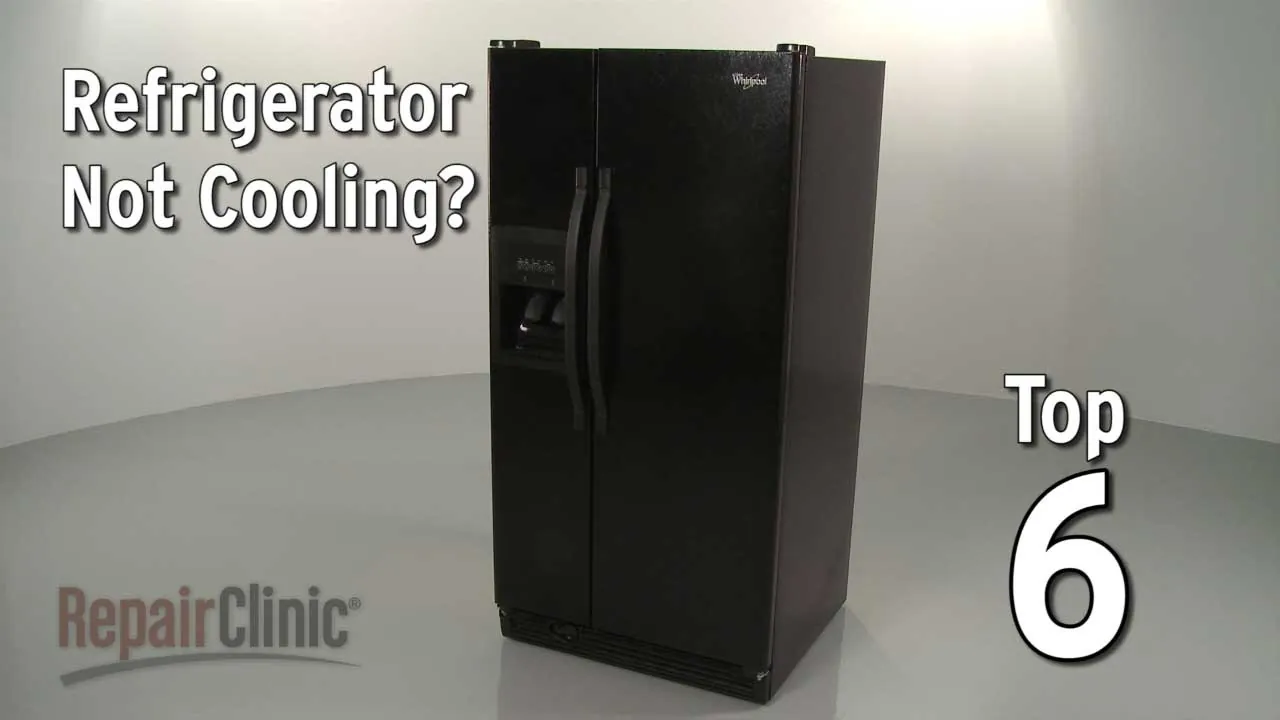
A bad start relay makes the compressor click, hum for a second, then go quiet — and it repeats every few minutes. The relay gives the compressor the push it needs to start. When it fails, the compressor never gets going, so no cooling happens at all.
This suits a reader who hears clicking from the back of the fridge. It’s not for you if the compressor hums steadily and stays running — that points to a sealed-system problem instead, and that’s technician work.
- Restores compressor starting for a modest cost in parts, well below the alternative
- Easy to reach — it clips onto the compressor terminals
- A common failure on older fridges
- Fixes total cooling loss, not partial
Pull the fridge out, unplug it, and remove the back access panel. The relay is the small plastic box on the side of the compressor. Match the part number on the old relay to the new one — they aren’t universal. If the new relay clicks too, the compressor itself has failed, and that’s a sealed-system repair.
Test the thermistor
A faulty thermistor sends wrong temperature readings to the control board, so the fridge either runs nonstop or barely runs. It’s a small sensor, and its resistance changes with temperature — the board uses that to decide when to cool.
This suits a reader with a fridge that’s warm but shows no other symptom, or one that freezes food in the fridge section. It isn’t for you if you don’t own a multimeter — you can’t diagnose this one by look or sound.
- Explains erratic temperatures with no mechanical noise
- Cheap part, inexpensive next to the alternative
- Fixes both over-cooling and under-cooling
- Rules out the control board before you replace it
Unplug the fridge and locate the thermistor — usually clipped to the evaporator or the fridge liner. Test the thermistor’s resistance with your multimeter and compare it to your model’s spec sheet, since the value varies. If the reading is far off or doesn’t change when you warm the sensor in your hand, replace it.
Other Kenmore Elite refrigerator cooling issues
A few less common problems can also stop an Elite from cooling. These are worth checking if the six above don’t explain what you’re seeing.
- Sealed-system leak — Refrigerant escapes slowly, so cooling fades over weeks rather than hours. You’ll often see oily residue on the tubing. This needs a licensed technician with recovery equipment; it’s not a DIY repair.
- Failed control board — The board stops sending power to the fans or compressor. Symptoms mimic a thermistor fault. Test the board’s output voltage before replacing it.
- Door gasket leak — A torn or stiff gasket lets warm air in constantly. Run a dollar bill around the door — if it slides out easily, the seal is weak.
- Condenser fan motor — Sits next to the compressor and pushes air across the coil. If it’s dead, the coil overheats and cooling drops. Listen for it running when the compressor runs.
How to pick the right fix

Match the symptom to the part before you buy anything. If the freezer is cold and the fridge is warm, the evaporator fan or a blocked drain is your answer — start with the fan. If both compartments are warm and you hear clicking, go straight to the start relay. If both are warm with no clicking and the compressor runs constantly, clean the coil first, then test the thermistor.
If the fridge warms slowly over weeks rather than all at once, that pattern points to a sealed-system leak, and no DIY part will fix it. If you’ve cleaned the coil, the fans run, and the compressor hums steadily but nothing gets cold, you’re past the DIY line.
These fixes do stack — cleaning the coil and clearing the drain are maintenance you can do on the same afternoon. But the parts aren’t interchangeable. Replacing the start relay won’t help a dirty coil, and a new thermistor won’t fix a dead fan. Diagnose first, then buy one part.
Frequently asked questions
Can a Kenmore Elite refrigerator stop cooling and then start again?
Yes, and it usually means the start relay is failing or the compressor is overheating and cutting out on its thermal overload. The fridge cools, the overload trips, it warms, then it restarts. That cycle shortens the compressor’s life. Replace the relay first — it’s the cheap part. If it still cycles, call a technician.
Why is my freezer cold but my fridge warm?
The evaporator fan or a blocked defrost drain is the cause in most cases. Cold air is made in the freezer but never reaches the fridge section. Open the freezer door and listen — if the fan is silent when it should run, that’s your answer. Check the drain hole for ice at the same time.
How long does a Kenmore Elite refrigerator last?
Most refrigerators last many years, but that assumes normal use and a clean condenser coil. A fridge with a dust-packed coil runs hotter and wears out faster. Check your model’s serial plate for the manufacture date, then compare it to how long you’ve owned it. Once it’s well past its expected life, weigh repair cost against replacement.
Is it safe to keep food in a fridge that’s not cooling?
No. Food above 40°F for more than 2 hours should be thrown out, per the USDA’s food safety guidance. A fridge that’s warm but still under 40°F is fine for a short time. Once it climbs past that, move what you can to a cooler with ice and don’t refreeze thawed meat.
What happens if I ignore a clicking compressor?
The compressor will eventually fail completely, and that’s the most expensive repair on the fridge — often more than the fridge is worth. A cheap relay now prevents a far pricier sealed-system job later. If you hear clicking for more than a day, replace the relay before the compressor burns out.
Does it matter which replacement part I buy?
Yes — Kenmore Elite parts aren’t universal across model numbers. A relay or thermistor from a different model can fit physically but read the wrong values, and the fridge won’t cool right. Write down the full model number from the plate inside the fridge, and order only the part listed for that number.
How often should I clean the condenser coil?
Every 6 to 12 months, and every 3 months if you have pets. That range assumes the coil is reachable behind the kick plate. A home with two shedding dogs clogs a coil far faster than a home with none. If you can see a grey mat of dust on the fins, it’s already overdue.
What to do next
Pull the kick plate off and look at the condenser coil first — it’s free, it’s fast, and it fixes more warm-fridge complaints than any part you can buy. If the coil is clean, the fans run, and the compressor hums without cooling, stop and call a technician — that’s a sealed-system job. Your next step is to schedule that service call.