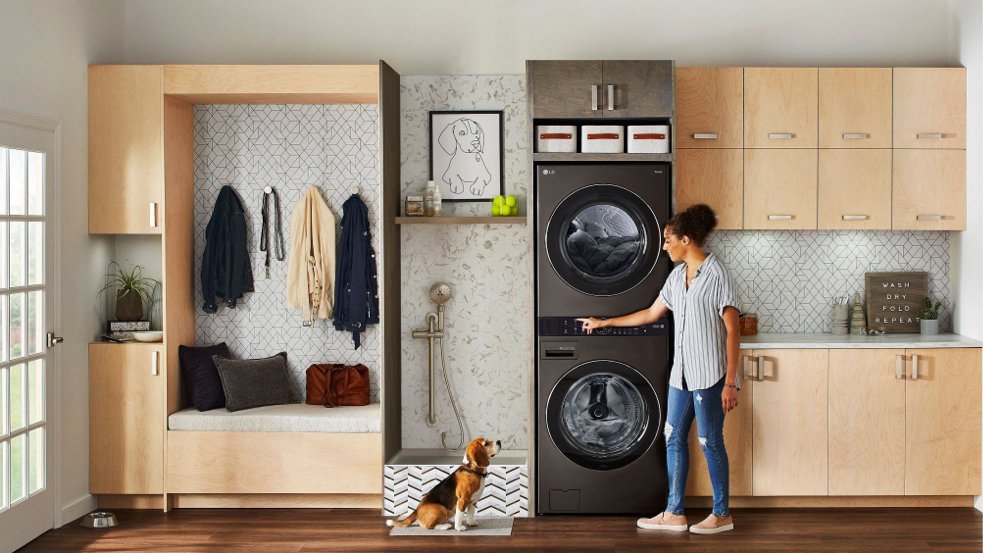
Yes, you can put a stackable washer and dryer almost anywhere, as long as the spot has the right power, water, drain, and venting. The one condition that flips that answer is ventilation: a vented dryer needs a duct to the outside, so an inside closet or a basement corner won’t work without one. Check the outlet type and the vent path in your chosen spot before you buy anything.
Where a stackable set works and where it doesn’t
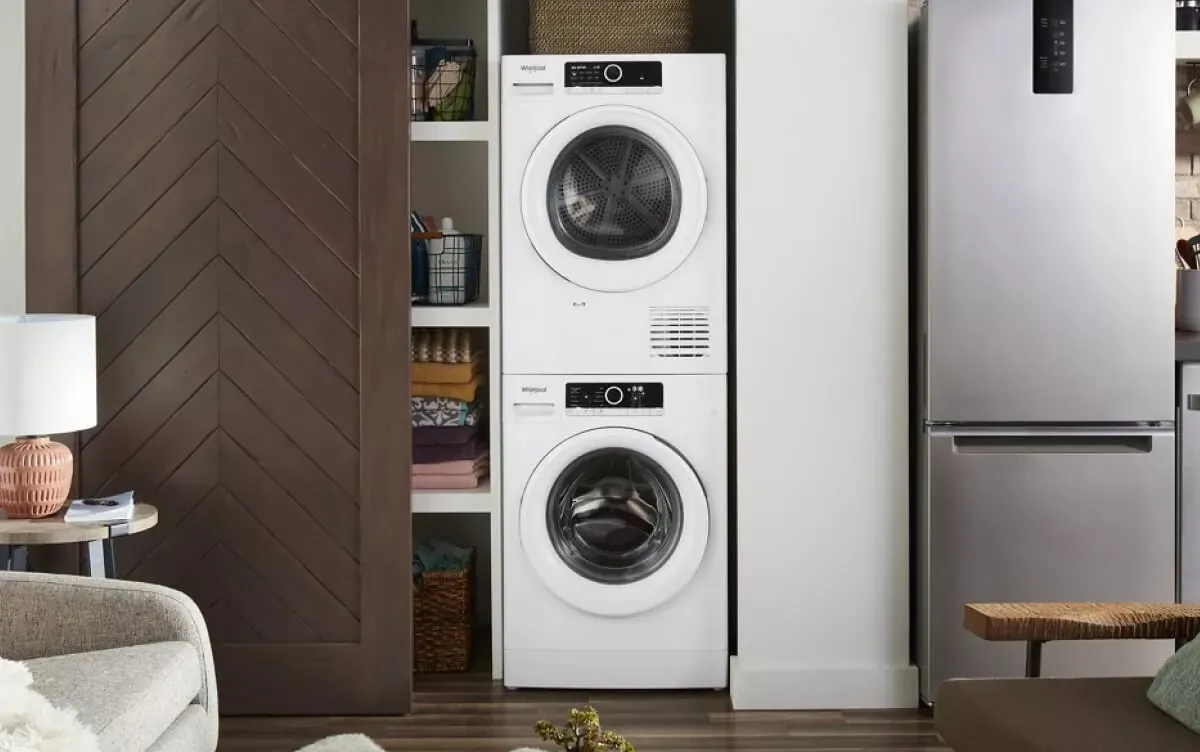
The spot matters more than the machine. A stackable unit saves floor space, but it still needs the same connections a full-size set needs. Walk your space against the list below before you commit.
| Your situation | Answer | Why |
|---|---|---|
| Upstairs laundry closet | Yes | Water, drain, and a power source are usually already there |
| Small bathroom corner | Yes, if vented | Needs a duct path and a suitable outlet |
| Kitchen nook | Usually yes | Space is tight, but plumbing is close by |
| Unheated garage | Only if it’s a ventless model | Cold can freeze water lines and block a vented dryer |
| Bedroom closet | Only with a ventless dryer | No duct path means moisture stays inside |
| Under a low ceiling | No | Stacked units need clearance above for the top door |
| RV or tiny home | Yes, with a compact 120V model | RV hookups often have limited power capacity |
The rows that say “no” aren’t about the machine’s size. They’re about what the space can’t provide. A closet with no outside wall has nowhere for a vented dryer to push hot, damp air.
What actually decides if a stackable fits
Power and venting decide it, not floor space. A stacked pair needs a dedicated circuit, and the dryer type sets the rule for where it can sit. Get those two right and almost any spot works.
Most electric dryers need a 240-volt outlet on its own breaker. A standard 120-volt wall outlet won’t run one. If your spot only has 120V, you’re limited to a ventless or heat-pump dryer, which plugs into a normal outlet. Check the outlet’s shape: a 240V dryer plug has a different prong layout than a regular one.
Venting is the harder limit. A vented dryer pushes lint-heavy moist air through a duct to the outside. The duct run should be as short and straight as possible, because long runs and too many bends trap lint and slow the airflow. Dryers and their venting are a leading cause of home fires when lint builds up, so a clean, short duct isn’t optional.
Ventless dryers skip the duct. They condense the moisture and drain it, or collect it in a tank you empty. That’s what lets them sit in an inside closet or a bedroom. The trade-off is a longer cycle and, on some models, a tank you have to empty after every load or two.
If your spot has a 240V outlet and an outside wall for a duct, a vented stackable works. If it has only 120V or no duct path, you need a ventless model instead.
Setting it up so it runs right
Once the spot passes the power and vent checks, the install is mostly about level ground and clean airflow. Follow these steps in order.
- Measure the full height and clearance. Add the washer and dryer heights together, then add a few inches above for the top door to open. If the number is taller than your ceiling or shelf, the stack won’t fit — stop here.
- Confirm the outlet and breaker. Match the dryer’s plug to the wall outlet. A 240V dryer needs its own dedicated circuit; if you’re not sure the breaker is dedicated, that’s an electrician’s call, not yours.
- Set the vent path. For a vented dryer, keep the duct short and use rigid metal, not the flexible foil kind that crushes and traps lint. The sign it’s right: the duct runs straight to the outside with no sharp bends.
- Level the base unit. A washer that rocks will walk and bang on spin. Turn the feet until a spirit level reads flat in both directions. The sign it worked: the machine stays still on a full spin.
- Stack and lock the pair. Use the manufacturer’s stacking kit for your exact models — never stack one unit loose on top of another. The sign it’s secure: the top unit doesn’t shift when you push it side to side.
- Run a test load. Start with one small load and watch for leaks at the hoses and warm air at the outside vent. The sign it’s right: the vent pushes strong warm air and nothing drips.
If any step fails — no dedicated circuit, no duct path, a ceiling that’s too low — don’t force it. That’s the point where the space, not the machine, is the problem.
The mistake that costs the most
The costliest mistake is buying the stackable set before checking the vent path. People see the floor space, measure the width, and order the pair — then find the only outside wall is on the far side of the room. Now they’re paying for a return, a restocking fee, or a duct run they didn’t plan for.
The fix is one check before you buy: stand in the spot, find the nearest outside wall, and trace how a duct would reach it. If that path is longer than the manufacturer allows or crosses a doorway, a vented dryer won’t work there. Look at the dryer’s spec sheet or manual for its maximum vent length — that number is on the maker’s own page, not on a store listing.
A second cost hides in the power. A 240V dryer needs a dedicated circuit; sharing it with other loads can trip the breaker mid-load. You lose a wet load and a chunk of your day. Confirm the circuit is dedicated before the delivery truck arrives, not after.
When to call a professional
- No 240V outlet and you want a vented dryer. Adding a dedicated circuit means new wiring and a breaker — an electrician’s job, and a licensed one at that.
- You need a new vent cut through a wall or roof. Cutting a duct hole through an exterior wall or roof risks structure and water leaks. A licensed contractor handles this.
- The only duct path is long or has many bends. A run that’s too long traps lint and raises fire risk. A pro can tell you if it’s within the maker’s limit or needs a booster.
- You smell gas near a gas dryer hookup. Stop and leave the area, then call your gas utility or a licensed plumber. Never test a gas line yourself.
- The unit trips the breaker or the outlet feels warm. That points to a wiring or circuit problem. An electrician needs to look before you run another load.
Electrical work and gas hookups carry real risk of fire, shock, or a code violation, and most places require a licensed pro for both. Your own checks stop at the outlet shape, the vent path, and the level feet. Everything past that belongs to a trained tradesperson.
Frequently asked questions
Can you put a stackable washer and dryer in a closet?
Yes, if the closet has a power source and a vent path. A vented dryer needs a duct to the outside, so an interior closet won’t work unless you can route one. A ventless or heat-pump dryer needs no duct and fits an inside closet, but you’ll empty a water tank or run a drain line.
Can you put a stackable washer and dryer in a garage?
Only with the right conditions. An unheated garage can freeze water lines in winter, which can crack hoses and damage the machine. If you use one there, choose a ventless model, insulate the pipes, and keep the space above freezing. Check your local code for appliance rules in garages.
How much space do you need for a stackable washer and dryer?
Plan for the width of the wider unit plus a couple of inches on each side, and the combined height plus a few inches above. A typical stacked pair is around 24 to 27 inches wide, but measure your exact models. The manual lists the clearance the maker requires — use that number, not a guess.
Is it safe to stack a washer and dryer yourself?
Yes, if you use the manufacturer’s stacking kit for your exact models and level the base unit. Stacking one loose on top of another isn’t safe — it can shift or fall on a spin cycle. If you’re unsure the kit matches your pair, buy it from the maker or have the installer do the stack.
Why does my stacked dryer take so long to dry?
A blocked or crushed vent is the usual cause. Flexible foil ducts kink and trap lint, which slows airflow and stretches the cycle. Check the duct for kinks and clean the lint screen and the duct run. If the run is long or has many bends, it may be past the maker’s limit and need a pro.
What happens if a stackable dryer has no vent?
A vented dryer with no duct can’t operate properly and shouldn’t be used; lint and moisture will accumulate and create a fire and mold risk. It won’t dry properly either. If you have no duct path, use a ventless or heat-pump dryer instead — those are built to run without one.
Does a stackable washer and dryer need a special outlet?
It depends on the dryer. Most electric dryers need a 240-volt outlet on a dedicated circuit, which looks different from a standard 120-volt one. Ventless and heat-pump dryers often run on a normal 120-volt outlet. Match the plug to the outlet before you buy, or plan for an electrician.
Can you put a stackable washer and dryer on a second floor?
Yes, and it’s common. The floor needs to carry the weight and the machine needs to be level, or it will vibrate and walk. Check that the spot has the right outlet and a vent path. If the floor bounces or the unit rocks, add a sturdy base or call a pro to check the support.
What to do next
Check the outlet shape, the nearest outside wall for a vent, and the ceiling height above the stack. That tells you in a few minutes whether a vented or ventless model fits. Next, measure the space and confirm the model’s clearance specs before you buy.