
The spray arm at the top of the dishwasher is usually the problem, and it’s the answer to a dishwasher not cleaning dishes on the top rack most of the time. That arm gets less water pressure than the lower one, so anything blocking its holes or feeding it hits the top shelf first.
Run one cycle with nothing in the machine and watch through the door gap. If the top arm barely turns while the bottom one spins fast, you’ve found it.
Before you buy parts, check the filter and the sump at the bottom. A clogged filter starves the whole machine, and the top rack suffers first because it sits furthest from the pump. Pull the filter, rinse it under hot water, and look for glass or seeds in the sump.
Then check the supply tube that feeds the upper arm. On most models it runs up the back wall and can pop loose or crack. If the arm spins freely by hand but never moves during a cycle, that tube is the likely culprit, not the arm.
Causes, ranked by how often they’re the real one
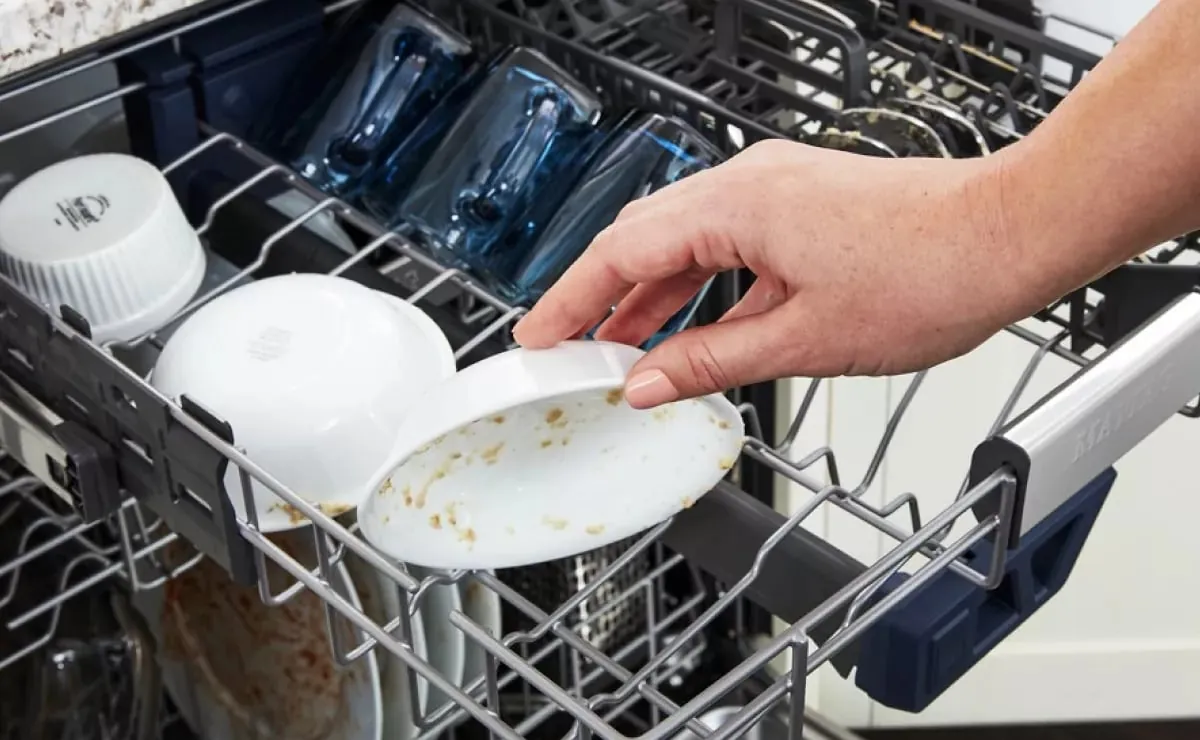
Water reaches the top rack last and weakest, so the causes below are ordered by how often each one actually explains dirty upper dishes.
| Cause | How common | How to confirm it | Fix it yourself? |
|---|---|---|---|
| Clogged top spray arm holes | Very common | Shine a light through each hole | Yes |
| Dishes blocking the spray arm | Very common | Spin the arm by hand before starting | Yes |
| Low water reaching the top | Common | Watch the arm turn during a cycle | Yes with care |
| Wrong cycle or no heat dry | Common | Check the panel settings | Yes |
| Filter and sump full of debris | Sometimes | Pull the filter and look | Yes |
| Inlet valve or water level fault | Uncommon | Compare fill level to the mark | No |
| Wash pump losing pressure | Rare | Weak spray on both racks | No |
Clogged holes in the top spray arm
Food bits, hard water scale and bits of broken glass collect in the small holes of the upper spray arm, and water then sprays sideways or not at all. The top arm sits closest to the food you scrape off plates above it, so it clogs faster than the lower one. That’s why the symptom shows up on the top rack first.
The confirming test takes about two minutes. Pull the top rack out, twist the spray arm off if your model allows it, and hold it up to a bright light. You should see a clear dot of light through every hole. Any hole that looks dim or solid is blocked.
To clear it, soak the arm in warm water with a splash of white vinegar for 15 to 20 minutes, then push a wooden toothpick through each hole. Never use a metal skewer or a wire — it scratches the plastic and gives scale a place to grab next time. Rinse and refit.
Run a short rinse cycle afterward and check the arm spins freely. The whole job costs you 20 to 30 minutes and no parts, unless a hole has split, in which case you’ll need a replacement arm for your model — check the part number in your manual or on the manufacturer’s site.
Dishes blocking the spray arm
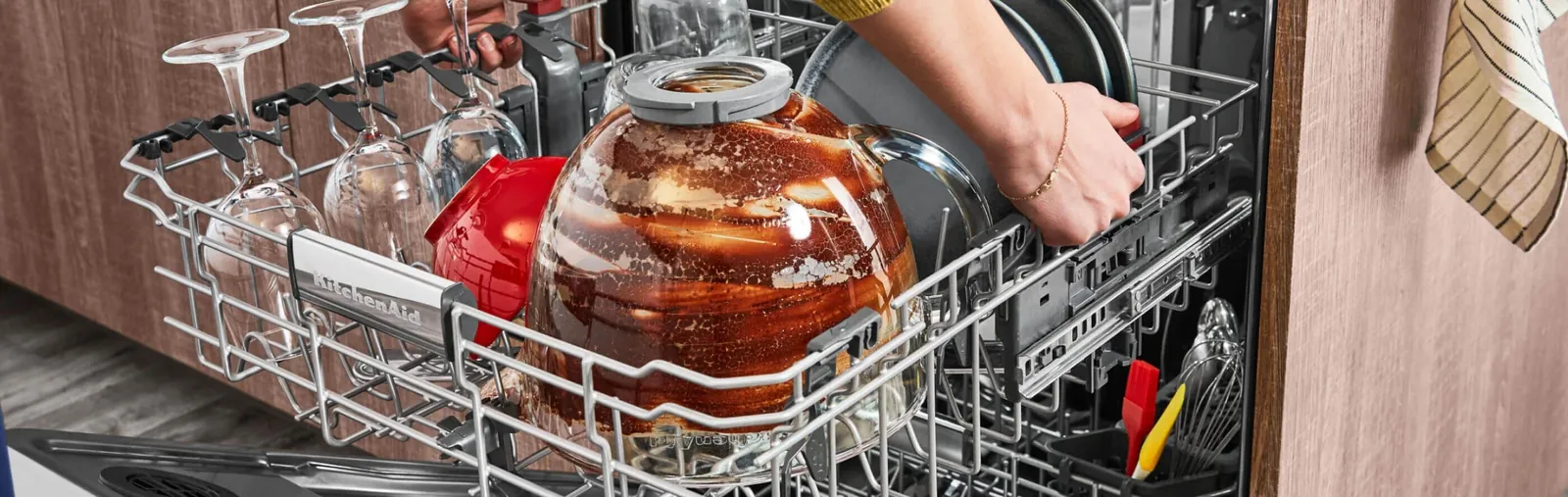
Tall items on the bottom rack stop the upper arm from turning, and the top rack gets a thin, uneven spray instead of a full sweep. You can tell this cause from a clogged arm because the arm spins freely by hand but stalls once the machine is loaded.
Load the bottom rack so nothing stands higher than the spray arm’s path. Pull the top rack out and spin the arm through a full circle by hand — it should clear every plate, pot handle and utensil. If it catches, move the item.
Face dirty surfaces down and inward on the top rack. Cups and bowls should tilt so water can’t pool in them. Don’t nest items against each other; a 1-inch gap between plates lets water through.
A common mistake is stacking the top rack tight to fit one more mug. The cost is a second full cycle, which uses the same water and energy again for dishes that were already mostly clean.
If your model has a fold-down shelf or a bottle jet, check that it isn’t flipped up into the arm’s path. It’s an easy thing to miss after unloading.
Low water or a weak fill
If the arm spins by hand but barely moves during a cycle, the machine isn’t filling with enough water to reach the top. This is different from a blockage — the spray is weak on both racks, not just the upper one.
If it’s well below that, the fill is short.
Check the basics first: the water supply valve behind the machine should be fully open, and the inlet screen at the connection point should be clean. A kinked supply line does the same thing.
If the fill still looks short, the inlet valve or the water-level sensor is the likely cause. Those are technician jobs — the machine holds live mains voltage inside, so call a qualified appliance technician rather than opening the housing. Call a qualified appliance technician rather than opening the housing.
Less common causes worth knowing
- Clogged filter and sump: the filter sits under the lower rack; if it’s coated in grease and grit, dirty water recirculates onto the top rack. Pull it monthly and rinse it under hot water.
- Wrong cycle or no heated dry: a quick or eco cycle often skips the hot final rinse, so plastics on the top rack stay wet and spotty. Check your panel’s cycle names in the manual.
- Hard water scale: a white film on glasses and the spray arm points to mineral buildup. A dishwasher cleaner run on a hot cycle handles most of the buildup inside the machine; for scale on glasses and the spray arm, use a vinegar soak or a citric-acid descaler.
- Detergent not dissolving: powder in a cold pre-wash leaves residue. Use a tablet in the main cup and close it properly; powder left in the pre-wash cup may not fully dissolve in a short cold pre-wash.
- Aging wash pump: weak spray on both racks, plus noise, means the pump is losing pressure. That’s a technician diagnosis, not a homeowner fix.
For anything involving the pump, valve or control board, stop at the checks above. Those parts sit behind mains voltage and need a qualified technician.
What a fix usually involves
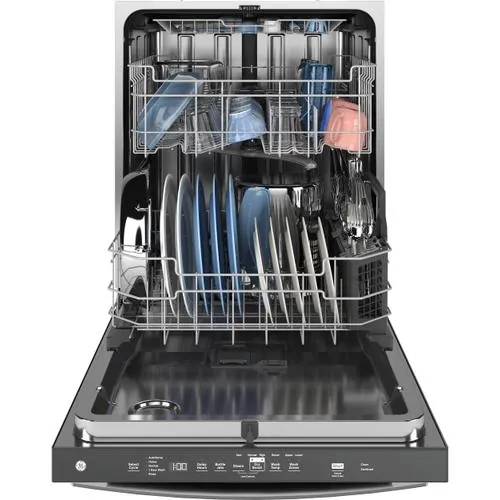
Clearing the spray arm is the cheapest path — 20 to 30 minutes, a toothpick, and warm water with vinegar. No parts, no waiting. It’s the same effort as hand-washing one sink of dishes.
One thing to check while you’re in there: spin the arm with your finger. If it turns freely, the blockage was the whole problem. If it grinds or catches, the arm itself is worn and cleaning will only buy you a few loads before the spray pattern goes uneven again.
Reloading the racks costs nothing but a few minutes before each cycle. The trade-off is that you lose some capacity, since taller pots have to move to the lower rack or wait for the next load.
Filter cleaning is a monthly habit — about 5 minutes, no tools. Skip it and you’re back to square one within weeks.
A technician visit for a fill or pump fault is the big one. The cost depends on your model, your area and whether a part is needed, so get two quotes and ask for the diagnostic fee up front. Check your manual or the manufacturer’s site for the part number before you call — it speeds things up and stops a wrong part being ordered.
If the machine won’t drain at all, that’s a pump issue and no amount of cleaning will touch it. Book the technician. If it drains but leaves grit, stay with the spray arm and filter.
Frequently asked questions
Why is only the top rack dirty in my dishwasher?
The upper spray arm gets the least water pressure, so a partial blockage or a stalled arm shows up there first. Check whether the arm spins freely by hand, then look through its holes for clogs. If both check out, the machine may not be filling enough water.
Can a clogged spray arm cause dirty dishes on the top rack?
Yes, and it’s the most common cause. Food bits and scale block the small holes, so water sprays sideways instead of up. Soak the arm in warm vinegar water for 15 to 20 minutes and clear each hole with a toothpick. Never use metal.
How long does it take to clean a dishwasher spray arm?
About 20 to 30 minutes, including the soak. Soak for 15 to 20 minutes, then push a toothpick through each hole and rinse. If holes are split or the arm is cracked, replacement takes longer and needs the correct part number for your model.
Is it safe to use vinegar in a dishwasher?
Yes, for occasional cleaning. A cup of white vinegar in an empty hot cycle helps with scale and odor. Don’t use it every wash — repeated acid exposure can wear rubber seals over time. Check your manufacturer’s care guide for what it recommends for your model.
What happens if I ignore a blocked top spray arm?
Dishes keep coming out dirty on the top rack, and you’ll run the same load twice. That doubles your water and energy use for that load. Long term, scale hardens in the holes and the arm may need replacing instead of just cleaning.
Does it matter which cycle I choose?
Yes. Quick and eco cycles often skip the hot final rinse, so the top rack stays wetter and spottier. A normal or heavy cycle with heated dry gives the best results on the upper rack. Check your panel’s cycle names in the manual.
How often should I clean the dishwasher filter?
Once a month for most households, and more often if you pre-rinse heavily or cook with a lot of grease. Pull the filter, rinse it under hot water, and check the sump for debris. A clogged filter recirculates dirty water onto every rack.
When should I call a technician instead?
Call one when the arm spins freely, the filter is clean, and the top rack is still dirty. That points to a fill, valve or pump fault. Those parts sit behind mains voltage, so don’t open the housing yourself. Don’t open the housing yourself.
Conclusion
Start with the spray arm — shine a light through every hole and spin it by hand. That one check settles most cases in two minutes, and it costs nothing. If the arm is clear, the water level is next, and then it’s a call to someone qualified.