
A rinse aid dispenser works by releasing a small amount of rinse aid into the rinse water at the end of the wash cycle. The rinse aid lowers the surface tension of the water. That means water can’t form droplets on your dishes. Instead, the water slides off in thin sheets. The result is faster drying and fewer spots. Think of it like a raincoat: water beads up on a raincoat, but it spreads out on a cotton shirt. Rinse aid makes your dishes act more like the shirt.
The parts that do the work

| Part or input | What it does | What you notice when it goes wrong |
|---|---|---|
| Rinse aid reservoir | Holds the liquid between cycles | Dishes come out spotted and wet |
| Fill cap or door | Seals the reservoir shut | Rinse aid leaks out during the wash |
| Wax motor or solenoid | Opens the release valve | No rinse aid gets released at all |
| Release valve | Lets a set amount into the rinse water | Too much or too little gets dispensed |
| Control board | Times the release to the rinse cycle | Release happens at the wrong moment |
| Rinse water | Carries the rinse aid across the dishes | Hard water leaves mineral spots behind |
The wax motor is the part most people have never heard of, and it’s often the one that fails. It’s a small cylinder that expands when heated by an electric current. That expansion pushes a pin that opens the valve. No motor, no release.
What happens, step by step
-
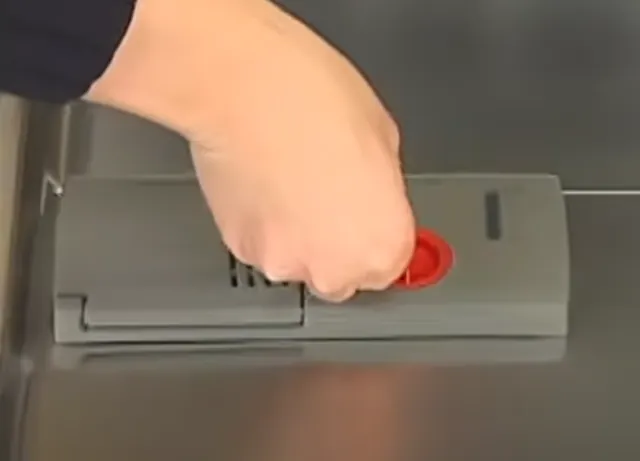
You fill the reservoir. Open the dispenser door on the inside of the dishwasher door. Pour rinse aid in until the window or float shows full. It holds roughly 3 to 4 ounces (about 100 ml) on most home models — check your own manual, since sizes vary.
-
The main wash starts. Hot water and detergent spray across the dishes for 20 to 40 minutes, depending on the cycle you picked. The dispenser stays shut the whole time. Rinse aid in the wash water would create excess foam.
-
The drain and refill happen. The machine pumps out the dirty detergent water and refills with clean hot water. This marks the start of the rinse phase.
-
The control board sends power to the wax motor. A small current heats the wax inside the motor. The wax expands and pushes the valve pin open.
-
Rinse aid drops into the rinse water. A measured amount — usually 1 to 3 ml per cycle — flows out of the reservoir. Your machine’s setting (often marked 1 to 5) controls how much is released.
-
The rinse water sheets off. The rinse aid breaks the water’s surface tension. Water runs off in a thin film instead of beading into droplets.
-
The drying phase runs. Heat or a fan dries the dishes for 20 to 30 minutes. With no droplets left, there’s nothing to leave spots behind.
-
The wax cools and the valve closes. Power stops, the wax shrinks, and the pin retracts. The dispenser is sealed and ready for the next load.
Why spots and wet dishes point to the dispenser
Wet dishes with white spots usually mean the rinse aid never reached the rinse water. The spots themselves are minerals — calcium and magnesium — left behind when water droplets evaporate. If water sheets off properly, those minerals rinse away with it. If droplets stay, each one dries into a visible spot. So spots are a drying problem, not a cleaning problem. The detergent did its job. The rinse stage didn’t.
A clogged dispenser is the most common cause. Rinse aid is slightly thick, and over months it can gum up the valve opening. If the reservoir is full but the dishes stay wet, the valve is likely stuck or blocked.
Rinse the dispenser with hot water and check again. If the reservoir is empty after two or three loads, the seal or the cap is leaking, and the rinse aid is draining into the wash water where it does nothing useful.
If the reservoir stays full and never drops, the wax motor or the control board has failed. That’s a repair, not a cleaning job. On most machines the dispenser assembly is one sealed unit, so you replace the whole thing rather than the motor alone. Check your model’s parts diagram before you buy anything.
Hard water makes all of this worse. The harder your water, the more minerals are left when a droplet dries, and the more visible the spots become. If your water is very hard, you may need a higher rinse aid setting just to get the same result. Your water utility publishes a hardness report — that’s the number to look up, not a guess.
One thing worth knowing: rinse aid isn’t the same as detergent, and it’s not a sanitizer. It doesn’t clean and it doesn’t kill germs. It only changes how water behaves on the surface. If your dishes come out dirty rather than spotted, the problem is elsewhere — the filter, the spray arms, or the detergent.
What you can change, and what you cannot
What you control
- The dosage setting. Most dispensers have 1 to 5 levels. Hard water needs a higher number; soft water needs a lower one.
- How often you refill. A full reservoir lasts roughly 30 to 60 washes on a mid setting. Check the window monthly.
- The rinse aid brand. Different formulas have different concentrations, so your setting may need adjusting when you switch.
- Cleaning the dispenser. A hot water rinse keeps the valve from gumming up; how often depends on use, and the owner’s manual is the authority.
- Cycle choice. A longer dry phase gives the rinse aid more time to work.
What is fixed by design
- The release amount per cycle. The valve size sets the range; you can only pick within it.
- When the release happens. It’s tied to the rinse phase by the control board.
- The reservoir size. It’s built into your model and can’t be enlarged.
- Whether your machine has a dispenser at all. Some compact models don’t.
If the wax motor or control board has failed, that’s past the do-it-yourself line for most people. It means pulling the door apart and working near live wiring and water. Call a qualified appliance technician, or check whether your machine is still under warranty before you touch anything.
Getting more out of it

Set the dosage by result, not by the label. Start at the middle setting, run two loads, and look at the glasses. Spots mean go up one level; a blue or greasy film means go down one. Change one level at a time so you can tell what actually made the difference.
Refill before the reservoir runs dry. Running it empty for a few cycles doesn’t damage anything, but you’ll get spotted dishes for every load until you refill. The fill window on the inside of the door tells you what’s left, so a quick look before you start the machine saves a whole cycle.
Match your setting to your water hardness. Your utility’s published report gives the number in grains per gallon or mg/L. As a rough guide, soft water below about 3 grains per gallon usually works fine on a low setting, while very hard water above 10 often needs the top setting. The report, not a guess, is what to trust here.
Clean the dispenser opening as often as your use requires — the owner’s manual is the authority. Warm water and a soft cloth are enough. Don’t poke anything metal into the valve — you’ll scratch the seal and create the leak you were trying to prevent.
Use a rinse aid that’s labeled for dishwashers. Some “drying aid” products are meant for hand washing, and they foam badly inside a machine. Foam can overflow and leave a mess you’ll be cleaning for an hour.
Frequently asked questions
How long does rinse aid last in the dispenser?
A full reservoir lasts about 30 to 60 wash cycles on a middle setting. Higher dosage settings use it faster, so a machine set to 5 will need refills sooner. Check the fill window regularly, and let the owner’s manual be your guide.
Can I use vinegar instead of rinse aid?
It can help with mineral spotting because it’s acidic, but it doesn’t lower surface tension the way commercial rinse aid does. Use it at full strength in the reservoir. The trade-off is that vinegar doesn’t dry dishes quite as fast, and some manufacturers say it can wear down rubber seals over time. Check your manual first.
Why is my rinse aid dispenser not releasing?
The valve is stuck, the wax motor has failed, or the control board isn’t sending power. First, clean the dispenser opening with hot water — gummed-up rinse aid is the most common cause. If the reservoir still won’t drain after two loads, the motor or board needs a technician.
Is rinse aid safe on dishes and baby bottles?
Yes, at the amounts a dishwasher uses. The residue left after the final rinse is tiny. If you’re still concerned, run an extra rinse cycle or drop the dosage setting by one level.
What happens if I put rinse aid in the detergent slot?
You’ll get a machine full of foam. Rinse aid is a surfactant and it foams hard when agitated with detergent. The foam can overflow onto your floor and may trigger the overflow sensor, which stops the cycle. Wipe out the slot and run an empty hot rinse before your next load.
Does rinse aid matter if I use a dishwasher pod with rinse aid in it?
It helps, but the built-in amount is small. A separate dispenser releases at the right moment. If your dishes still come out wet with pods alone, fill the dispenser too.
How do I know if my dishwasher has a rinse aid dispenser?
Look for a small hinged door or a round cap on the inside of the dishwasher door, usually next to the detergent cup. It often has a star or a sun symbol on it. If you can’t find one, your model’s manual will list it — compact and older machines sometimes don’t have one.
Can I adjust how much rinse aid is released?
Yes, on most machines. There’s a dial or a setting in the control menu, usually numbered 1 to 5. Higher numbers release more. Start in the middle, then move up one level if you see spots and down one if you see a film. Give each change two full loads before judging it.
Conclusion
Rinse aid isn’t complicated once you see it as a timing problem. The machine needs to release it during the rinse, not the wash, and it needs to release the right amount for your water. When dishes come out wet or spotted, check the reservoir, then the setting, then the valve. That order saves you from replacing a part that was never broken.