
Burn stains on a stove top come off with a paste of baking soda and water, left to sit for a short while, then lifted with a plastic scraper and a non-scratch pad. Removing burn stains from stove top glass or metal takes about 30 to 45 minutes for one burner.
The job is easy to medium — easy on the flat glass top, medium around raised gas grates. It costs very little, since baking soda, dish soap and a plastic scraper are things most kitchens already have. Before you start, you need the maker’s manual for your stove. If you don’t have the paper copy, the model number is printed on a sticker near the oven door or on the back panel.
What you’ll need for a stove top burn stain

| Item | How much | Why it’s needed | A substitute |
|---|---|---|---|
| Baking soda | 3 to 4 tablespoons | Makes the cleaning paste | None — don’t swap this |
| Warm water | 1 to 2 tablespoons | Turns powder into paste | Dish soap, 2 drops |
| Dish soap | 1 teaspoon | Cuts baked-on grease | None — don’t swap this |
| Plastic scraper | 1 | Lifts burnt crust | Old credit card |
| Non-scratch pad | 1 | Wipes without scratching | Microfiber cloth |
| White vinegar | ½ cup | Removes the white film | Lemon juice, same amount |
| Nitrile gloves | 1 pair | Keeps vinegar off skin | None — don’t swap this |
Vinegar is the one item people skip. The vinegar takes away the cloudy film left behind. If you have hard water, that film shows up more. A razor blade isn’t on this list on purpose — it’s for glass tops only. Check your manual before reaching for any blade.
Prep the stove top before you clean
- Switch off and unplug. Turn off every burner and let the surface cool for at least 30 minutes. On a gas stove, shut the gas valve at the wall. A warm surface dries the paste out before it can soak into the crust.
- Remove what lifts off. Take off grates, burner caps and drip pans so you can reach the stain directly. Soak the metal parts in hot soapy water while you work on the top.
- Wipe up loose crumbs first. A dry paper towel takes off ash and crumbs. Skip this and you’ll grind grit into the glass with the pad later.
- Ventilate the room. Open a window or run the hood fan. Open a window or run the hood fan to clear any smoke, gas, or cleaner vapors.
- The step people skip: check the manual for banned cleaners. Many glass tops forbid ammonia, bleach and abrasive powders, and using one can dull the finish or void the warranty. If your manual is missing, find the model number and read the maker’s care page before you start.
If the stain sits over a crack or a chip, stop and call the maker’s service line. Cleaning around damaged glass can turn a small chip into a full panel replacement.
Step-by-step to lift the burn stain
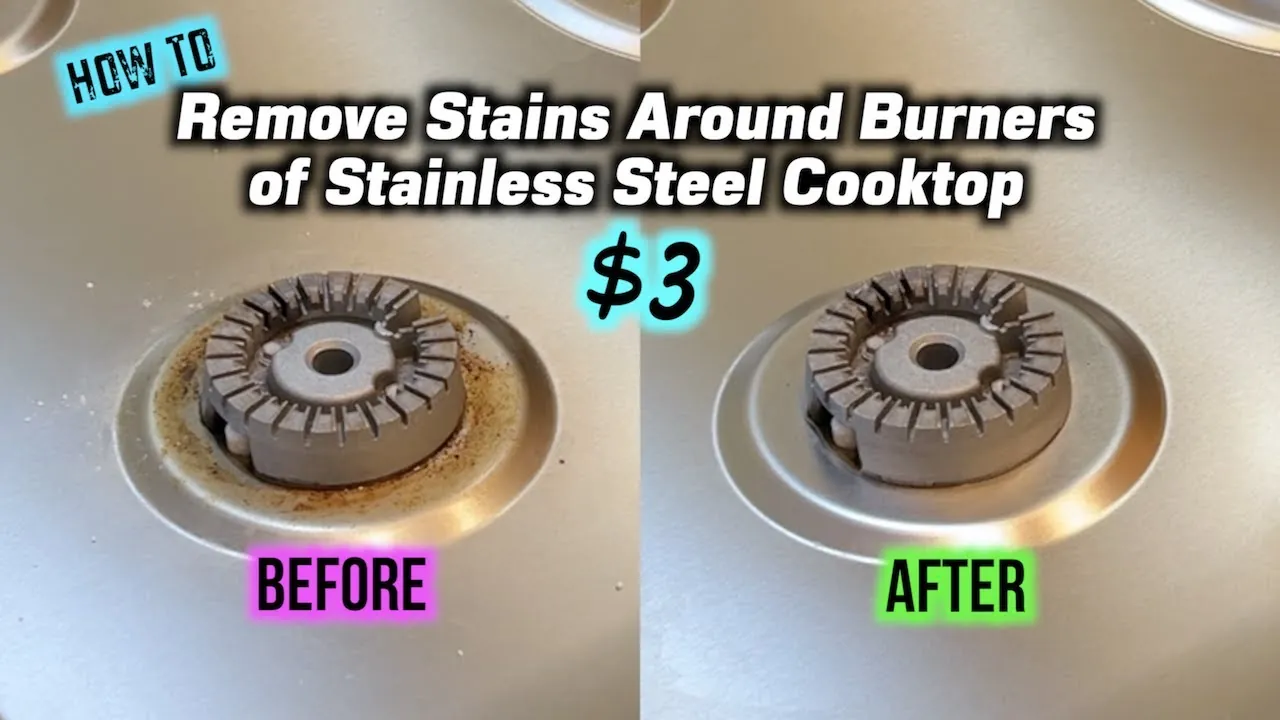
- Mix the paste. Put 3 to 4 tablespoons of baking soda in a small bowl and add warm water 1 teaspoon at a time until it looks like thick toothpaste. Add 1 teaspoon of dish soap and stir. If it drips off the spoon, it’s too thin — add ½ tablespoon more soda.
- Spread it over the stain. Cover the burnt area with a layer about ¼ inch thick, and push it ½ inch past the edge of the stain. Leave the middle of the stain slightly thicker, since that’s where the crust is hardest.
- Let it sit 20 to 30 minutes. Go by the clock, not by feel. A light brown ring loosens in about 20 minutes; a black crust that’s been there for months needs the full 30, and sometimes a second round after that.
- Press a warm damp cloth on top. Lay a cloth soaked in warm water over the paste for 5 minutes. The warmth and moisture soften the crust from above, so the scraper has less to fight. The cloth should feel warm, not hot, on your hand.
- Scrape at a shallow angle. Hold the plastic scraper at about 30 degrees and push the crust toward the center of the stain. Work in short strokes. You’ll see the crust lift in flakes — that’s your sign to keep going in the same spot.
- Wipe with the non-scratch pad. Use light circles, not hard pressure, and rinse the pad every few strokes. If you feel grit under the pad, stop and rinse it. Grit is what leaves fine scratches, not the pad itself.
- Rinse and check the surface. Wipe away all the paste with a clean damp cloth, then dry the spot and look at it from the side in daylight. A faint shadow means another round; a clean shine means you’re done with the paste.
- Remove the white film with vinegar. Pour ½ cup of white vinegar over the area and let it sit 5 minutes. Wipe it dry with a clean cloth. This step matters most on light-colored glass tops, where paste residue shows as a chalky haze.
- Clean the grates and caps. Scrub the soaked grates with the non-scratch pad, rinse them, and dry them fully before putting them back. Dry grates fully before putting them back so they don’t develop surface rust.
- Do a final heat test. Put the parts back, switch on one burner on low for 2 minutes, and watch for smoke or a burning smell. A faint smell of hot metal is normal as residue burns off. Smoke means residue is still there, so wipe the spot again with a damp cloth.
How to tell the burn stain is gone
Look at the surface from the side, with the room light behind you, not above you. A clean glass top reflects one straight line with no dull patch. If the reflection breaks into a cloudy blotch, paste residue or a thin film of burnt grease is still sitting there, and one more vinegar wipe will take it off.
Run your fingertip — dry, not wet — across the spot. It should feel as smooth as the area next to it. A slight drag or a raised edge means the crust is thinner but not gone, so repeat the paste for another 20 minutes. On a gas stove, check the burner cap sits flat, because a cap that rocks will leave a new scorch ring on the first cook.
The time check is simple. If you’ve scrubbed for 10 minutes with no change in the stain, stop scrubbing. More pressure won’t help — the paste needs time, not muscle, and hard scrubbing on glass is how scratches start. Add fresh paste, wait another 20 minutes, and try again.
One more sign: the color. Fresh burn marks are brown and lift in one round. Black, baked-on rings that have been reheated many times can take two or three rounds, spread over a day. That’s normal, and it’s cheaper than replacing a panel. If the mark is silver or grey and won’t lift at all, it’s probably not a stain — that’s scratched or worn enamel, and no cleaner will bring it back.
When the stove top cleaning goes wrong
| What happened | Why | What to do |
|---|---|---|
| Scratch marks appear | Grit under the pad | Rinse pad more often |
| White haze stays | Paste residue left behind | Wipe with vinegar |
| Stain won’t lift | Crust too old and thick | Repeat paste, wait 30 minutes |
| Burner won’t light after | Wet cap or clogged port | Dry fully, clear the port |
| Glass top cracks | Thermal shock or pressure | Stop — call a service tech |
| Paint dulls on the rim | Wrong cleaner used | Check manual, switch product |
A crack in the glass top is where this stops being a cleaning job. Don’t cook on a cracked top and don’t try to seal it yourself — call the maker’s service line or a qualified appliance technician. The same goes for a gas smell after you put the burner back. Shut the gas off at the wall, open a window, and call a professional. A gas leak isn’t a stain problem, and no home fix belongs near it.
How often to clean a stove top

Wipe the surface after every cook, once it’s cool, and do the full paste treatment every 2 to 4 weeks. That range covers most homes. The weekly wipe takes 1 minute and stops the burn from ever baking into a hard ring, which is the whole reason the deep clean stays easy.
Two things move that number. The first is how often you cook at high heat — frying, searing and wok cooking spit oil, and oil that sits through a heating cycle turns into the brown film that hardens fastest. If you fry most days, clean the top more often. The second is what you cook on.
A flat glass top wipes clean fast because there are no corners, while a gas stove has grates, caps and drip trays that trap grease out of reach. Those hidden spots need a soak regularly, but how often depends on how much you use the stove, and the owner’s manual is the authority on the schedule.
If you’re not sure which group you’re in, check the underside of your drip pans. A thin film means monthly is fine. A sticky, dark layer means you’re overdue, and going forward, weekly is your number.
Related guides
Frequently asked questions
How long does it take to remove burn stains from a stove top?
Plan 30 to 45 minutes for one burner, and most of that’s waiting, not scrubbing. The paste sits for 20 to 30 minutes on its own, then scraping and wiping take about 10 minutes. A black, long-baked ring can need two rounds, so allow an hour if the stain has been there for months.
Can I use baking soda on a glass stove top?
Yes, baking soda is safe on glass tops when you mix it into a paste and use a non-scratch pad. It’s a mild abrasive, so it lifts burnt crust without cutting the glass. The risk isn’t the soda — it’s dry powder or grit dragged across the surface, so always add water first and rinse your pad often.
Why won’t the black stain come off my stove top?
The stain is probably carbonized grease that’s been reheated many times, and it needs time rather than force. Add fresh paste, let it sit the full 30 minutes, and press a warm damp cloth on top for 5 minutes before scraping. If it still won’t move after three rounds, the mark may be permanent damage, not a stain.
Is it safe to scrape a glass stove top with a razor blade?
It’s safe only if your manual allows it, and only on a cool, wet surface with the blade held almost flat. Many makers approve a razor scraper for glass tops, but the wrong angle cuts the surface. Check your model’s care guide first, and use a plastic scraper if you’re unsure.
What happens if I use an abrasive cleaner on my stove top?
You can dull the finish or scratch the glass, and on some models you’ll void the warranty. Ammonia, bleach and scouring powders are banned on many glass tops for exactly this reason. The US Consumer Product Safety Commission publishes recall and safety notices for appliances, and your maker’s care page lists what’s approved for your model.
Does vinegar damage a stove top?
No, white vinegar is safe on glass and enamel when you wipe it off after a few minutes. It’s a mild acid that dissolves the chalky film left by baking soda.
Can I clean a burn stain while the stove is still warm?
No — let it cool for at least 30 minutes first. A warm surface dries the paste too fast, so it can’t soak into the crust, and it also raises the risk of a steam burn on your hand. Warm is fine for the damp cloth step, but the surface itself should be cool to the touch.
Does a burn stain mean my stove is broken?
Usually not. Most brown and black marks are just burnt food and grease sitting on top of the surface. A stain is a problem only when it comes with a crack, a gas smell, or a burner that won’t light — those need a technician, not a cleaner.
Conclusion
Once your stove top is clean, keep it that way with a quick wipe after each cooking session. It’ll save you from scrubbing hard later. If a stain still lingers, try a specialized cleaner made for your surface type, and you won’t have to fight it again.