
A clean washing machine takes about 2 hours, and you don’t need a technician for it. Run an empty hot cycle at 140°F (60°C) with 2 cups of white vinegar in the drum and ½ cup of baking soda in the detergent drawer, then wipe the gasket, filter, and door. This method suits top-loaders and front-loaders that smell musty or leave marks on clothes. If your machine is under warranty, check the manual first.
What you’ll need before you start

Gather everything in one place before you open the machine. Running back and forth mid-cycle wastes time, and a wet drum sitting open is a slipping hazard on a hard floor.
- White vinegar — 2 cups (500 ml). Distilled white vinegar, not apple cider or cleaning vinegar, which is stronger and can harm rubber.
- Baking soda — ½ cup (about 100 g) for the drawer and drum.
- Old toothbrush — for the gasket fold and the detergent drawer corners.
- Microfiber cloths — 2 or 3, so you have a dry one for the final wipe.
- Warm water and mild dish soap — 1 quart of water with a few drops of soap, for the outside and the door.
- Rubber gloves — the filter trap can hold standing water and debris that smells bad.
- A shallow tray or old towels — the filter sits low, and water will come out when you open it.
- The manufacturer’s manual — for your model’s filter location and self-clean setting.
Skip bleach if you’ve just used vinegar — mixing them in the same cycle releases a gas that irritates your eyes and throat. For machines with a “Clean Washer” cycle, the manual tells you which products the maker approves.
How to clean a washing machine step by step
-
Run an empty hot cycle with vinegar. Set the machine to the hottest wash it allows — usually 140°F (60°C) on a normal or cotton cycle. Pour 2 cups of white vinegar straight into the empty drum. Let the cycle run to the end. Tip: if your machine is a high-efficiency (HE) model, use the same amount — the drum load is what matters, not the water level.
-
Add baking soda to the detergent drawer. Sprinkle ½ cup of baking soda into the drawer and the fabric softener slot. Run a short warm rinse cycle. The two together lift residue that softener leaves behind.
-
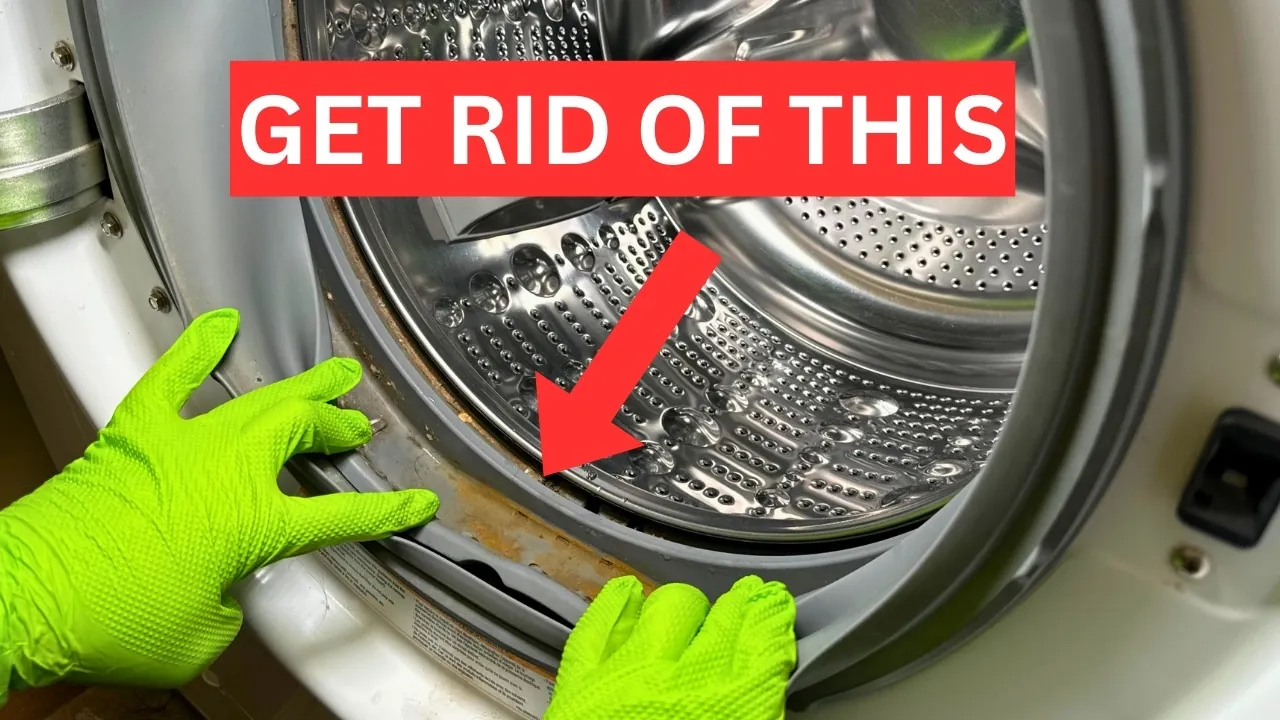
Clean the door gasket by hand. Pull back the rubber fold on a front-loader and wipe inside with a cloth dipped in warm soapy water. Work the toothbrush into the crease. This fold traps lint, hair, and standing water, and it’s the main source of musty smell.
-
Empty and rinse the drain filter. Put towels down first. On most front-loaders the filter sits behind a small panel at the bottom front. Unscrew it slowly, let the water drain into the tray, pull out lint and coins, then rinse the filter under warm water and screw it back.
-
Wipe the drum, door glass, and detergent drawer. Use warm soapy water, then a clean damp cloth. Dry everything with a microfiber cloth so no water sits in the folds.
-
Clean the outside and the dispenser housing. Wipe the control panel with a barely damp cloth — never spray water directly on it. Dry immediately.
-
Run one more empty rinse. A short warm rinse with no products clears any vinegar or soap left in the lines. Leave the door and drawer open to air-dry.
-
Check the water inlet hoses. Look for cracks, bulges, or leaks at both ends, and replace any hose that shows them. This is a visual check only — don’t unscrew fittings or open the machine’s housing.
Careful: never open the machine’s cabinet, and never touch the capacitor or any internal wiring. A capacitor can hold a lethal charge even when the machine is unplugged. If your machine won’t drain, won’t spin, or trips the breaker, stop and call a qualified appliance technician.
How the job changes with your machine
Use the table to find your situation.
| Your situation | Time it takes | What’s different | What to watch |
|---|---|---|---|
| Top-loader, cleaned in the last 3 months | About 1 hour | No gasket fold to scrub | Water level — use the highest setting |
| Front-loader with a musty smell | About 2 hours | Gasket and filter both need work | The filter holds standing water |
| Machine not cleaned in a year or more | 2 to 3 hours | May need two vinegar cycles | Repeat the hot cycle if the smell stays |
| HE front-loader with a self-clean cycle | About 1.5 hours | Machine runs its own hot wash | Use only products the manual approves |
| Machine with visible mold on the gasket | 2 hours, plus a repeat in 1 week | Mold in the rubber needs a second pass | Don’t scrub so hard you tear the rubber |
Start with one vinegar cycle and see how the machine smells after it dries. Adding a second cycle is easy; overdoing it with strong products can dry out rubber seals and cost you a repair.
How to tell you did it right
A good result smells neutral when the drum is dry — not floral, not sour. The gasket fold feels dry to the touch, the filter runs clear, and the next load of laundry comes out without gray streaks or a damp, stale smell.
A poor result shows up fast. Clothes smell musty right after the wash, dark specks appear on light fabric, or water pools in the gasket after every cycle. That means residue or biofilm is still sitting somewhere you didn’t reach.
The quality problem this job is prone to is using too much product. Extra detergent and softener don’t clean better — they leave a sticky film inside the drum and hoses, and that film feeds the smell you’re trying to remove. It happens because soap feels like it’s doing more work.
Three things prevent it: measure detergent to the line for your load size and water hardness, skip fabric softener for a few weeks, and leave the door open after every wash so the drum dries.
The rules, and what comes after
The rule that matters here comes from your machine’s maker, not a cleaning blog. Manufacturers publish their own care instructions in the owner’s manual, and following them protects your warranty. If you don’t have the paper copy, most brands post the manual on their official website by model number.
After the clean, clear the detergent drawer of any leftover product, wipe the gasket dry, and leave the door and drawer open for a few hours. Record the date — a note on your phone is enough.
How long it lasts depends on how often you wash and how much detergent you use. A machine used daily with the door kept closed will need this again sooner than one used twice a week and left open to dry. Your own habits set the interval, and the smell test tells you when it’s time.
If your machine is still under warranty and something seems wrong beyond cleaning, contact the manufacturer’s service line rather than opening anything yourself.
Other ways to handle it
Use a store-bought washing machine cleaner
Tablets and powders made for washing machines follow the maker’s own instructions, and most go straight into the empty drum on a hot cycle. They cost more per clean than vinegar and baking soda, but they’re simpler and some brands approve them for self-clean cycles. Read the label for the dose — it changes with drum size.
Book a professional appliance service
A technician can pull the drum, clear a blocked drain pump, and replace worn seals. This costs far more than a home clean and takes a scheduled visit, so it suits machines with a real mechanical fault or a smell that returns within days. For routine musty odor, it’s more than you need. Prices vary by area, so ask for a quote first.
Run a monthly hot maintenance wash
Instead of one deep clean a year, run an empty hot cycle once a month with 1 cup of vinegar. Each session takes about an hour and prevents buildup from ever getting bad. It’s the easiest habit to keep, and it works well for anyone who washes often and wants to skip the scrubbing.
Frequently asked questions
How often should I clean my washing machine?
How often you need to do this depends on how much you use the machine — a machine running several loads a week builds residue faster than one used twice a week. Your owner’s manual is the authority on what your machine needs. If it smells musty, clean it then.
Can I use bleach instead of vinegar?
Yes, but never in the same cycle as vinegar. Bleach works well on mold in the gasket and on white drums, and it’s the better choice for visible mold. Mixing bleach and vinegar creates a gas that irritates your eyes and lungs. Use one or the other, and run a plain rinse between them.
Is it safe to put vinegar in my washing machine?
Yes, for occasional cleaning. White vinegar is mild enough for rubber seals at the amount used here — 2 cups in an empty drum. Don’t use it too often, and don’t use cleaning vinegar, which is stronger. If your manual names products to avoid, follow the manual over any general advice.
What happens if I never clean it?
Residue, lint, and biofilm build up inside the drum, gasket, and filter. Clothes start coming out with a stale smell and dark specks, and the machine works harder to drain. Over a long time, a blocked filter or drain pump can fail, and that repair costs far more than a bottle of vinegar.
Why does my washing machine smell after cleaning?
Either the filter or the gasket still holds debris, or water is sitting in the drain hose. Recheck the filter trap and wipe deep inside the gasket fold. If the smell returns within a few days, the drain pump may be partly blocked — that’s a job for a qualified technician.
How long does a washing machine clean take?
About 2 hours for a front-loader with a full clean, or about 1 hour for a top-loader with no gasket to scrub. The time is mostly cycle time, not scrubbing. A machine that hasn’t been cleaned in over a year may need two hot cycles, which adds roughly another hour.
Can I clean it with just hot water?
Hot water alone removes some loose residue, but it won’t disinfect the drum or remove the biofilm that causes the smell. Add 2 cups of vinegar to the empty drum for a real clean. Hot water is a good follow-up rinse, not a replacement.
Conclusion
Cleaning your washing machine is a 2-hour job you can do with vinegar, baking soda, and a few cloths. How often it needs doing depends on your use, so check your owner’s manual, leave the door open after each wash, and your laundry will smell clean again. Anything past the filter, the gasket, and the outlet belongs to a technician — not your toolkit.